REVIEW · OLD TOWN PRAGUE
Prague: Highlights Walking Tour to the German embassy 1989
Book on GetYourGuide →Operated by David Klaus Travel Manager Service Prag · Bookable on GetYourGuide
A balcony can carry a whole era. This 150-minute Prague walk connects 1989 to the streets you’ll stand on today.
I like how it ties big events to very specific places, and I also like that you cover classic sights while learning the story behind them. One thing to note: the German embassy interior isn’t open to the public, so the most memorable parts happen from outside and via the balcony viewpoint.
What really stuck with me is the way the route moves through Old Town layers—Jewish Prague, 1968 protest, and the 1989 refugee moment—without feeling like a lecture. The walk crosses the iconic Charles Bridge, then slows down at the John Lennon Wall and the sites tied to Jan Palach. If you hate walking or you need step-free access, this won’t be your best choice.
In This Review
- Key points that make this tour worth your time
- Why a German Embassy Balcony View Changes How You See Prague
- Getting Oriented: Meeting at Charles University Law and the Quick Metro/Tram Options
- Josefov and the Old Jewish Cemetery: A Quiet Start Before the Political Breakthrough
- Jan Palach Square and the Velvet Revolution Memorial: Protest on the Streets of 1968
- Charles Bridge: From Photo Stop to Freedom Footsteps
- John Lennon Wall: Political Hope in Paint and Messages
- Wenceslas Square and the National Museum Area: Where History Plays Out in Plain Sight
- Malostranské Square to the German Embassy: The Balcony Story Comes Into Focus
- Price and Value: Is $32 Worth 150 Minutes of History on Foot?
- Who Should Book This Walk (and Who Might Want a Different Plan)
- Should You Book This Prague 1989 Highlights Walk?
- FAQ
- How long is the Prague Highlights Walking Tour to the German embassy 1989?
- How much does the tour cost?
- Where is the meeting point, and how do I get there by public transport?
- Which major places do you visit on the route?
- Is the German embassy interior open during this tour?
- Is the tour guide available in German?
Key points that make this tour worth your time
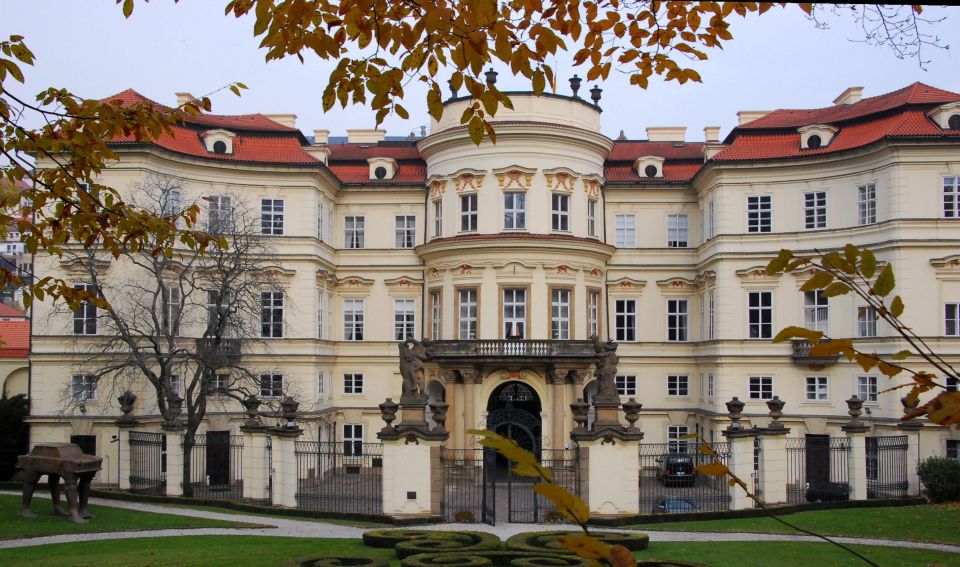
- German embassy focus: you see the building and the balcony tied to Hans-Dietrich Genscher’s famous speech
- 1989 refugee story on foot: you learn how East Germans fled through Poland and Hungary toward the West German Embassy in Prague
- Street-level 1968 context: Jan Palach’s story and the Prague Spring are connected to places you can actually visit
- Lennon Wall stops: you get time at the homage wall, not just a passing glance
- Big-sight payoff: Charles Bridge, Wenceslas Square, and major squares fit into one compact route
Why a German Embassy Balcony View Changes How You See Prague
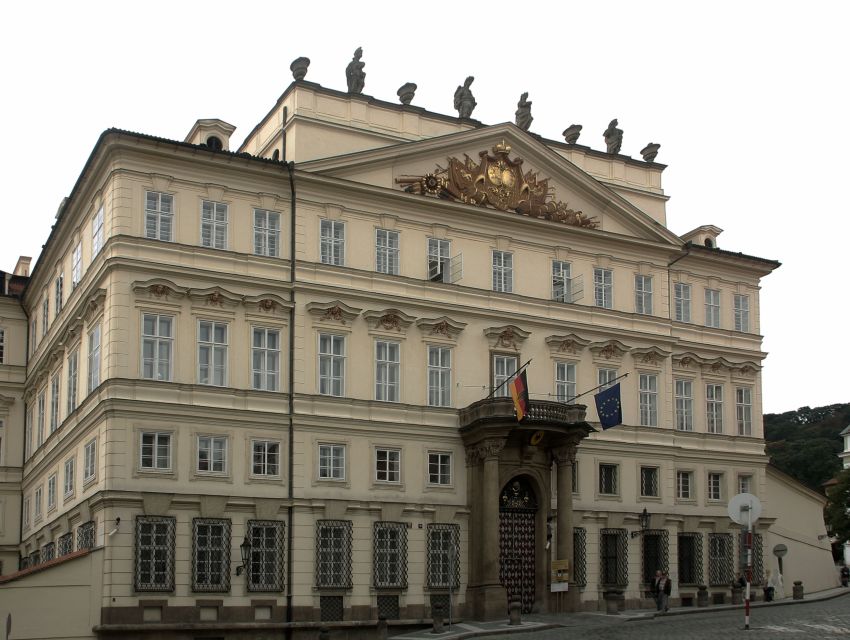
Prague has plenty of tours about castles and bridges. This one has a sharper focus: the fall of the Iron Curtain, told through the route that leads you to the German embassy area. That shift matters. When you walk with the story in your head, the city stops being just scenic.
I also like that the tour doesn’t treat history like something sealed in a museum. You’re walking across the same kind of public space where people gathered, argued, and hoped. One guest in a recent private group described how emotional it was to return to the spot where, decades earlier, they learned the news from the balcony near Hans-Dietrich Genscher. That reaction makes sense here: the place does the storytelling.
Expect a licensed German-speaking guide, and a guide who actually answers questions. In one private tour experience, the guide (David) was specifically praised for handling questions well. You can use that. If something feels confusing—like how 1968 leads into 1989—ask right away.
Getting Oriented: Meeting at Charles University Law and the Quick Metro/Tram Options
You meet in front of the Faculty of Law at Charles University, at nám. Curieových 7 in the Old Town. The easiest metro option is to get off at Staromětká, which is about 550 meters from the meeting point. If you prefer tram, take tram 17 and get off at Pravnicka Fakulta.
Why this matters: the tour starts in a spot that’s central enough to drop into quickly, but it’s still in a lived-in area of the Old Town. You’re not herded from a hotel lobby. You step into Prague with your guide and get your bearings fast.
The tour timing is about 150 minutes. That’s long enough to cover the key sites, but short enough that you’ll still have energy for an evening stroll afterward.
Josefov and the Old Jewish Cemetery: A Quiet Start Before the Political Breakthrough
The first meaningful stop is at Josefov, the historic Jewish quarter, with a photo stop at the Old Jewish Cemetery. Even if you don’t know much about Prague’s Jewish heritage, this portion gives you a different tempo. It’s a pause before the tour turns sharply toward 20th-century political events.
Josefov helps you understand why Prague’s story isn’t only about modern politics. It’s about communities, identities, and how the city keeps layers of memory in place. The Old Jewish Cemetery stop is brief, but it sets the tone: Prague keeps records in its streets, not just in textbooks.
Practical tip: wear shoes that can handle uneven pavement. This walk is mostly on foot, and you’ll be moving between squares and viewpoints with only short breaks.
Jan Palach Square and the Velvet Revolution Memorial: Protest on the Streets of 1968
Then the route turns to 1968. You’ll visit Jan Palach Square, with a guided stop designed to connect Jan Palach’s life at the Faculty of Philosophy to what happened during the Prague Spring. This is one of those stories where a small location can help you remember the bigger arc.
Right after that, you’ll make a photo stop at the Velvet Revolution Memorial. Even if you’ve heard the phrase before, seeing the memorial while your guide is explaining the link between mass protest and political change makes it feel more grounded. You’ll also start to see the tour’s main idea forming: 1968 isn’t separate from 1989. It’s part of the same struggle, with different chapters.
What I like here is the balance. You’re not only learning dates. You’re learning how people respond when they think the world is changing—and when it doesn’t.
Charles Bridge: From Photo Stop to Freedom Footsteps
You cross into the classic postcard zone with stops at Charles Bridge. The tour includes time for a walk and sightseeing, plus a photo stop approach at the bridge area. This is where you get the visual payoff: the view lines, the flow of pedestrians, and that unmistakable feeling of standing in a landmark rather than just reading about it.
But the guide doesn’t let the bridge be only scenery. As you get near the German embassy area later, you’ll understand why Charles Bridge is on this route: it connects neighborhoods and it functions like a public corridor—exactly the kind of space where historic moments get observed, remembered, and retold.
Short and honest note: if it’s busy, the crowd can slow your pace. That doesn’t ruin the tour, but it changes how much you can linger and take photos. Go easy with your expectations and focus on the guide’s explanation.
John Lennon Wall: Political Hope in Paint and Messages
A standout stop on this walk is the John Lennon Wall. You’ll spend time there with a guided visit and sightseeing. This is one of the most powerful “show, don’t tell” moments in central Prague.
Why it works: the Lennon Wall is a living kind of protest memory. It connects to ideas many people associate with Western freedom and resistance, which makes it a natural bridge between the tour’s 1968 chapter and its 1989 focus.
I recommend giving yourself a few minutes to just stand back and absorb the wall before you read any details. The guide’s context helps, but your own first glance helps too. It’s easy to miss what makes the place hit emotionally if you rush.
Wenceslas Square and the National Museum Area: Where History Plays Out in Plain Sight
Next comes Wenceslas Square—a guided stop with time to see and visit. The square feels like a stage, and that’s exactly why it fits this itinerary. Your guide uses this space to connect Prague’s modern political story to the public life of the city.
You also get a photo stop at the Prague National Museum area. That’s not the main point of the tour, but it reinforces how Prague’s central boulevards act as an open-air archive. If you like architecture and street scale, you’ll enjoy this portion. If you want only history, you’ll still benefit from the spatial sense—how major events unfold across wide public space.
A practical approach: keep your phone charged and your water handy. This is the part where you’ve already had some walking time, and you’ll want to stay comfortable while the guide talks.
Malostranské Square to the German Embassy: The Balcony Story Comes Into Focus
The final stretch brings you down toward Malostranské Square, plus a short on-foot connector segment before you reach the heart of the experience: the German Embassy, Prague. The tour ends at Malostranské náměstí.
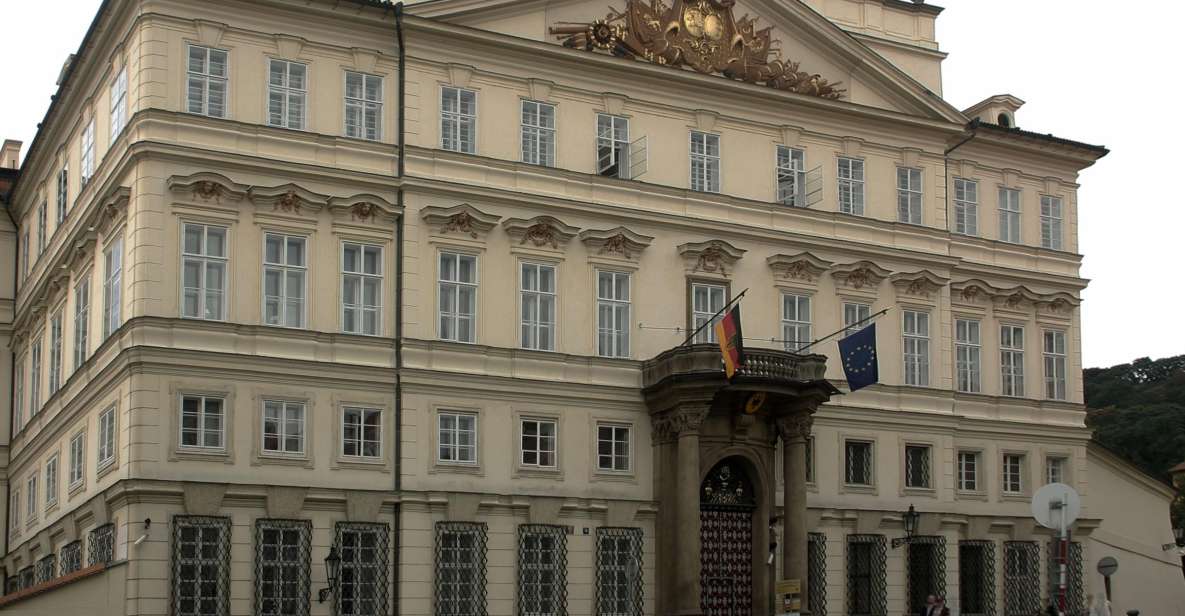
Here’s where the emotional center of the tour lands. You’ll see the embassy from outside and learn about the famous balcony where Hans-Dietrich Genscher made his speech. The tour also includes mention of the embassy garden viewpoint—one private tour experience included a moment described as deeply meaningful because it echoed a family memory from decades earlier.
One important consideration: the embassy interior is not open to the public during this experience. You’re there for the setting, the exterior details, and the balcony story. That’s still worth it. In fact, it can be more powerful than an indoor visit because you’re reading the scene in real-world light and traffic—exactly the way public history happens.
If you want a simple takeaway from the last segment, it’s this: political decisions weren’t happening in a vacuum. They were happening in visible, public places where people could watch and react.
Price and Value: Is $32 Worth 150 Minutes of History on Foot?
At $32 per person for about 150 minutes, this tour feels like good value if you’re the type who enjoys learning while walking. You’re getting a licensed German-speaking guide, and you’re also getting a route that combines major sights with a focused storyline.
Here’s what you’re paying for, beyond “seeing stuff”:
- Direction and interpretation: the guide connects Charles Bridge, Lennon Wall, Jan Palach sites, and the German embassy balcony into one coherent narrative.
- Time at the moments that matter: you’re not just stopping for a snapshot and moving on.
- A specific historical thread: the refugee crisis and how East Germans fled toward the West German Embassy in Prague.
If you only want a light sightseeing day with minimal context, you might find it heavier than you prefer. But if you like context—especially 20th-century Central European context on real streets—this format is a strong use of time.
Who Should Book This Walk (and Who Might Want a Different Plan)
This tour is a good fit if you:
- Want major Prague sights linked to history, not treated as separate checklist items
- Care about how 1968 and 1989 connect in Prague
- Like guided question-and-answer moments with a real person leading the narrative
It’s less ideal if:
- You have mobility impairments, since it’s not suitable for people with mobility impairments
- You want an interior-only museum-style experience, because the German embassy interior isn’t open during this tour
For pacing, it helps to think of the experience as a guided route with short photo stops and a few longer guided moments, especially around the Lennon Wall and the key historical squares.
Should You Book This Prague 1989 Highlights Walk?
I’d book it if you want your Prague day to mean something. The German embassy balcony story gives the tour a clear emotional anchor, and the rest of the route supports it with context you can actually picture: Jan Palach’s Prague Spring connection, the Velvet Revolution memorial stop, and the Lennon Wall’s message-filled presence.
If you’re deciding between a pure sightseeing walk and a story-focused one, this is the story-focused option that still gives you big-city landmarks. It’s not long, but it’s not superficial either. You finish the walk with a better sense of why people risked everything—and why a balcony speech could matter to thousands watching from the streets.
FAQ
How long is the Prague Highlights Walking Tour to the German embassy 1989?
It runs for 150 minutes.
How much does the tour cost?
The price is $32 per person.
Where is the meeting point, and how do I get there by public transport?
You meet in front of the Faculty of Law at Charles University (nám. Curieových 7, Old Town). If you arrive by metro, get off at Staromětká (about 550 meters away). You can also take tram 17 and get off at Pravnicka Fakulta.
Which major places do you visit on the route?
You’ll see stops around the Old Jewish Cemetery/Josefov, Jan Palach Square, the Velvet Revolution Memorial, Charles Bridge, the John Lennon Wall, Wenceslas Square, the Prague National Museum area, Malostranské Square, and the German Embassy exterior.
Is the German embassy interior open during this tour?
No. The interior of the embassy is not open to the public during the experience.
Is the tour guide available in German?
Yes. The tour is led by a licensed German-speaking guide. Private group options are also available.