REVIEW · PRAGUE
Communism and its fall Prague private tour
Book on Viator →Operated by Jana Neubergova Private Tour Guide · Bookable on Viator
Prague’s communist story has human faces. This 2-hour private walk links key landmarks to the moment communism began to unravel, with a guide who can talk about it from inside the events.
I really like how tight the route is—you move through the city’s real turning points without wasting time. I also love that the experience is guided by Jana Neubergova, who brings first-person context from the Velvet Revolution era.
One possible drawback: it is a walking tour and some stops may have admission tickets not included (the memorial is the free exception), so you may want to budget a little extra if you plan to go inside.
In This Review
- Key things you’ll notice on this tour
- Why a 2-hour communist walk in Prague still works
- Meeting Jana Neubergova: why the guide matters here
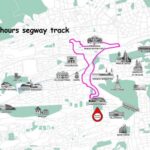
- The 2-hour route: from Czech intellectual roots to public protest
- Stop 0: The meeting point for Czech intellectuals
- Stop 1: National Theatre’s role in Czech identity
- Stop 2: Narodni Street and the Velvet Revolution spark
- Stop 3: Lucerna Arcade, culture, and Vaclav Havel’s family
- Stop 4: Wenceslas Monument at Wenceslas Square
- Stop 5: Memorial to the Victims of Communism (free and focused)
- Price and value: does $85 make sense for this tour?
- Logistics that matter (and what you should plan for)
- Who should book this private communism tour
- Should you book Communism and its fall Prague?
- FAQ
- What is the duration of the Communism and its fall Prague private tour?
- How much does the tour cost, and what’s included?
- Is private transportation included?
- Are admission tickets included for the stops?
- What language is the tour offered in?
- What are the cancellation terms?
Key things you’ll notice on this tour
- Firsthand Revolution perspective from Jana Neubergova
- A short, meaningful route centered on Narodni Street and Wenceslas Square
- Lucerna Arcade’s connection to Václav Havel’s family
- Memorial to the Victims of Communism by Olbram Zoubek, included
- Free Prague map, plus a private setup just for your group
Why a 2-hour communist walk in Prague still works
Most tours about communism end up sounding like a lecture. This one stays grounded in place. Prague is full of stone reminders—statues, squares, buildings—and the guide uses them like signposts for what changed, why it mattered, and what people risked.
You’ll also get a rare kind of context: Jana Neubergova is not reading from a script. She has personal ties to the era, including participation in the Velvet Revolution and time connected to Václav Havel afterward. That kind of perspective makes the story feel less theoretical and more like a sequence of decisions made under pressure.
Finally, the format is practical. It’s about 2 hours, and it’s private, so you can ask questions without waiting your turn. If you like history but hate slow pacing, you’re in the right place.
You can also read our reviews of more private tours in Prague


Meeting Jana Neubergova: why the guide matters here
The biggest reason I’d put this tour near the top of a Prague history short-list is the person leading it. Jana Neubergova is a professional, fully licensed guide, and the tour is offered in English.
The standout detail is her connection to the events. She has stories from the demonstrations in November 1989, and she also worked in Václav Havel’s office shortly after the Velvet Revolution. That matters because she can connect what you see outside—squares, theater buildings, public spaces—to what was happening in real time.
In practice, her style comes across as friendly and approachable, not stiff. You should expect clear explanations, plus personal anecdotes that help you understand why these locations became symbols.
And yes, language is a big deal on a tour like this. Jana’s English is described as excellent, so you won’t lose the thread when she moves from setting to meaning.
The 2-hour route: from Czech intellectual roots to public protest
This tour is structured as a focused city walk. It runs roughly 2 hours with short stop times, so you’ll cover several key locations without getting worn out.
It starts at a meeting point described as a meeting point of Czech intellectuals. That may sound abstract until you realize it sets the tone: Prague’s political change didn’t come only from street crowds. It also came from people who argued, wrote, organized, and built influence through ideas.
From there, the route moves through places tied to Czech identity and public life—then lands at sites that directly connect to protest and revolution. The pacing is meant to keep your brain engaged: you look, you walk, you connect the dots.
Pickup is on foot from Prague hotels, and the tour is near public transportation. So even if you’re not starting from one central landmark, it’s usually easy to meet up without complicated rides. You still rely on your own legs between stops.
Stop 0: The meeting point for Czech intellectuals
The tour begins at a place framed as a gathering point for Czech intellectuals. I like this opening because it shifts your mindset. Before you hit the big names and famous squares, you get a sense that the story is about people—writers, thinkers, organizers—who helped push the country toward change.
You’ll likely hear explanations that make later stops land better. When the guide talks about cultural institutions and public spaces, you’ll understand why intellectual life mattered under communist rule.
Practical note: this is a walk start, so give yourself a few minutes to get oriented with your guide and group before moving on.
Stop 1: National Theatre’s role in Czech identity
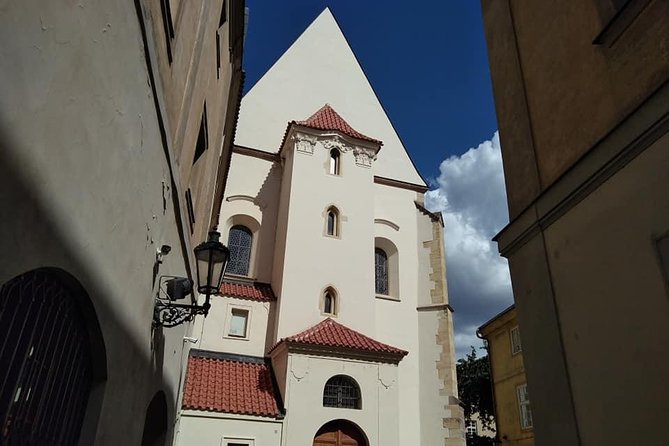
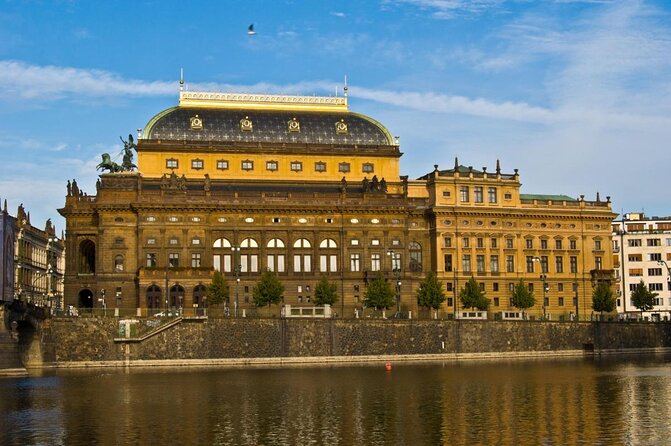
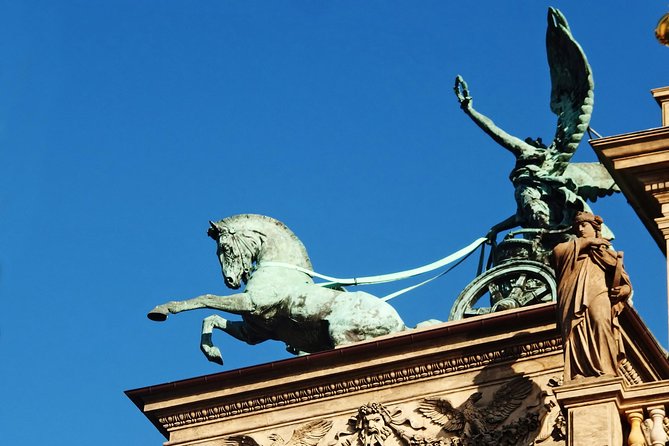
Next is the National Theatre, a building described as having played an important role in Czech history. Even if you don’t go inside, the location helps you feel the idea of culture as power.
Here’s why this stop isn’t just a pretty exterior: in Prague, major cultural institutions often served as more than entertainment. They were places where national identity could be expressed loudly, especially when politics tried to shrink public voices.
The stop is brief (about 10 minutes), and admission is not included. So if you’re the type who likes to pair the street view with an interior visit, you’ll want to plan for extra tickets on your own.
Drawback to consider: short stops mean you won’t have time for lingering, and if you want museum-level reading, you may still want an additional self-guided visit later.

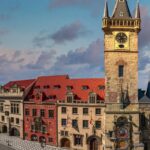

Stop 2: Narodni Street and the Velvet Revolution spark
Then you hit one of the most direct links to the story: Narodni Street, where the Velvet Revolution started. The tour gives this stop about 15 minutes, and admission tickets aren’t included here either—which makes sense, since the “site” is really the street itself and the moment it represents.
This is where the history becomes motion. You’re not just looking at a building; you’re imagining the crowd energy, the shift in public confidence, and the sudden visibility of dissent.
What I find most valuable here is that the guide can connect what you see (street layout, urban visibility, gathering space) to what happened. And because Jana experienced the demonstrations in November 1989, her descriptions tend to feel grounded rather than symbolic.
This is also a good stop for questions. If you want to understand how ordinary people became part of a movement, ask. The guide’s first-person context is exactly what you need.
Stop 3: Lucerna Arcade, culture, and Vaclav Havel’s family
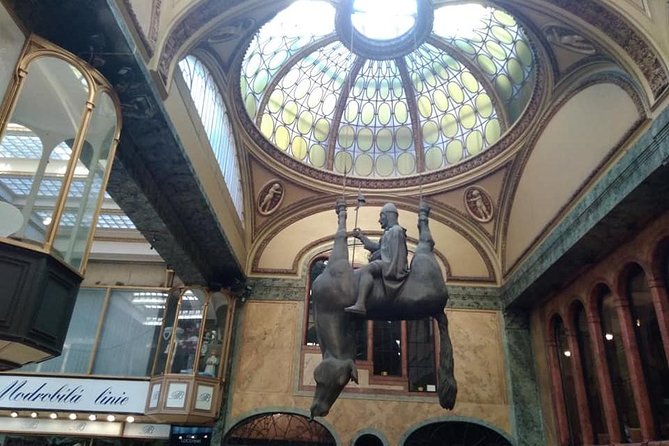
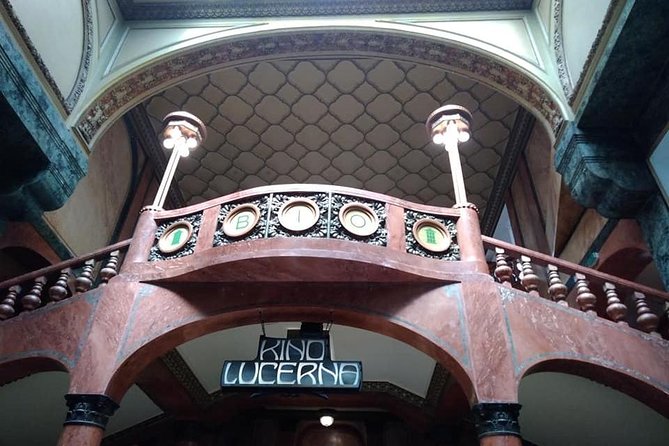
After the street-level revolution energy, the tour shifts to a social and cultural center: Lucerna Arcade. It’s described as founded by Václav Havel’s family, and that connection gives the stop extra weight.
You’ll spend about 10 minutes here, and admission isn’t included. So think of Lucerna Arcade as a context stop—learning why this kind of place mattered—rather than a ticket-heavy “must enter” moment.
Why it works: you get a bridge between protest and the rebuilding phase. The Velvet Revolution is often framed as street action, but the aftermath required institutions, leadership, and public life moving back into full view. Havel’s family connection helps show that change wasn’t only reactive; it also had roots in cultural and civic circles.
If you like the intersection of politics and public space, this is one of your better stops on the route.
Stop 4: Wenceslas Monument at Wenceslas Square
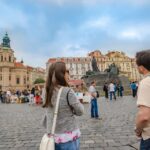
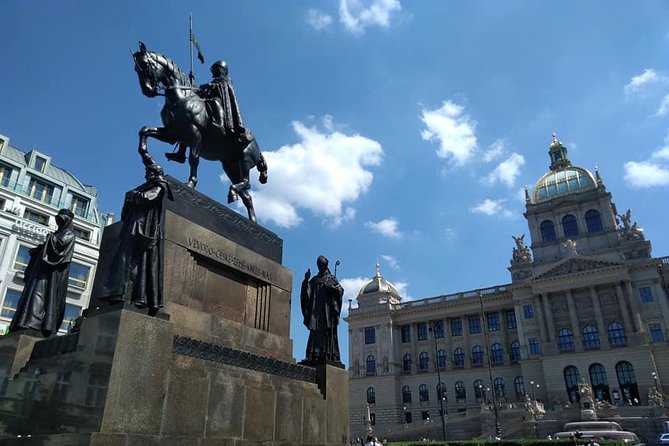
Next comes the Wenceslas Monument, located on Wenceslas Square, described as the heart of Prague and the place where demonstrations are held even today. Expect about 20 minutes here.
This is one of those stops that is both visual and practical. From here, you see why large public movements can happen in the open—wide space, strong sightlines, easy access for crowds. Even if you know the general history, looking at the monument in its actual setting helps the story click.
Admission isn’t included, so treat this as a viewing stop. Still, it’s a good place to pause and let the meaning settle.
I also like that this stop echoes the earlier one. Narodni Street represents the spark; Wenceslas Square represents the public stage where that spark could grow.
Stop 5: Memorial to the Victims of Communism (free and focused)
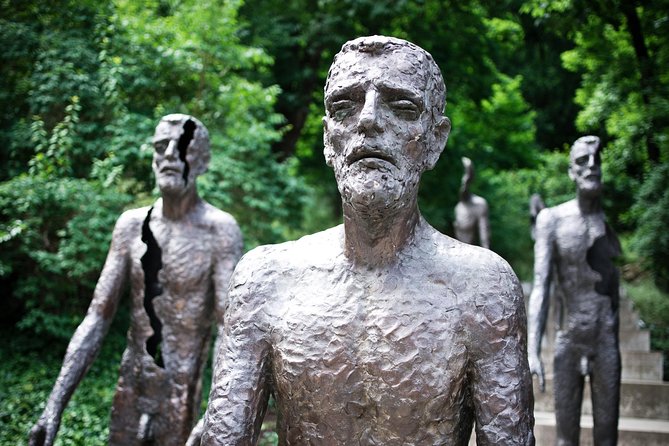
The tour finishes at a place that shifts the mood: the Memorial to the Victims of Communism. This stop is free, and it’s described as created by sculptor Olbram Zoubek, one of the most notable Czech artists.
You’ll spend about 15 minutes here.
This ending choice matters. It reminds you the story isn’t only about political turning points—it’s also about the people who suffered under the system. A memorial like this gives you a place to step out of the narrative and confront the human cost.
If you’ve been asking yourself how something so dramatic can affect ordinary lives, this is where you get an honest answer. And because it’s free, it’s a low-stress win: you don’t need to pay extra to give this part your attention.
Price and value: does $85 make sense for this tour?
At $85 per person for roughly 2 hours, this isn’t the cheapest Prague option. But it isn’t overpriced for what you get, either.
Here’s the value breakdown that matters:
- You get a professional, fully licensed guide with an unusual level of first-person connection to the topic.
- It’s a private experience, meaning only your group participates.
- You receive a free map of Prague, which helps if your plan is to keep exploring right after.
The missing piece is also important: there is no private transportation included. Pickup is offered on foot from Prague hotels, but you’re still doing walking and relying on the city’s normal layout and public connections.
So I’d frame the price like this: if you want a guided story with personal context—and you’ll be walking anyway—you’re paying for the guide’s perspective and time, not for a bus ride.
If you’re on a super tight budget, you might compare it to self-guided options. But if you care about understanding the “why” behind these locations, the guide experience is what you’re really buying.
Logistics that matter (and what you should plan for)
A few practical points can make your experience smoother:
- Pickup: The tour offers on-foot pickup from Prague hotels. This reduces the friction of meeting somewhere exact, but you still should be ready at the agreed time.
- Timing window: The tour operates daily from 9:00 AM to 6:00 PM, within an overall date range listed as 07/11/2023 – 03/23/2027.
- Group size: It’s private for your group.
- Fitness: You should have moderate physical fitness, since it’s an active walk across multiple stops.
- Tickets: Several stops list admission tickets as not included. The memorial is free.
- Language: Offered in English.
If you’re the type who hates paying extra at the door, I’d go into this knowing that at least some stops may require extra tickets if you want to go inside. If you’re happy with exterior viewing and context, you can keep costs tighter.
Who should book this private communism tour
This tour is a good match if:
- You want a short, high-impact history route rather than a long day.
- You like your history explained by a guide with real connection to the events.
- You’re interested in Prague’s modern political story, from demonstrations to remembrance.
- You’re traveling with a group that wants a private setup instead of a crowded join-in tour.
It may be less ideal if:
- You dislike walking, even when the stops are short.
- You want every stop to be fully included without any extra admissions.
- You prefer deep museum visits over street-level interpretation.
Should you book Communism and its fall Prague?
My take: if you’re in Prague for a few days and you want one history tour that doesn’t feel like a slideshow, this is a strong choice. You’re paying for a guide with rare firsthand perspective, and the route hits symbols you’ll keep seeing around the city.
Book it if you’ll actually use the context. The stops are short, so you’ll get the most if you show up curious and ready to ask questions.
I’d skip it only if you’re purely after a budget-friendly checklist of photos, or if you absolutely need fully paid admissions at every stop. For many people, though, this kind of personal, place-based storytelling is exactly what makes a Prague trip memorable.
FAQ
What is the duration of the Communism and its fall Prague private tour?
It’s approximately 2 hours.
How much does the tour cost, and what’s included?
The price is $85.00 per person. It includes a professional, fully licensed guide and a free map of Prague.
Is private transportation included?
No. Private transportation is not included.
Are admission tickets included for the stops?
Admission tickets are not included for several locations on the route, while the Memorial to the Victims of Communism is free.
What language is the tour offered in?
The tour is offered in English.
What are the cancellation terms?
You can cancel for a full refund if you cancel at least 24 hours before the experience starts. If you cancel less than 24 hours before, the amount you paid will not be refunded.