REVIEW · PRAGUE
Prague Art Nouveau and Cubism Walking Tour
Book on Viator →Operated by Insight Cities · Bookable on Viator
Prague’s buildings argue with each other. This tour pairs Art Nouveau curves with Cubist angles, so you start seeing design choices instead of just taking photos.
I love how the historian guide turns architecture into a story you can follow, from ginkgo-leaf ornament to the oddball typography that makes Prague feel different.
I also love the practical, “how did they build this?” side—central heating and ventilation, drinking water, hydraulic elevators, steam-powered laundry, and even an intercom system. You get the tech and the culture in the same walk.
One drawback: it’s still a walking tour. Plan on about 3 hours on your feet, and bring good shoes if you’re doing it on cobblestones or in weather.
In This Review
- Key Points Worth Booking
- Prague Art Nouveau vs Cubism: Why This Walk Feels Different
- Starting Point at Ovocný trh: How the Tour Actually Begins
- House of the Black Madonna: Cubism’s Knock on the Door
- Obecní Dum: The Art Nouveau Landmark You’ll Recognize Later
- K+K Hotel Central Prague and Café Imperial: Early Art Nouveau Mood
- Czechoslovak Legion Bank: Cubism With a Story Attached
- Prague Main Train Station Dome: Using the Architecture to Navigate
- Wenceslas Square: Reading the Square Like a Timeline
- Lucerna Music Bar Arcades: Turn-of-the-Century Optimism in a Glassy Space
- The Upside-Down Statue: Czech National Revival Through Modern Symbolism
- Ending at Café Louvre: A Classic Stop That Feels Like a Time Machine
- Price and Value: Is $126.71 Worth It?
- What Makes the Guides Matter (Vadim, Bonita, Matous)
- Practical Tips So You Don’t Miss the Details
- Should You Book This Prague Art Nouveau and Cubism Tour?
- FAQ
- FAQ
- How long is the Prague Art Nouveau and Cubism Walking Tour?
- How many people are in the group?
- What language is the tour offered in?
- Where do I meet the guide and where does the tour end?
- Are food and drinks included?
- Is hotel pickup or drop-off included?
- Are there any entry tickets needed for the stops?
- What if I need to cancel?
Key Points Worth Booking
- Small group, max 8 travelers: more questions, less crowd noise, easier pacing
- Historian guide: architecture + local history explained clearly, not as a lecture
- Art Nouveau vs Cubism contrast: you’ll learn how to spot the differences on the street
- Iconic stops plus side-adjacent interiors: you’re not stuck only outside the buildings
- Optional morning or afternoon departure: pick the time that fits your itinerary best
Prague Art Nouveau vs Cubism: Why This Walk Feels Different
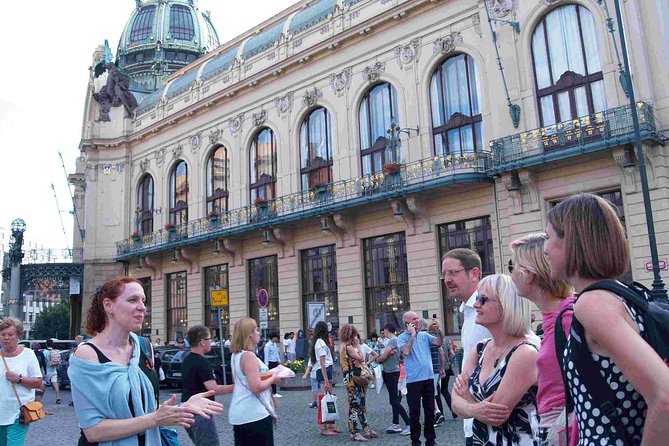
Prague has a gift for mixing styles like a live debate. This is a walking tour that helps you understand that argument—why Art Nouveau wanted flowing, nature-ish lines and fancy detail, while Cubism pushed sharper geometry and fractured forms.
The best part is that the tour doesn’t treat architecture like wallpaper. It connects design to history, politics, and real daily life. You’ll hear how Eastern art and aesthetics influenced Art Nouveau—right down to the look of light fixtures and that distinct, curvy style of letterforms.
And because it’s led by a historian guide, you’re not just learning names. You’re learning how to read the buildings. That changes the rest of your trip: every façade starts to look “explainable.”
You can also read our reviews of more walking tours in Prague


Starting Point at Ovocný trh: How the Tour Actually Begins
You meet at Ovocný trh 19 in the Old Town area. It’s a solid spot to start because you’re already in the historic core and close to public transportation—handy if you’re coming from a hotel not in the center.
From there, the tour runs around 3 hours with a maximum group size of 8. That matters more than people think. In a small group, you can ask why something was built a certain way, or why the styles clash in the same neighborhoods.
It’s also offered in English, with a mobile ticket. That reduces the hassle of figuring out paperwork on the spot. The tour also gives you a choice of morning or afternoon—so you can match it to when you have energy.
House of the Black Madonna: Cubism’s Knock on the Door
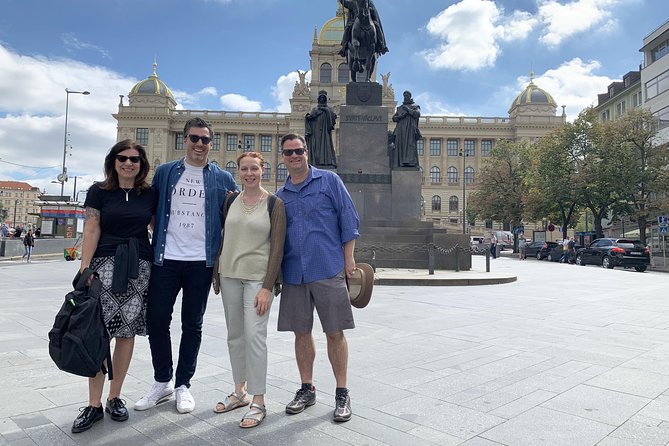
Stop one is the House of the Black Madonna, known for its Cubist style. This is your first hint of what the tour is really about: not “pretty buildings,” but design logic.
When you’re standing in front of a Cubist façade, the big thing to notice is how the shapes look almost carved—crystal-like forms and angular ideas. The guide helps you connect those shapes to Prague’s bigger reputation as a major center for Cubist art.
A small consideration here: you only get about 10 minutes. That’s enough to learn what to look for, but not enough to stare forever. If you’re the type who always wants a longer museum-style visit, mentally switch into “quick photo + careful looking” mode.
Obecní Dum: The Art Nouveau Landmark You’ll Recognize Later
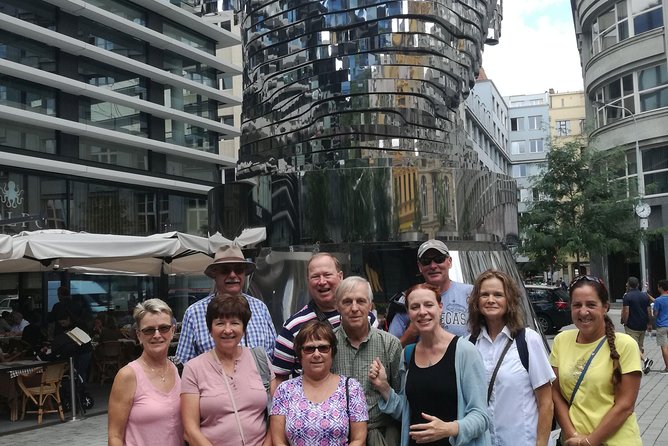
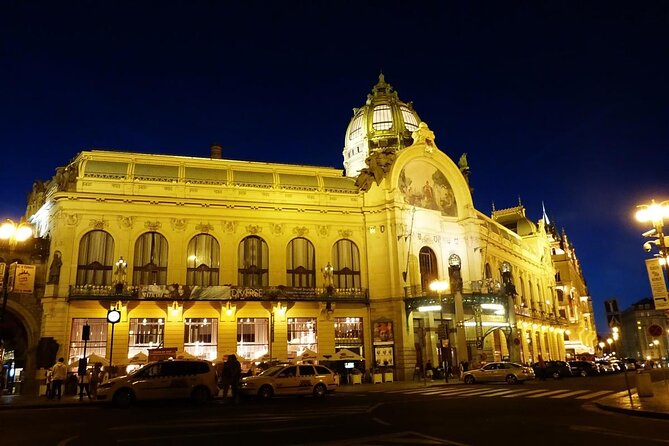
Next up is Obecní Dum (Municipal House), a standout Art Nouveau site. If you’ve seen photos of Prague’s “grand” architecture, there’s a decent chance you’ve seen this building in some form.
What makes this stop useful is the way the guide teaches you to spot Art Nouveau patterns without needing an art degree. You’ll learn to watch for nature-inspired details—like gingko leaves—and for the general sense of movement in the façade.
It’s a longer stop by walking-tour standards (about 15 minutes), so you can take your time with the exterior. Still, you’re on a schedule, so don’t spend so long admiring one corner that you miss the rest of the style comparisons.
K+K Hotel Central Prague and Café Imperial: Early Art Nouveau Mood
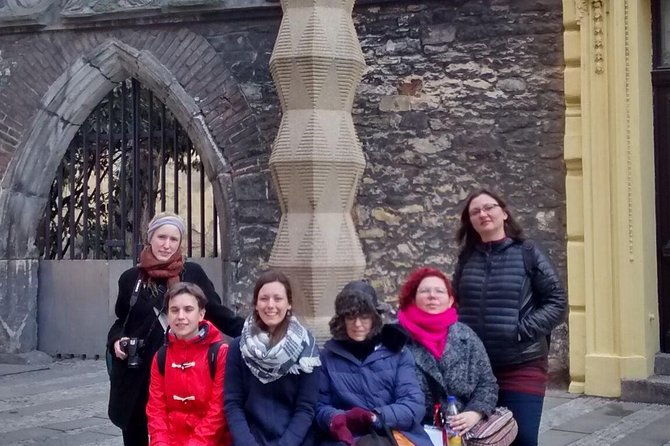
Then you’re at the K+K Hotel Central Prague, described as the first Art Nouveau building in Prague. That alone is worth a quick stop, because it frames the whole movement: Art Nouveau wasn’t just decoration—it was an early “new way of building” mindset.
Right after, you visit Café Imperial, where you get a closer look at an Art Nouveau interior. This is where the tour starts to feel like it’s more than street sightseeing. Café interiors are usually where styles show off the most, because the design has to work for everyday social life.
Time is short here (about 5–10 minutes depending on the stop), so come in with a plan:
- Look up for details, not just at eye-level ornaments.
- Take one or two photos, then spend the rest of the time watching how the space feels.



Czechoslovak Legion Bank: Cubism With a Story Attached
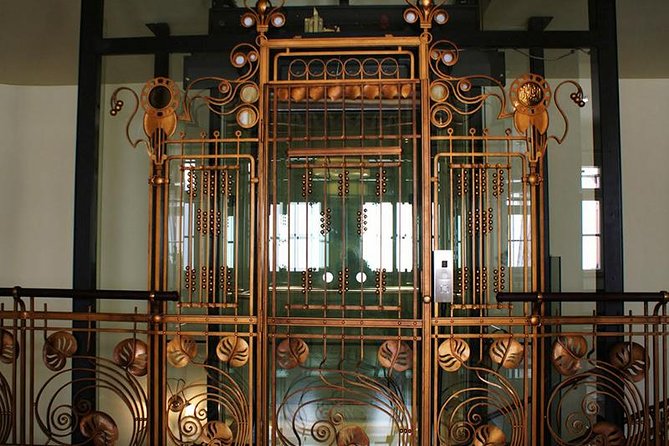
Stop five is the Czechoslovak Legion Bank, famous for its Cubist architecture and interior tied to the Czechoslovak Legion of World War I. This is a key moment because it links style to politics and public identity.
The guide helps you understand that architecture wasn’t isolated from events. In Prague, you’ll see how fierce European wars changed the course of history, and that shift shows up in what gets built and how communities want to represent themselves.
If you care about “why this exists,” this stop tends to land well. If you just want straight-up ornament appreciation, it may feel more story-heavy—but it’s still visually distinctive, especially once you notice the Cubist forms.
Prague Main Train Station Dome: Using the Architecture to Navigate
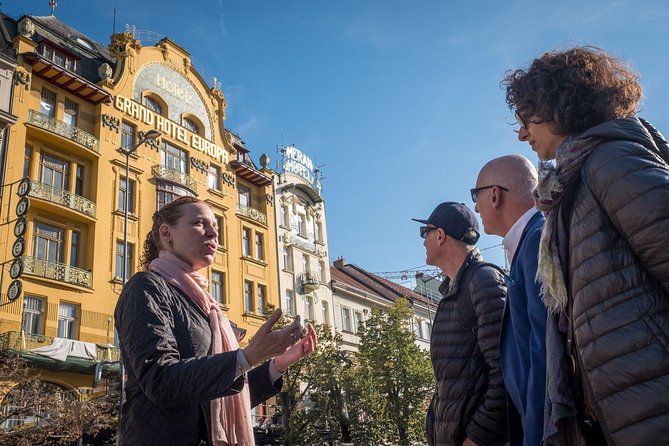
Then it’s to Praha hlavni nadrazi (Prague Main Train Station)—specifically the magnificent Art Nouveau dome interior. The station can be intimidating. It’s huge and busy, and your brain goes into airport mode.
This tour does something smart: it uses the station as a learning moment, not just a photo stop. One of the standout benefits is that the guide can help you understand your way around—so when you return on your own, you’re not wandering like a confused tourist with a map you can’t read.
Time here is brief (about 10 minutes), so treat it as orientation plus a chance to see the dome detail. The downside is obvious: you won’t get a full station “how it works” explanation. But that wasn’t the goal. The goal was to make the building feel less random.
Wenceslas Square: Reading the Square Like a Timeline
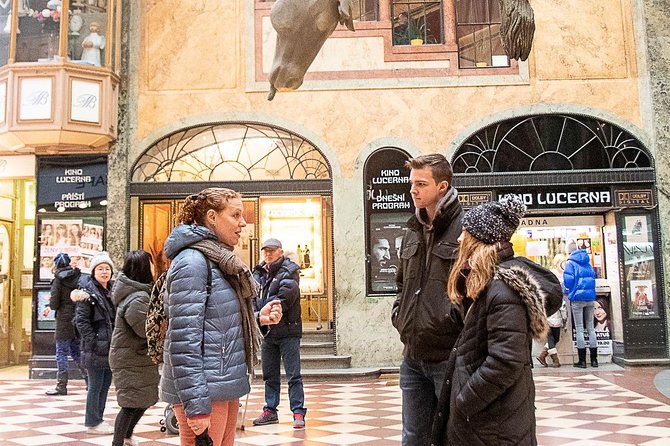
After that, you’re at Wenceslas Square, where the focus shifts from single buildings to an urban sequence—especially Art Nouveau and Art Deco architecture.
Squares are tricky on tours because they can get noisy and crowded. But this stop still works because it’s about learning how styles evolve and overlap over time. You get help spotting what changed and what stayed.
Your stop time is about 15 minutes, which is usually enough for a sensible walk-and-look rhythm. Just be ready to pause when the guide points out specific façade details—don’t get stuck walking ahead.
Lucerna Music Bar Arcades: Turn-of-the-Century Optimism in a Glassy Space
Stop eight is Lucerna Music Bar, known for its Art Nouveau interior and its arcades. This is the part of the tour where the mood shifts toward that turn-of-the-century feeling—when Prague seemed ready to try new ideas and bet on modern culture.
The guide connects that optimism to the bigger historical arc. Then, because you’ve already covered Cubism’s sharper “breakaway” feeling, you’ll notice how the interior design choices either soften or amplify that contrast.
This stop is about 10 minutes, which means you’ll probably want to linger for photos or close looking afterward. If you’re the type who wants to read every plaque and caption, you may wish the tour spent even more time here.
The Upside-Down Statue: Czech National Revival Through Modern Symbolism
You finish with the Upside-Down Statue of King Wenceslas riding a Dead Horse, and the symbolism is discussed in the context of Czech National Revival and later Czech history.
This part is useful because it changes how you view public art. You stop seeing statues as fixed objects and start seeing them as arguments—political, cultural, and emotional.
Time is around 10 minutes. If you’re hoping for a long essay about symbolism, you won’t get it. But you will leave with enough context to make sense of why the sculpture looks the way it does and what it’s trying to say.
Ending at Café Louvre: A Classic Stop That Feels Like a Time Machine
The tour ends near Café Louvre on Národní 22. It’s a fitting finale because it’s right by the action, close to restaurants and attractions, so you’re not stuck in the middle of nowhere once the walk ends.
Café Louvre dates to 1902, and it’s the kind of place where famous names like Kafka, Albert Einstein, and T. G. Masaryk were associated with the atmosphere. Even if you don’t go inside, the location helps you keep your bearings for the rest of your day.
If you want one practical move after the tour: use the ending point to reset with a coffee or a snack nearby. You’ll have built a style “map” in your head, and a break helps the details stick.
Price and Value: Is $126.71 Worth It?
At $126.71 per person for about 3 hours, the price can feel a bit steep—especially if you’re used to casual walking tours.
But you’re paying for three things that add real value:
- A historian guide who teaches you what to look for and how to tell styles apart
- A tight route that hits major landmarks tied to the Art Nouveau/Cubism story
- Small-group format (max 8), which means more interaction and less “follow the crowd” frustration
Compared to DIY wandering, the tour saves you the guesswork. You don’t have to research the differences between Art Nouveau typography, light fixtures, and Cubist geometry on your own while you’re trying to stay oriented in a new city.
Group discounts are mentioned too, which can make it more attractive if you’re traveling with someone who’s equally into buildings.
What Makes the Guides Matter (Vadim, Bonita, Matous)
A lot of architecture tours sound like the same script. This one tends to feel different because the guides adjust and stay engaged.
Guides such as Vadim, Bonita, and Matous are repeatedly associated with a few high-impact habits:
- answering questions without rushing you
- tailoring the walk to your interests, including Cubism and Art Deco
- adding extra context that makes the buildings feel connected to Czech society
There’s also a practical streak. One guide even helped with navigating the main train station, which is the kind of real-world usefulness you only notice later when you’re standing under that dome trying to catch your train.
If you want to get the most out of the tour, come with two questions:
1) How do I spot Art Nouveau versus Cubism fast?
2) Where did the influence come from—especially Eastern art and aesthetics?
Ask those early, and the rest of the walk clicks faster.
Practical Tips So You Don’t Miss the Details
Here’s how to make the most of your time without overthinking it:
- Wear shoes you can trust. Prague sidewalks are not always forgiving.
- Bring a phone with space for photos, but don’t turn it into a full-time job. Watch the guide’s pointing.
- Have a small “focus” mindset. Pick one style to watch closely each hour (Art Nouveau first, then Cubism contrast).
- If it rains, don’t bail. The route includes interiors and façades, so you still get plenty to look at even in bad weather.
Should You Book This Prague Art Nouveau and Cubism Tour?
Book it if you want your Prague experience to have structure. This is a good first-visit tour because it gives you a style filter. After it, you won’t see buildings as random decoration.
Skip it if you hate walking, or if you want long, slow indoor museum time. This tour is built for quick, focused architectural learning with a small-group pace.
If you’re the kind of traveler who likes asking why things look the way they do, this one is a strong yes. You’ll leave with that rare feeling that the city makes more sense.
FAQ
FAQ
How long is the Prague Art Nouveau and Cubism Walking Tour?
It runs for about 3 hours.
How many people are in the group?
The tour has a maximum of 8 travelers.
What language is the tour offered in?
It is offered in English.
Where do I meet the guide and where does the tour end?
You meet at Ovocný trh 19, Staré Město, Prague 1, and the tour ends at Café Louvre, Národní 22, Prague 1.
Are food and drinks included?
No. Food and drinks are not included unless specified.
Is hotel pickup or drop-off included?
No. Hotel pickup and drop-off are not included.
Are there any entry tickets needed for the stops?
The stops listed are marked as admission ticket free.
What if I need to cancel?
Free cancellation is available up to 24 hours before the experience starts for a full refund. If you cancel less than 24 hours before, it won’t be refunded.