REVIEW · PRAGUE
Prague Castle St. Vitus Cathedral, Royal Palace, St. George’s Basilica
Book on GetYourGuide →Operated by Robert Procházka · Bookable on GetYourGuide
Prague Castle tells stories with stone. In a German guided tour led by historian Mr. Robert Procházka, you connect big political moments to the buildings that still carry them. This is one of those tours where you do not just look up at Prague Castle, you understand why each space matters.
I love two things most: the way you get St. Vitus Cathedral explained like a living timeline, and the payoff views that come with the walk through the castle grounds. One heads-up: the tour is in German only, and the main sights have separate entrance tickets you pay for on-site.
In This Review
- Key Things You’ll Notice on This Prague Castle Tour
- Finding the Pražský hrad Stop (and Getting Started Right)
- How the 3-Hour Route Flows Through St. Vitus to Golden Lane
- Price and Value: The Tour Fee Plus Entrance Tickets
- St. Vitus Cathedral: Coronations, Wenceslas, and the Spiral Stair
- The Old Royal Palace: Crown-Jewel Replica and Political Shockwaves
- St. George’s Basilica: St. Ludmila’s Tomb and a Family Power Struggle
- Golden Lane: Rudolf II’s Alchemists, Kafka, and End-of-Tour Views
- Architecture Across Eras: Gothic, Renaissance, and Baroque in One Complex
- Who This Tour Suits Best (and Who Should Rethink It)
- Should You Book This Prague Castle Tour?
- FAQ
- Where is the meeting point?
- How long is the guided tour?
- What language is the tour?
- Which sites does the tour include?
- Are entrance tickets included in the price?
- Will the guide help with entrance tickets?
- Is this tour suitable for children?
- What if I need to cancel?
Key Things You’ll Notice on This Prague Castle Tour
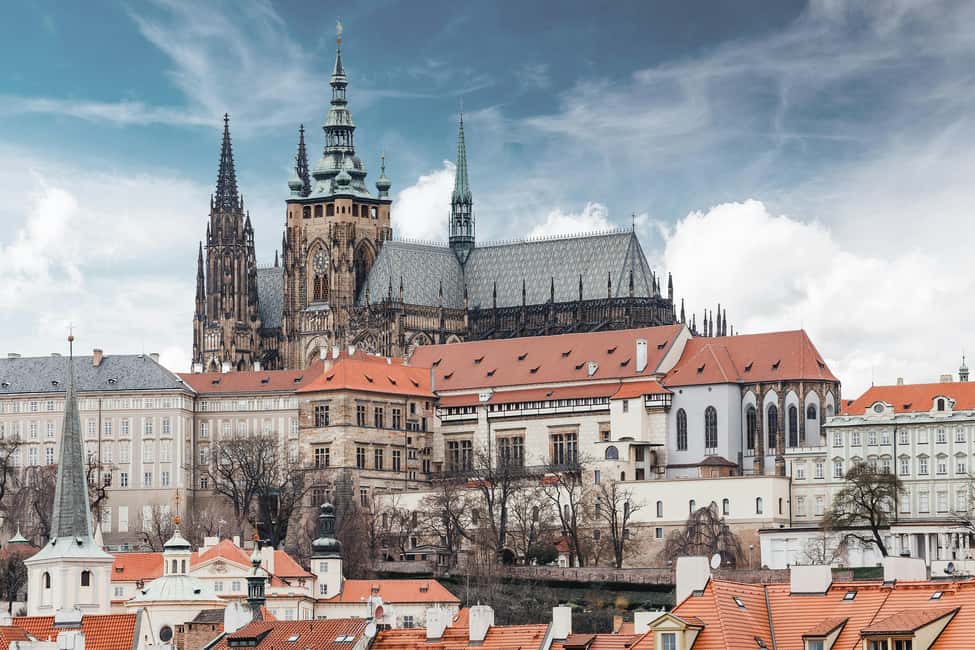
- Mr. Robert Procházka brings the story together as a historian, not just a spotter of facts
- St. Vitus Cathedral’s royal role is spelled out through coronations, burials, and the Wenceslas route
- Old Royal Palace details like the crown-jewel replica and the Third Defenestration tie art to history
- St. George’s Basilica focuses on St. Ludmila, with a tomb that anchors the narrative
- Golden Lane becomes a mini-time machine: Rudolf II’s alchemists and even Kafka
Finding the Pražský hrad Stop (and Getting Started Right)
Start at the streetcar stop Pražský hrad. Look for streetcar lines 22 or 23, direction Bílá hora. The guide will be waiting right at that stop, which makes the first five minutes stress-free.
This kind of meeting point matters at Prague Castle. The whole area is large, full of turns, and easy to wander in the wrong direction. Starting at the Pražský hrad stop keeps you anchored before you enter the castle grounds and start moving between major buildings.
You can also read our reviews of more tours and experiences in Prague.

How the 3-Hour Route Flows Through St. Vitus to Golden Lane
This tour runs about 3 hours and is guided live in German. You cover both interiors and castle grounds, then finish in Golden Lane. The experience is designed so you do not feel like you’re randomly hopping between stops. Instead, each location builds on the last.
You’ll move through:
- St. Vitus Cathedral
- The old Royal Palace
- St. George’s Basilica
- Golden Lane
And because you’re inside a major complex, the order really helps. You begin with the coronation/burial heart of Bohemia, then shift to royal power and political chaos in the palace, then slow down with the basilica’s memorial focus, and finally end with Golden Lane’s human-scale stories.
Price and Value: The Tour Fee Plus Entrance Tickets
The tour price is listed as $41 per person, and the historian guidance is included. But the main entrances are not included in that fee.
You should plan on paying separate tickets on arrival:
- Adults: 18 EUR
- Seniors (from 65 years): 14 EUR
Here’s the practical value piece: the guide accompanies you to the ticket office and handles the ticket purchase at a counter exclusively for guides, which helps you avoid long waiting. You can pay with a card at the office, or hand EUR directly to Mr. Procházka so he can obtain the tickets for you.
So the decision comes down to this: you’re paying for a focused historian-led route through some of Prague Castle’s most important interiors. If you would rather explore solo with a guidebook, you might skip the tour. But if you want context fast—why specific chapels, rooms, and tombs matter—this format is good value for the time.
St. Vitus Cathedral: Coronations, Wenceslas, and the Spiral Stair
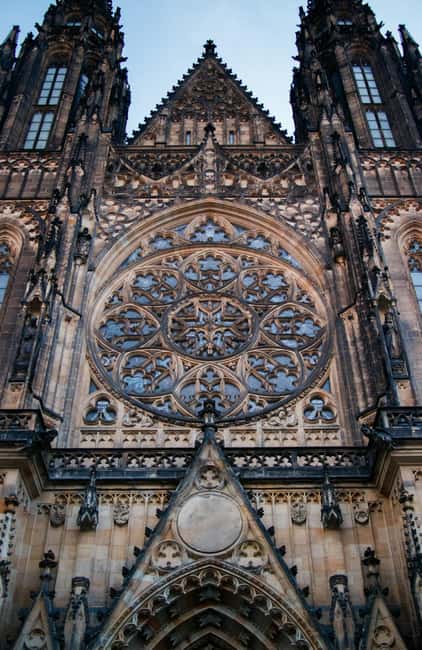
St. Vitus Cathedral is the anchor stop on this route. It’s the burial and coronation site of Bohemian kings, so your historian doesn’t treat it like just another church. It’s a power-center made in stone.
What you learn here is specific and grounded:
- The oldest predecessor building was a Romanesque rotunda, founded around 925
- Important Czech patron saints are buried here, including St. Wenceslas and St. Adalbert
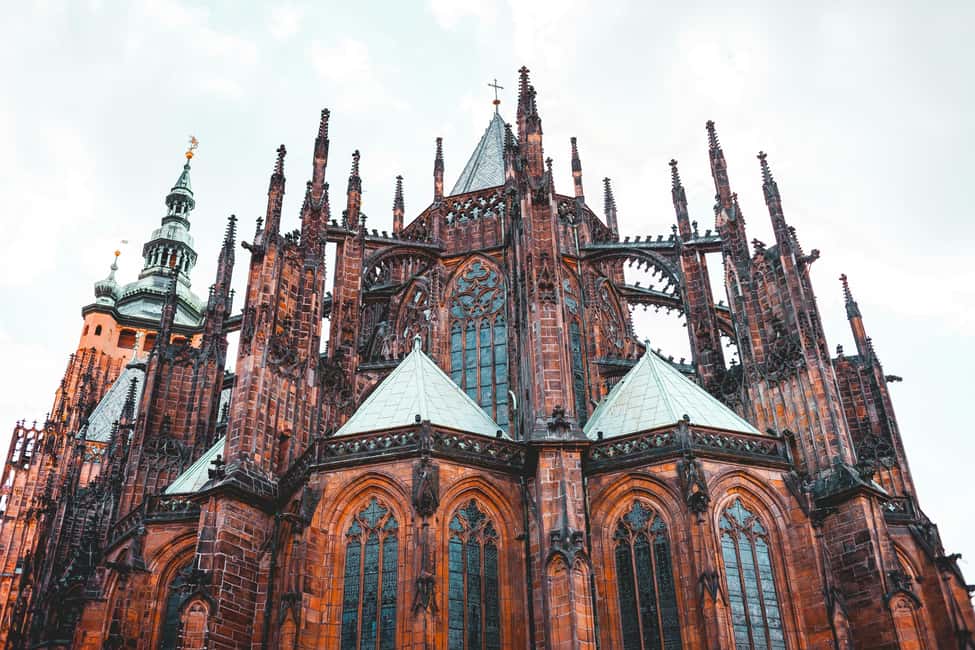
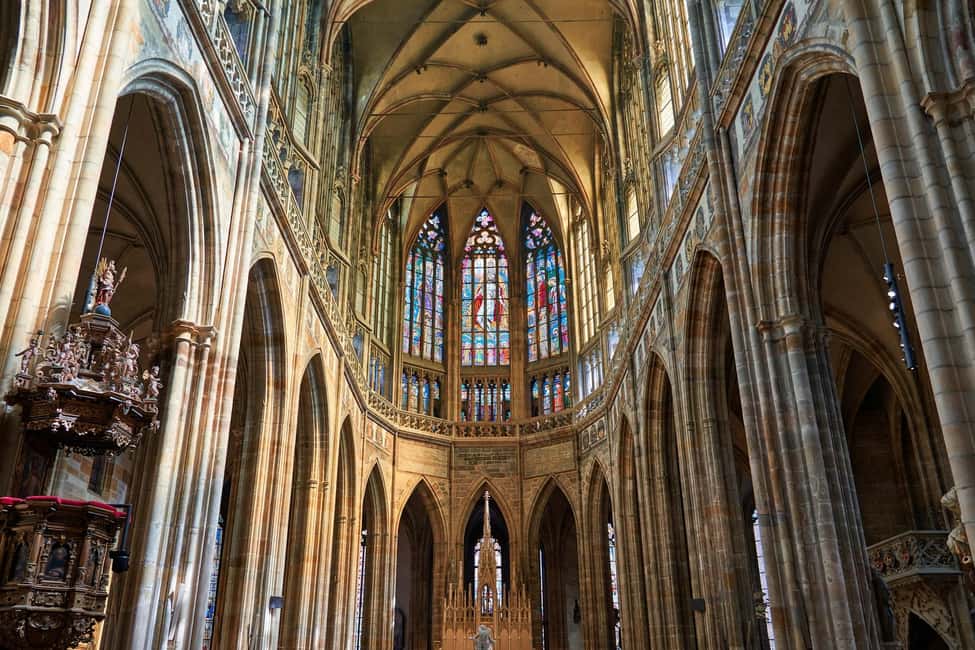
- The cathedral is a masterpiece of 14th-century Gothic architecture
One highlight is the Wenceslas Chapel. It’s decorated with semi-precious stones, and it connects directly to the story of St. Wenceslas. His remains rest in a Gothic shrine. Then, there’s a spiral staircase that leads from the Wenceslas Chapel up to the crown chamber, where the coronation regalia are kept.
This is the kind of detail that changes what you see. Without context, you can walk through huge Gothic spaces and still feel like you’re only admiring the style. With the guide’s framing, you understand the cathedral as a planned route: devotion down here, legitimacy and ceremony up there.
Practical note: cathedral interiors can be dim, so wear shoes you trust and take your time. The tour includes interiors, but you should still be ready for slower moments inside.
The Old Royal Palace: Crown-Jewel Replica and Political Shockwaves
Next comes the old Royal Palace, where royal symbolism and political drama share the same walls.
A few things make this stop feel more real than a museum display:
- You can see a replica of the Bohemian crown jewels
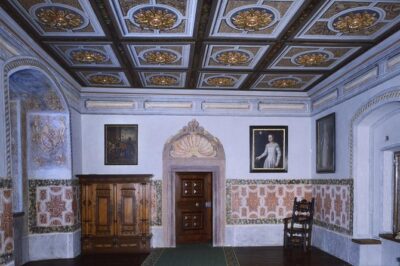
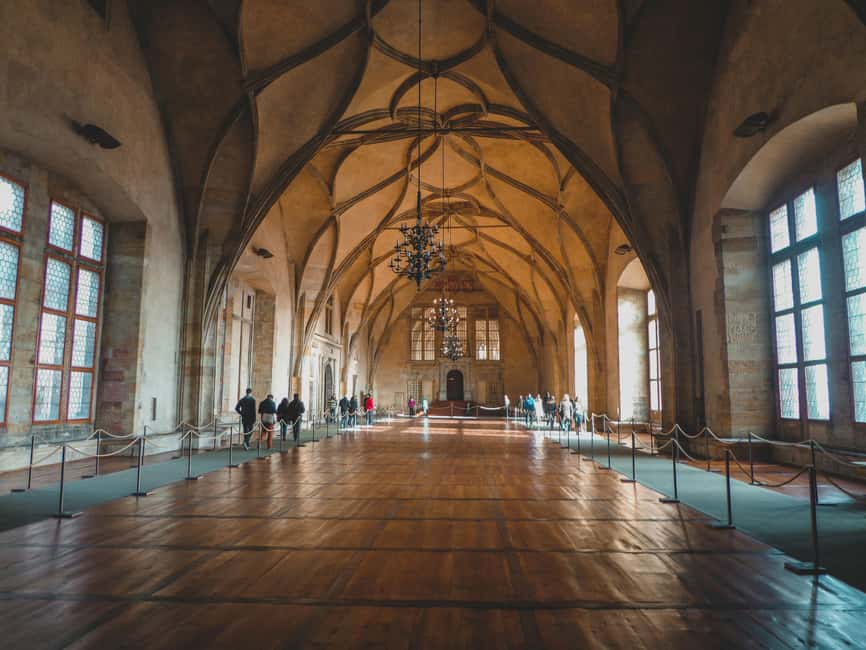
- You visit the largest late Gothic throne room in Central Europe
- You also see the site of the Third Defenestration of Prague, tied to the State Chancellery, which helped trigger the Thirty Years’ War
That last point matters. Defenestrations—people being thrown out of windows—sound like a quirky footnote until you realize they were part of serious political conflict. By pointing you to the exact site and linking it to the war, the palace stops being just decorative and becomes a map of events.
The throne room deserves attention even if you are not a “thrones and politics” person. A large space like this tends to amplify power. The guide helps you read that scale.


St. George’s Basilica: St. Ludmila’s Tomb and a Family Power Struggle
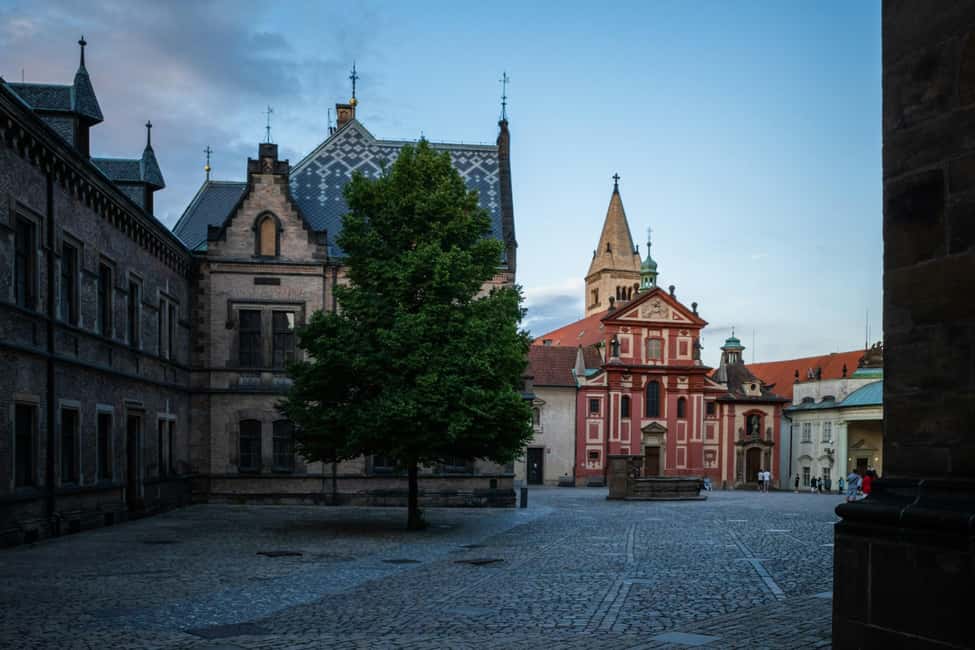
Then you shift to St. George’s Basilica. This is where the story turns from state-level conflict to family ties and spiritual memory.
The big draw is the tomb of St. Ludmila, who was the grandmother of St. Wenceslas. She was strangled to death by Viking warriors, acting on behalf of her daughter-in-law. It’s a harsh, dramatic detail, and it gives the basilica a weight that you won’t get from walking past it quickly.
St. George’s Basilica dates back to the 10th century, so you’re standing in a building anchored in the early layers of Bohemian religious life. Even if you are not fluent in the language, you can usually follow the emotional through-line: saints are not just names here. Their stories are tied to real stakes and real conflict.
Golden Lane: Rudolf II’s Alchemists, Kafka, and End-of-Tour Views
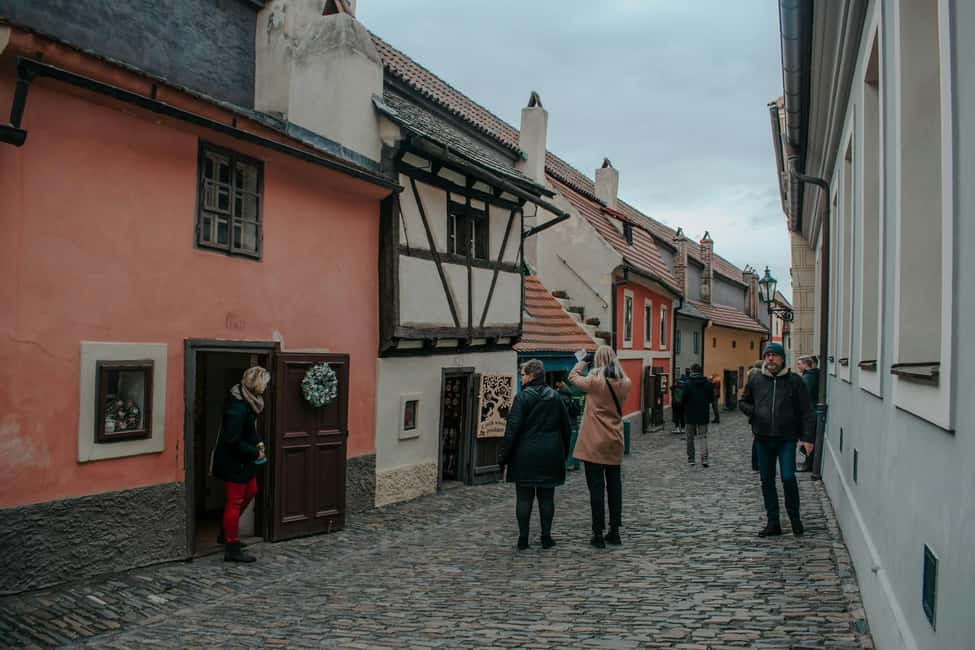
Your route ends in Golden Lane, and it’s a strong finish.
Golden Lane is a throwback to the 16th century, when Emperor Rudolf II’s alchemists were trying to chase an elixir of life. Their aim was dramatic: produce gold from lead. That mix of obsession and science makes the narrow lane feel instantly human.
Then there’s the literary link. Franz Kafka also lived in one of the little houses on Golden Lane. That detail is useful because it helps you stop thinking of the lane as purely “historical reenactment.” It was lived in.
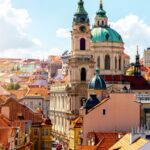
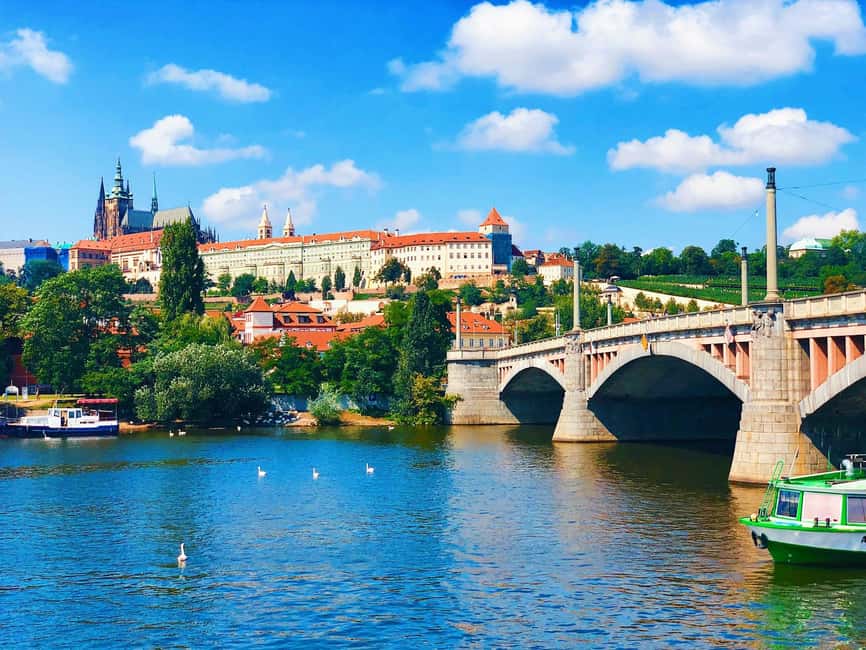
And don’t miss how the tour frames the wider castle grounds. The castle complex is listed in the Guinness Book as the largest enclosed castle grounds in the world. Even if you don’t memorize that trivia, it explains the scale—and why the views of Prague can feel so dramatic at the end.
If you want a practical tip: when you reach Golden Lane, slow down. This is the part where the stories become smaller, more personal, and you’ll enjoy it more if you let it breathe.
Architecture Across Eras: Gothic, Renaissance, and Baroque in One Complex
One reason this tour feels efficient is that you see architecture spanning multiple periods. The castle complex carries Gothic, Renaissance, and Baroque influences, even as each building has its own identity.
That matters because it stops you from treating Prague Castle like one uniform monument. Instead, you learn to spot how time left layers:
- Gothic power and ceremony in the cathedral
- Royal authority in the throne room and palace spaces
- Early religious roots at the basilica
- Daily-scale storytelling in Golden Lane
A historian-guided route is useful here because style alone can blur together. With Mr. Procházka’s narration, the buildings feel like chapters, not random landmarks.
Who This Tour Suits Best (and Who Should Rethink It)
This tour works best if you like your sightseeing with context. It’s ideal for:
- First-timers at Prague Castle who want the major interiors covered in 3 hours
- Visitors who enjoy political history tied to real places, like the Third Defenestration
- People who want a structured route instead of wandering across a huge site
It may not be the best fit if:
- You want the experience in English. The tour is German only
- You’re traveling with children under 10, since it’s listed as not suitable
Should You Book This Prague Castle Tour?
If you care about understanding what you’re seeing—especially how St. Vitus Cathedral, the Royal Palace, and Golden Lane connect to Bohemian power—this tour is an easy yes. The guidance from Mr. Robert Procházka adds the kind of detail that makes the visit feel earned, not just photographed.
Book it if you like structured time in a massive complex and you want help handling tickets smoothly. Skip it if you only want casual exterior wandering, or if German language narration would be a barrier for you. For the right audience, this is a high-value way to get the most important castle stories without burning a half day getting lost.
FAQ
Where is the meeting point?
Meet directly at the streetcar stop called Pražský hrad (Prague Castle), using streetcar lines 22 or 23 toward Bílá hora.
How long is the guided tour?
The tour lasts about 3 hours.
What language is the tour?
The live guided tour is in German.
Which sites does the tour include?
You visit St. Vitus Cathedral, the old Royal Palace, St. George’s Basilica, and Golden Lane.
Are entrance tickets included in the price?
No. Entrance tickets for St. Vitus Cathedral, the Old Royal Palace, St. George’s Basilica, and Golden Lane are not included. Adults pay 18 EUR and seniors (from 65) pay 14 EUR.
Will the guide help with entrance tickets?
Yes. The guide accompanies you to the castle ticket office. You can pay with a payment card there, or hand EUR to the guide, who buys the tickets together with you at a counter exclusively for guides.
Is this tour suitable for children?
It is not suitable for children under 10 years old.
What if I need to cancel?
You can cancel up to 24 hours in advance for a full refund.