REVIEW · PRAGUE
Prague: Jewish Quarter Half-Day Private Walking Tour
Book on GetYourGuide →Operated by Prague Private Tour Guide Ljuba Poleva · Bookable on GetYourGuide
Prague’s Jewish Quarter tells stories in every stone. I especially liked the way a Prague Jewish community licensed guide keeps the meaning of each site clear, and I loved how the route focuses on the Old Jewish Cemetery, including the layered graves and the Rabbi Loew golem legend. It is history you can walk through, not just read on a sign.
One thing to plan for: synagogue and Jewish Museum entrance fees are not included (about 350–600 CZK), so your final spend will be a bit higher than the headline $42.
In This Review
- Key highlights you’ll care about
- Where the tour starts: the Kafka statue and a smooth entry to the Quarter
- Spanish Synagogue first: orientation, atmosphere, and why this stop matters
- Pinkas Synagogue: the Holocaust memorial museum and the power of names
- Old-New Synagogue: the 13th-century anchor of European Jewish life
- Klausen Synagogue: traditions and artifacts with clear context
- Old Jewish Cemetery: layered graves, Rabbi Loew, and the weight of place
- The Judaica collection angle: what you’re really paying for with a guide
- Price and time: whether $42 feels fair for 3 hours
- Who should book this Prague Jewish Quarter tour
- Quick practical tips before you go
- Should you book the Prague Jewish Quarter half-day private tour?
- FAQ
- How long is the Prague Jewish Quarter half-day private walking tour?
- Where do I meet the guide?
- What synagogues and sites are included on the walk?
- Are synagogue and Jewish Museum entrance fees included?
- What languages are the live guides available in?
- What should I bring?
Key highlights you’ll care about
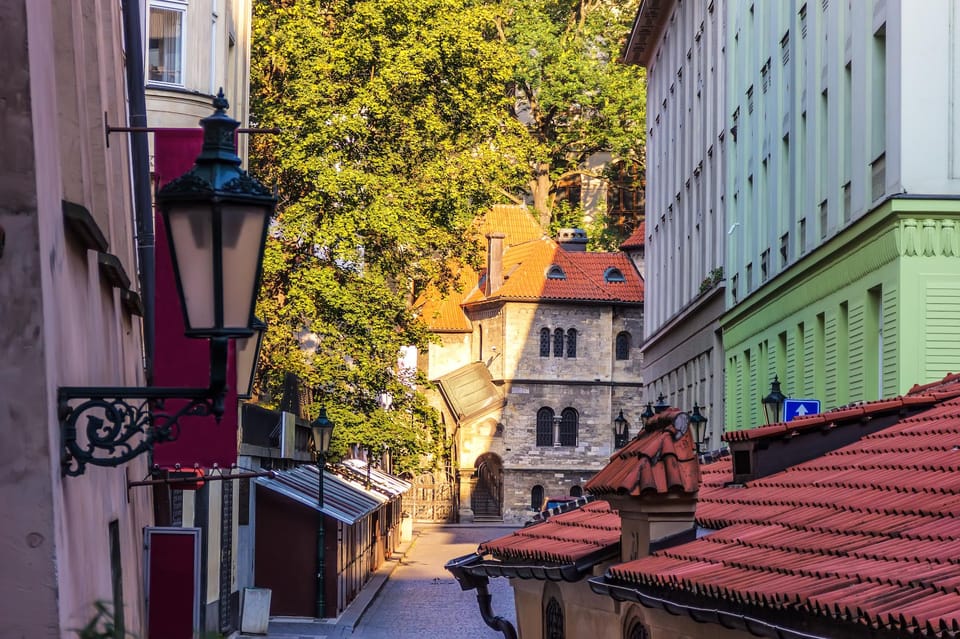
- Community-guide perspective: You’re guided by a licensed person and a member of Prague’s Jewish community, not just a generic narrator.
- Multiple synagogues, each with its own theme: Spanish, Pinkas, Old-New, and Klausen all get their own stop-and-explain time.
- Holocaust memory at Pinkas Synagogue: The Pinkas Synagogue is now a museum dedicated to Czech victims of the Holocaust.
- Old Jewish Cemetery details that stick: Graves are described as up to 12 layers deep, plus the Rabbi Loew golem legend.
- Judaica focus: You get context for the largest collection of Judaica in the world, so you know what you’re looking at.
- Tight half-day timing: About 3 hours total with around 30 minutes per major stop.
Where the tour starts: the Kafka statue and a smooth entry to the Quarter
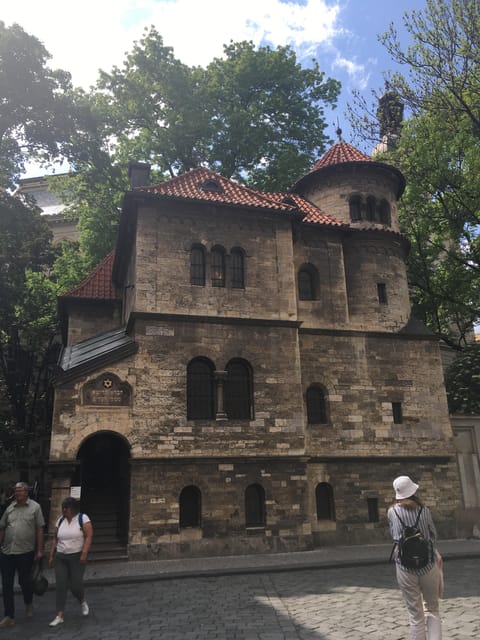
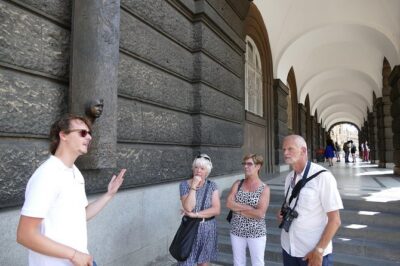
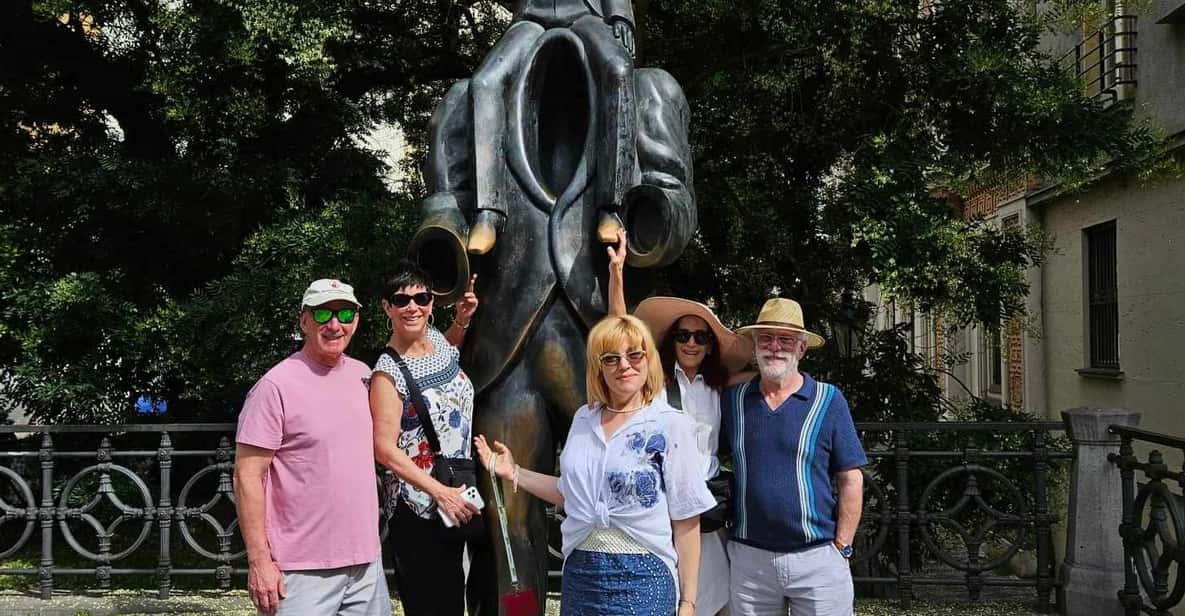
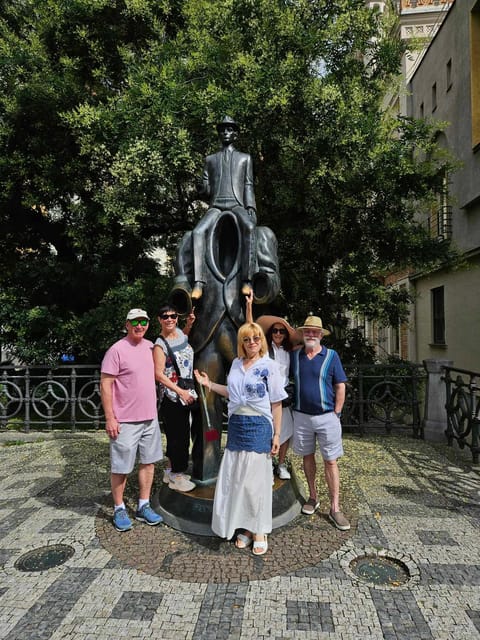
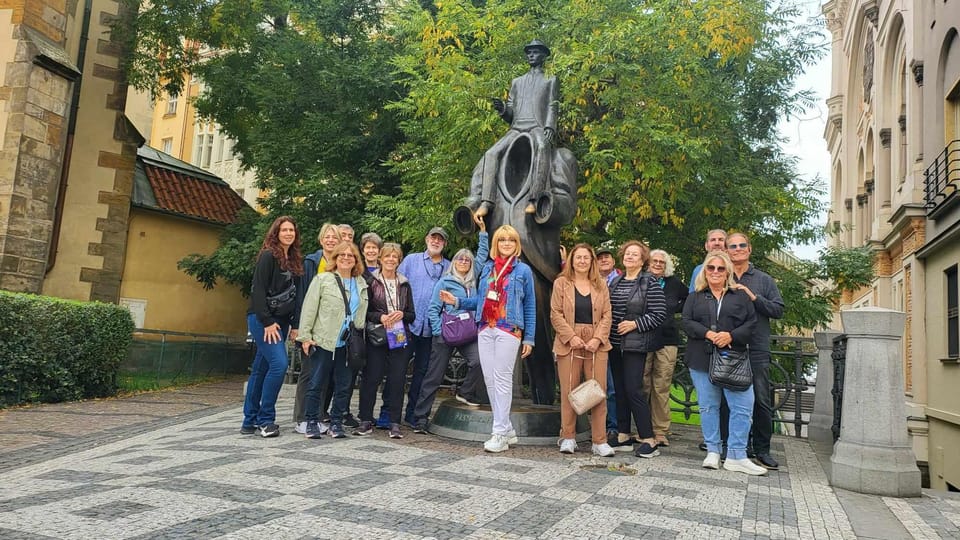
The tour meets under the statue of Franz Kafka beside the Spanish Synagogue on Vězeňská 1, Prague 1. That matters more than it sounds. When you start in the right spot, you spend less time hunting and more time actually absorbing the neighborhood.
The walk is structured around a sequence of Jewish Quarter landmarks. You’ll find this helps your brain. Each stop becomes a chapter, and the guide can connect what you just saw to what you’ll see next. If you like practical travel—clear pacing, good explanations, and not getting lost—this format usually works well.
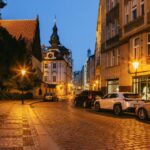
Also, you’ll want comfortable shoes. The area is cobbled, and you’re on your feet for roughly three hours. Bring what you can walk in for a while, not just for short sightseeing pops.
You can also read our reviews of more walking tours in Prague

Spanish Synagogue first: orientation, atmosphere, and why this stop matters
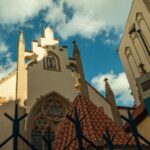
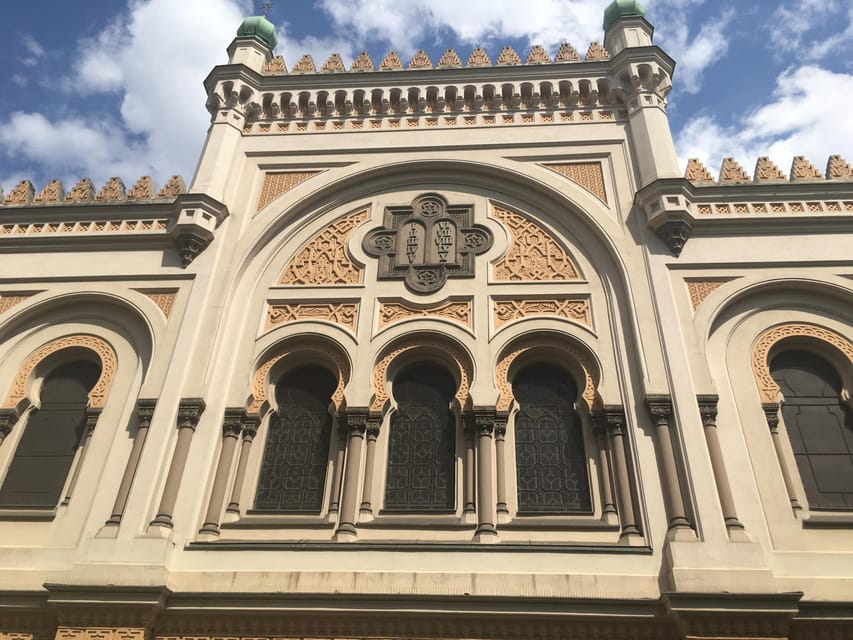
Your first guided block is the Spanish Synagogue for about 30 minutes. This is a smart opener because it sets the stage: you start with a major synagogue and you get the vocabulary for what follows.
Spanish Synagogue also makes the meeting point easy. You’re standing right by it, then you go in, instead of spending time matching directions later.
What I like about starting here is the way it frames the neighborhood as a living place of memory and ritual, not a theme park of old stones. You’ll hear commentary that ties into the larger Jewish Museum story too—so when the tour eventually points toward Judaica collections, you understand why the artifacts matter.
If you want a classic “first impressions” moment in Prague’s Jewish Quarter, this is it. You walk in, you get the guide’s context, and then you’re ready to notice details on your own as you move.
Pinkas Synagogue: the Holocaust memorial museum and the power of names
Next up is the Pinkas Synagogue, again around 30 minutes. This stop is emotionally weighty because the space is now a museum dedicated to Czech victims of the Holocaust.
Even if you’ve read about the Holocaust before, a guided visit changes how it lands. The guide’s job here is not to overwhelm you with dates. It’s to help you understand what the memorial setting is doing—how a synagogue building can be both a sacred space and a place of remembrance.
A practical tip: don’t treat Pinkas like a quick photo stop. Give it time. If your brain tends to rush through museums, slow down here. You’ll get more out of it when you let the guide’s commentary guide your pace.
I also appreciate that this tour doesn’t skip the hard parts. If you care about history with real human meaning, Pinkas is a key reason to book this itinerary.
Old-New Synagogue: the 13th-century anchor of European Jewish life
The Old-New Synagogue is the next 30-minute stop. The tour frames it as the oldest synagogue in Europe, dating back to the 13th century. Whether you’re a history nerd or just curious, you’ll feel the weight of that timeline in the explanations.
This is the kind of place where the guide’s commentary helps you see the structure as more than an old building. You’ll get meaning attached to what you’re noticing. That turns the stop from sightseeing into understanding.
Why this matters for you: by the time you reach the Old-New, you’ve already heard about the neighborhood’s broader identity. So the Old-New becomes the anchor point. It’s where your mental map tightens, and the Jewish Quarter stops feeling like separate monuments and starts feeling like one connected community story.
If you’re short on time in Prague and want the most historically grounded stop early, the route’s order is a strong advantage.
Klausen Synagogue: traditions and artifacts with clear context
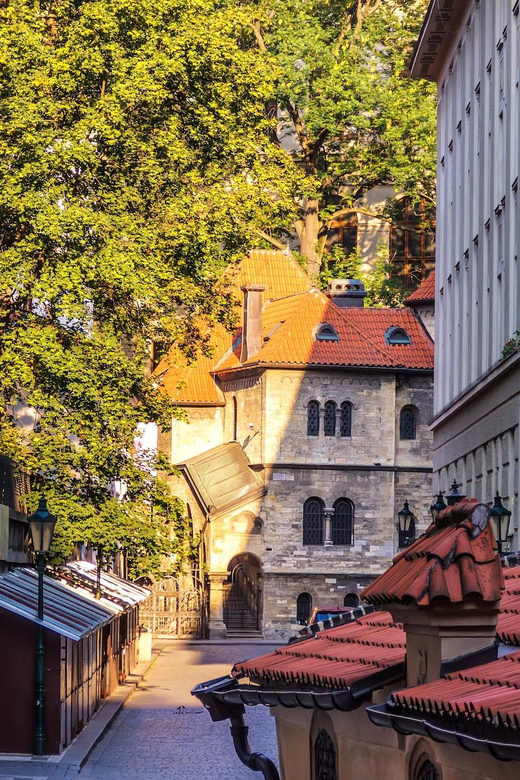
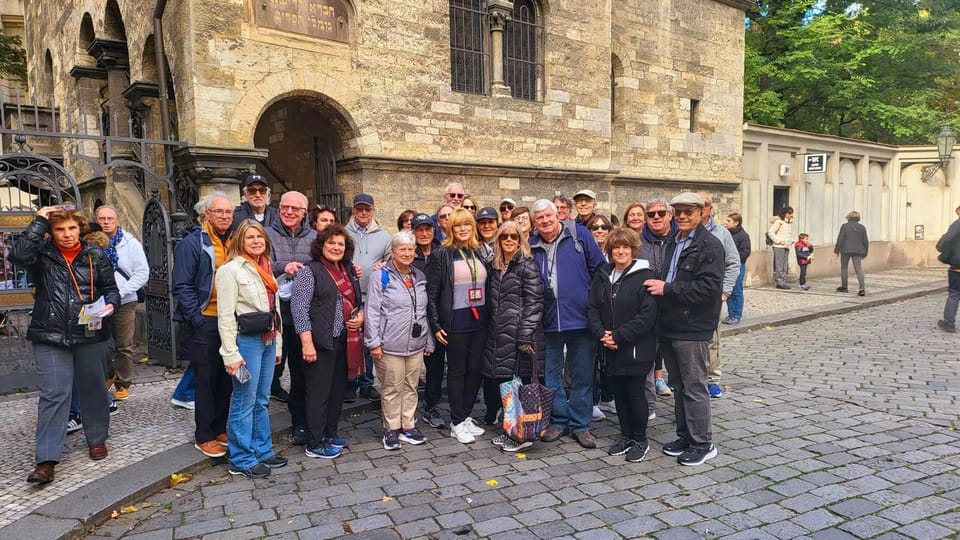
The Klausen Synagogue rounds out the synagogue set with another guided 30 minutes. Here, the tour highlights an exhibition of Jewish traditions and artifacts.
This is a good contrast to the memorial-focused Pinkas stop. Klausen helps you balance memory with daily-life context—how traditions show up in objects, practices, and community identity.
I like that the guide doesn’t just point out items. You should expect explanation that connects what you’re seeing to Jewish cultural life. That’s especially valuable if you are not already an expert. You’re not just collecting facts; you’re learning how to interpret what Judaica represents.
If you’re the type of traveler who wants a reason behind the museum objects—what they were for, what they symbolize—Klausen is where that payoff starts.
You can also read our reviews of more private tours in Prague


Old Jewish Cemetery: layered graves, Rabbi Loew, and the weight of place
Then you move to the Old Jewish Cemetery with guided time of about 30 minutes. This stop is where the tour gets haunting in a memorable way—in the best sense.
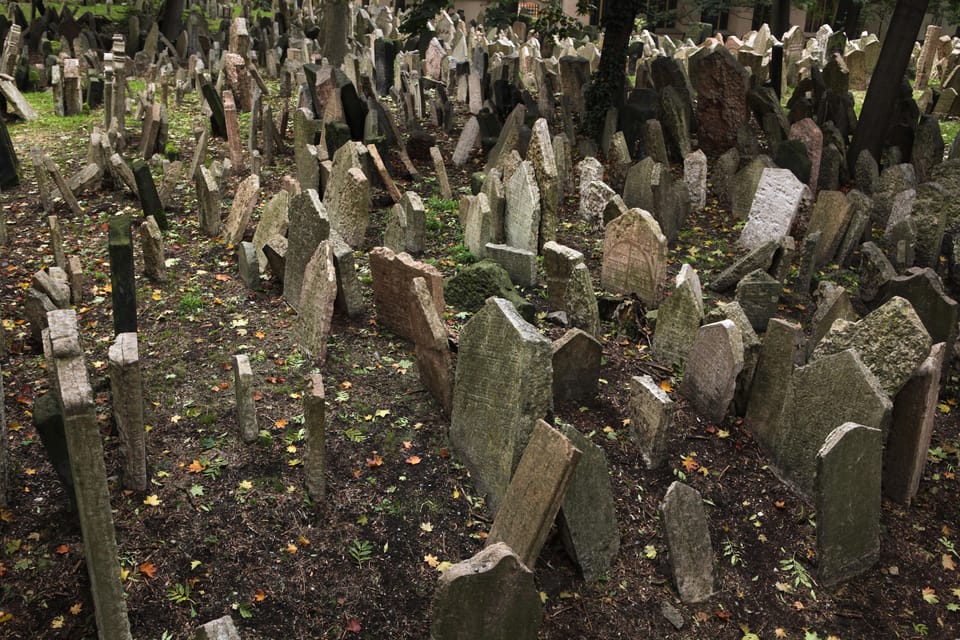
You’ll visit the Chevrah Kaddisha building and then get to the cemetery architecture and layout. A key detail the guide covers: graves are up to 12 layers deep. That is not just an odd fact. It changes how you understand the scale of time, loss, and how a community manages memory when space runs out.
Another memorable thread is the mention of Rabbi Loew’s resting place. The guide ties this to the famous golem legend. Even if you’ve only heard the story through pop culture, being in the actual cemetery setting tends to make legends feel less like random folklore and more like a way communities talk about fear, protection, and faith.
For me, this is the part that makes the tour feel worth it even after the synagogues fade from memory. You leave with a stronger sense of how geography carries meaning.
Practical note: you’ll be outside for at least part of this segment, so dress for Prague weather and keep your pace steady on cobbles and uneven ground.
The Judaica collection angle: what you’re really paying for with a guide
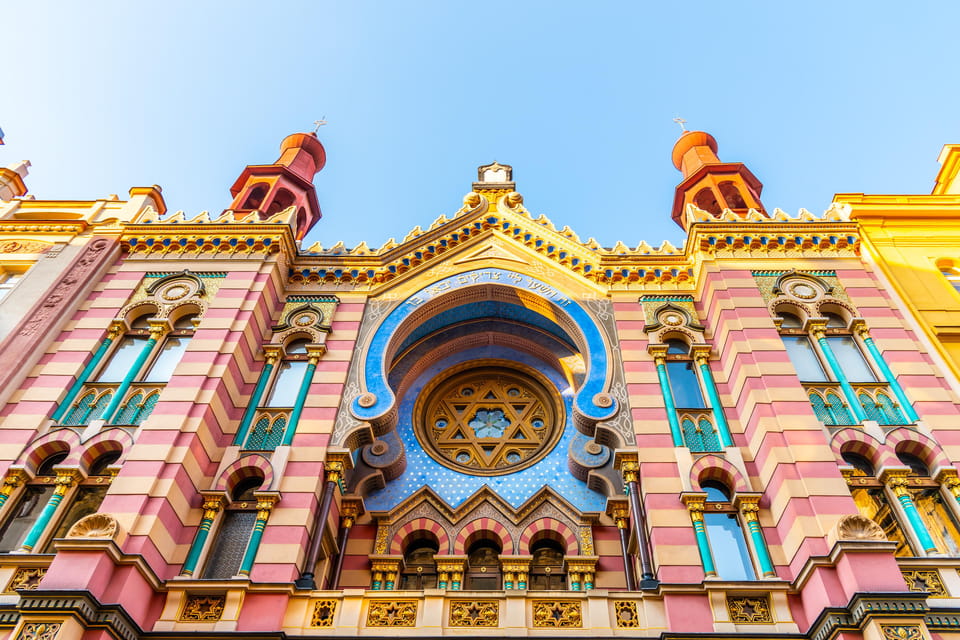
One of the biggest selling points here is the focus on Judaica—specifically, the claim that there is the largest collection of Judaica in the world, and that this Jewish Quarter is the only one the Nazis purposely did not destroy. That framing matters because it explains why the tour bothers to connect buildings with exhibitions.
Here’s the value you get when you have a guide who knows the Jewish Museum material: you don’t just walk into synagogues and read plaques. You get help interpreting what the objects and displays mean in the larger story.
That also explains why the tour is private or small group. A guide can answer real questions—like why a tradition artifact looks a certain way, or how the design of a synagogue relates to a community’s needs. You’re not squeezed into a loud script.
You also hear from guides with distinct personalities. I’ve seen examples of guides like Peter being described as extremely knowledgeable and funny, which is useful when you’re asking questions and want answers without the lecture vibe. Luba is noted for being accommodating and even helping with early shul closures on the last night of Hanukkah, plus sharing personal family context—exactly the kind of human detail that makes a tour feel less distant.
Vita is another example of a guide profile described as lovely with a wealth of historical knowledge and personal experience. That combination tends to work well: you get both factual grounding and the sense that this is part of someone’s lived community.
No guide is identical, but this tour’s structure is built to turn Judaica from objects into stories you can remember.
Price and time: whether $42 feels fair for 3 hours
The tour costs $42 per person for about 3 hours, with guided time of roughly 30 minutes at each main stop. For a Prague private walking tour, that’s not just a random price tag. You’re paying for a licensed local guide from the community and for multiple synagogue and cemetery segments in one route.
The one budget wrinkle: entrance fees to the synagogues and the Jewish Museum are not included, and the range is listed as about 350–600 CZK. So yes, your all-in cost will be higher than $42 once you add entry.
Still, here’s how I think about value: you’re not paying just to walk from place to place. You’re paying to connect meaning across multiple sites and museum exhibitions. If you tried to do this on your own with guidebooks, you’d spend time piecing together context and likely miss the connections the guide makes.
Also, the pace matters. Three hours is short enough to stay energetic, but long enough to actually absorb several major stops. If you’ve got only half a day in Prague and you want the Jewish Quarter route done properly, this timing fits.
One small perk to consider: the provider says they’ll recommend Jewish restaurants for dinner, and when you book, you can enjoy a 10% discount for a special evening concert in the Spanish Synagogue.
Who should book this Prague Jewish Quarter tour
I’d point this tour toward you if:
- You want a guided, structured route through multiple synagogues and the cemetery.
- You care about Holocaust memory and need a guide to help you understand the purpose of memorial spaces.
- You like asking questions and want answers from a guide tied to the Prague Jewish community.
- You’re interested in Judaica and want context, not just objects.
I’d think twice if:
- You hate walking on cobblestones for a few hours.
- You’re only looking for fast photo stops and minimal reading or listening.
- You don’t want to budget for entrance fees on top of the tour price.
The best match is a traveler who wants authenticity, respectful explanation, and a coherent story across the Quarter.
Quick practical tips before you go
A few small choices make the biggest difference:
- Wear comfortable shoes for cobblestones and outdoor cemetery time.
- Bring patience for security and entry flow at historical sites since those places often have procedures.
- Plan your schedule so you’re not rushing right afterward. The cemetery and memorial stops can slow your mind down—in a good way.
- If you’re visiting during a holiday period, keep an open mind. The guide’s real-world experience matters; Luba’s help with early shul closures on the last night of Hanukkah is a good example of how a guide can handle timing realities.
If you like travel that feels personal and well-timed, this one is built for you.
Should you book the Prague Jewish Quarter half-day private tour?
Yes—if your goal is meaning, not just sights. This route strings together the synagogues in a way that helps you understand what each one contributes, then lands at the Old Jewish Cemetery where the setting becomes unforgettable. The extra value is the guide’s connection to Prague’s Jewish community and the Judaica context, which helps you interpret exhibitions instead of just skimming them.
If your budget is tight, account for the additional synagogue and Jewish Museum entrance fees (about 350–600 CZK). If you’re comfortable with that, $42 for three hours of private-style guidance is a fair trade—especially in a city where self-guided routes can turn into a patchwork of plaques and guesswork.
Bottom line: book it if you want a focused half-day in the Jewish Quarter with a guide who knows how to explain both sacred spaces and difficult history in a human way.
FAQ
How long is the Prague Jewish Quarter half-day private walking tour?
The tour lasts about 3 hours.
Where do I meet the guide?
You meet underneath the statue of Franz Kafka beside the Spanish Synagogue at Vězeňská 1, Prague 1.
What synagogues and sites are included on the walk?
You’ll visit the Spanish Synagogue, Pinkas Synagogue, Old-New Synagogue, Klausen Synagogue, and the Old Jewish Cemetery, including the Chevrah Kaddisha building.
Are synagogue and Jewish Museum entrance fees included?
No. Entrance fees are not included and are listed as approximately 350–600 CZK.
What languages are the live guides available in?
The live guide options include Czech, English, German, and Russian.
What should I bring?
Wear comfortable shoes, since the route includes cobblestone streets and cemetery walking.