Prague’s Jewish Quarter hits hard. This guided 3-hour walk ties Wenceslas Square to the Old Jewish Cemetery and several synagogues, with admissions handled.
I love the up-close cemetery visit and how the route keeps you moving with clear stop times. I also love stepping inside the Jewish Museum in Prague complex instead of only looking from the street.
One thing to think about: the synagogues involve lots of stairs, and some viewpoints are only reachable on upper levels.
In This Review
- Key things to know before you go
- Entering Prague’s Jewish Quarter: what this tour is really for
- From Wenceslas Square to Jewish Town: the walk that sets context
- Old Jewish Cemetery: the 15th-century stop you won’t forget
- Jewish Museum in Prague: why it matters to do this with a guide
- Spanish Synagogue inside the museum complex
- Pinkas Synagogue: names, memory, and a moving wall
- Klausen Synagogue: a quieter but important chapter
- Maisel (and Meisel) Synagogue: finishing with a strong sense of place
- How the tour logistics actually work (pickup, timing, and your ticket)
- Price and value: is $97.32 a good deal?
- The big practical consideration: stairs and access
- Listening tips: groups, noise, and staying oriented
- Who should book this tour
- Should you book this Prague Jewish Quarter tour?
- FAQ
- How long is the Prague Jewish Quarter tour?
- What’s the price per person?
- Where do I meet the tour, and where does it end?
- Is pickup from my hotel included?
- What does the tour include for admissions?
- Which synagogues do you visit?
- Is the tour offered in English?
- How big is the group?
- Is the tour okay if stairs are hard for me?
- What happens if the weather is bad?
- Can I cancel for a refund?
Key things to know before you go
- Admissions included for the cemetery and each synagogue stop, so you spend your time inside—not buying tickets.
- Multiple synagogue interiors: Spanish, Pinkas, Klausen, and Maisel/Meisel, plus time in the Jewish Museum in Prague complex.
- A guided walking route that connects the neighborhood story to what you see on the ground.
- Old Jewish Cemetery visit is short but powerful, with a focus on a site dating to the 15th century.
- Stairs are real: narrow, high flights can limit what you can access if mobility is an issue.
- Group size is capped (up to 100 people), but you may still experience a small, hearable pace depending on the day.
Entering Prague’s Jewish Quarter: what this tour is really for
This tour is built for people who want more than a quick photo stop in the Jewish Quarter. You’re walking from the center of Prague, then switching into a slower, ticketed sequence of places where history is literally on the walls and in the layout of the rooms. It works best when you’re comfortable being a bit quiet and paying attention.
At its core, the experience is about context: why these buildings are here, how the museum and synagogues fit together, and what the cemetery can teach you about the Jewish community’s presence in Prague over centuries. You get guided interpretation while you move through the neighborhood, which is exactly what’s hard to piece together alone.
It’s also not a loose “wandering tour.” You have a timed structure and admissions included for each of the key stops. That matters because some of these interiors have limited time windows and busy visitor flow, and you don’t want to lose half your day hunting for entrances or buying separate tickets.
You can also read our reviews of more tours and experiences in Prague.


From Wenceslas Square to Jewish Town: the walk that sets context
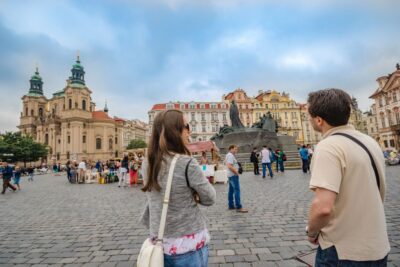
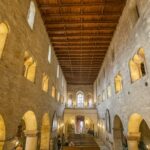
You start at Na Florenci 1413/33 at 10:30 am. The itinerary begins with a walk from Wenceslas Square toward the Jewish Quarter, about 30 minutes, and that first leg is ticket-free. This is more than just transit. It helps you get your bearings fast and makes the neighborhood feel like one connected story instead of a set of disconnected sights.
If you’ve visited Prague before, you’ll recognize how different the vibe becomes once you reach the Jewish Town area. The walk gives you a bridge between the city’s grand avenues and the more enclosed, historical spaces ahead. It’s a good moment to settle in, because once you reach the first museum/cemetery stop, the pace turns more reflective.
Practical tip: if your guide is talking as you walk, give them space. This route can involve narrow side streets and crowds near major landmarks. Earshot makes the difference between a “saw the places” day and a “learned something real” day.
Old Jewish Cemetery: the 15th-century stop you won’t forget
The Old Jewish Cemetery is where this tour turns emotional. You spend about 15 minutes there, with admission included. The site dates back to the 15th century, and the format is compact—there’s a lot of meaning packed into a small footprint.
What makes this stop stand out is how it changes your understanding of time. Buildings can be rebuilt; streets can be renamed. A cemetery like this is different. You’re looking at a physical record of lives and continuity, and the guide’s job is to help you read what you’re seeing without making it feel like a homework assignment.
Short visit length can be a plus or a minus. It’s powerful, but you won’t get unlimited time for slow wandering. If you tend to stand and stare for long periods, plan to focus on what your guide points out first—then circle back mentally even after you move on.
Also, some days can be crowded. If you want photos, watch for “still spots” where you’re not blocking others. Think quick, not long lingering—because the flow through memorial spaces can get tight.
Jewish Museum in Prague: why it matters to do this with a guide
After the cemetery, you head into the Jewish Museum in Prague complex for about 30 minutes, and admission is included. This is where the day shifts from open-air context to the curated, room-by-room presentation of Jewish life in Prague.
You don’t just see one synagogue interior. You get time in the museum space that connects what each synagogue is showing you—so the stops feel like chapters in one story. For many people, this is the real value of the tour: the guide helps you make sense of the labels and symbols as you walk.
This also matters for visitors who are not Jewish. Guides on this route have a knack for explaining exhibits in a way that doesn’t assume prior knowledge. The result is that you’re not lost once you step inside.
If you’re the kind of person who enjoys asking questions, this part is a good time to do it. You’re in a more sheltered space where listening is easier than on a windy street walk. And the museum setting helps you slow down and focus.
Spanish Synagogue inside the museum complex
You’ll then return into synagogue mode with time at the Spanish Synagogue (listed as a synagogue stop within the Jewish Museum in Prague complex) for about 25 minutes, with admission included. This stop is a key checkpoint because it reminds you that synagogues aren’t just religious spaces—they’re also architectural and cultural statements.
Expect a “look, then learn” rhythm. Your guide should point out what makes the room significant and how it reflects the community that used it. In this kind of setting, small details can carry big meaning, but they’re easy to miss if you’re only scanning for photos.
The time here is enough to see the highlights without rushing you out the door. Still, plan to keep your attention moving. Synagogues can be quieter than streets, but they’re often busier than you expect once tour groups pile in.



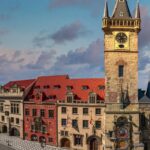

Pinkas Synagogue: names, memory, and a moving wall
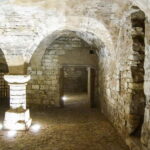
The Pinkas Synagogue stop is another big emotional moment, about 25 minutes with admission included. This is the place many people remember most because it centers on commemoration—especially the presence of names connected to World War II-era persecution.
If you’re sensitive to memorial spaces, bring that awareness with you. This isn’t a casual sightseeing stop; it’s meant to be read. The guide’s role becomes crucial here, turning a wall of names into something you can understand.
You may notice that the experience hits hardest when you slow down for even a minute. Don’t just skim. Pause, take in the layout, and listen to what your guide says about why names were preserved and displayed.
One small practical note: because the focus is on the wall and text, you’ll want to avoid blocking people when you stand to photograph. Quick photos are fine; prolonged shooting can get frustrating for the line behind you.
Klausen Synagogue: a quieter but important chapter
Next is the Klausen Synagogue, about 25 minutes with admission included. This stop often feels like a “breather” compared with the Pinkas Synagogue, but it’s still an important part of the overall museum narrative.
Here, the value is in comparison. Seeing multiple synagogues back-to-back helps you understand that Prague’s Jewish community wasn’t one single uniform experience. Different spaces served different needs, traditions, and community life. A good guide ties those differences together so you don’t treat each synagogue like it’s the same building in a new coat of paint.
If you’re the kind of person who likes to look for how architecture supports function, this is where you’ll find satisfaction. Even if you’re not a building nerd, your guide’s explanations help you notice what you might otherwise miss.
Maisel (and Meisel) Synagogue: finishing with a strong sense of place
Your final synagogue stop in the sequence is the Maisel Synagogue, about 30 minutes with admission included. This is where the tour often leaves you with a sense of closure—time to absorb the museum synagogues as a whole rather than as isolated stops.
You’re still inside the same overall Jewish Museum in Prague context, but the atmosphere can feel slightly different depending on the room and crowd level. Use your time well. If you’ve been listening closely all day, this stop is a chance to test your understanding—ask yourself what each place contributed to the story.
Some routes list Maisel and Meisel as part of the synagogue set. Either way, the theme stays the same: you’re finishing with another interior space that completes your picture of the neighborhood’s religious and cultural life.
How the tour logistics actually work (pickup, timing, and your ticket)
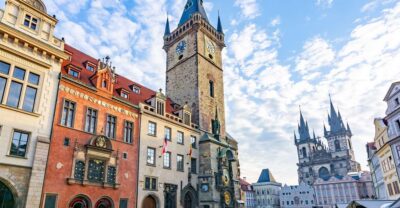
The tour runs about 3 hours. Start time is 10:30 am, and the meeting point is Na Florenci 1413/33. The end point is Old Town Square (Staroměstské nám., 110 00 Praha 1-Staré Město).
Pickup is offered, but read the rules carefully. The time on your voucher shows the tour start time, not your pickup time. Pickup time is sent at least 24 hours before the tour starts via a Viator private message. If you booked less than 24 hours before, free hotel pickup may not apply—so you may need to meet at the listed location.
If you want the smoothest day, do two things:
- Send your hotel name in time for pickup eligibility.
- Watch your messages the day before the tour so you’re not guessing.
You’ll also have a mobile ticket, which is handy in Prague where paper tickets can get lost in daypacks.
Price and value: is $97.32 a good deal?
At around $97.32 per person for an about 3-hour tour, the value depends on what you’d do if you didn’t book. If you were planning to visit the cemetery and multiple synagogue interiors on your own, you’d likely spend extra time coordinating tickets, entrances, and the order of stops—especially once you factor in busy visitor hours.
This tour bundles the time and admissions. You get multiple synagogue interiors plus the cemetery and museum complex without the administrative friction of buying several separate tickets or figuring out which rooms you’re actually allowed to enter. That’s a real time-saver in a place where queues and entry rules can vary.
The best “value” angle here isn’t discounting. It’s efficiency plus interpretation. You’re paying to have someone connect what you see to what it means—so you don’t leave with a stack of photos and a vague feeling.
The big practical consideration: stairs and access
This tour includes synagogue visits, and the interiors come with lots of stairs. One important caution: the synagogues can require climbing narrow, high flights. If you or someone in your group struggles with steps, you might not be able to reach upper levels where some viewing is possible.
This is the kind of tour where “I can see the main room” doesn’t always mean “I can access all exhibits.” If stairs are an issue, ask your guide early and be upfront before you start climbing. In these spaces, it’s better to set expectations quickly than to discover limitations after you’ve already committed to the path.
If you’re traveling with older adults or anyone with mobility challenges, you may want to bring a plan: comfortable shoes, patience, and an alternate viewing approach that still lets you enjoy the cemetery and the parts you can access.
Listening tips: groups, noise, and staying oriented
The route can include crowds, especially near major museum entry points. If your guide is explaining something during transitions, your best move is to keep close enough to hear without crowding other people’s space.
There’s also a common practical reality with Prague tours: language. Some experiences on this route have involved more than one language at a time, which can slow down the flow. You can protect yourself by arriving a few minutes early, standing where the guide can clearly reach your side of the group, and paying attention at the start of each stop. Once you’re oriented, you’ll often catch the key points even when the room gets noisy.
If you want maximum learning per minute, treat each room like a mini lesson: look first, then listen, then take one or two photos at the end when you know what you’re photographing.
Who should book this tour
Book this if:
- You want synagogue interiors and the Old Jewish Cemetery, not just exterior views.
- You like guided context—someone translating symbols, memorial themes, and neighborhood history into plain language.
- You’re okay with a structured pace and a few busy moments.
- You’d rather spend 3 hours doing it right than piece it together over a half-day of planning.
Skip it or consider alternatives if:
- Stairs would likely prevent you from experiencing major parts of the synagogue stops.
- You prefer a completely unstructured walk with no museum pacing.
- You need long silent time in each room; this is more “guided sequence” than “wander at your own tempo.”
Should you book this Prague Jewish Quarter tour?
I think it’s a strong choice when you want admissions included and a coherent story from cemetery to synagogues. The value is in the combination: multiple interiors you can actually enter, plus an organized route from Wenceslas Square, plus a guide who helps you connect what you see to why it matters.
If you’re sensitive to memorial spaces, go in prepared to feel something and to pause. If stairs are a concern, plan for them early—ask questions and make a realistic viewing plan.
For most people, this is one of the best ways to experience Prague’s Jewish Quarter in a few focused hours. You leave with a clearer picture of the neighborhood and a set of memories that stick.
FAQ
How long is the Prague Jewish Quarter tour?
It runs for about 3 hours.
What’s the price per person?
The price is $97.32 per person.
Where do I meet the tour, and where does it end?
You start at Na Florenci 1413/33, Praha 1-Nové Město. The tour ends at Old Town Square (Staroměstské nám., Praha 1-Staré Město).
Is pickup from my hotel included?
Pickup is offered, but free hotel pickup is not available for reservations made less than 24 hours before the tour starts. Your voucher time shows the tour start time, and pickup time is sent at least 24 hours before the tour via Viator private message. If you’re not eligible for pickup, you should be at the meeting point 5 minutes before the tour starts.
What does the tour include for admissions?
Admission is included for the Old Jewish Cemetery, the Jewish Museum in Prague, and the synagogue stops (Spanish, Pinkas, Klausen, and Maisel/Meisel).
Which synagogues do you visit?
You visit the Spanish Synagogue, Pinkas Synagogue, Klausen Synagogue, and Maisel Synagogue (with Maisel/Meisel listed as part of the synagogue set).
Is the tour offered in English?
Yes, it is offered in English.
How big is the group?
The tour has a maximum of 100 people.
Is the tour okay if stairs are hard for me?
The synagogue interiors can require climbing narrow, high stairs. This can affect who can access upper levels, so it’s worth considering if stairs are a problem for you.
What happens if the weather is bad?
The experience requires good weather. If it’s canceled due to poor weather, you’ll be offered a different date or a full refund.
Can I cancel for a refund?
Yes. You can cancel up to 24 hours in advance for a full refund. If you cancel less than 24 hours before the start time, the amount paid isn’t refunded.