REVIEW · PRAGUE
Prague Renaissance and Baroque Gardens Walking Tour
Book on GetYourGuide →Operated by insightcities.com · Bookable on GetYourGuide
Gardens can be politics, in bloom. This Renaissance and Baroque gardens walk connects Prague’s power plays with the plants, statues, and fountains that still shape what you see today.
I especially love how it explains the big idea—Emperor Ferdinand I brought in Italian know-how to remake the Castle Gardens in a Mediterranean style—and then backs it up with specifics you can spot with your own eyes. I also really like the weird details, like the Singing Fountain and the albino peacocks at Wallenstein Garden.
One thing to consider: expect stairs. Some are narrow and/or steep, so if you’re mobility-limited, a private tour is the smarter call.
In This Review
- Key highlights you’ll remember
- Why Prague’s royal gardens feel like real history
- From Bagel Lounge Malostranska to Castle views: how the 3 hours work
- Emperor Ferdinand I and the Italian garden team at Prague Castle
- Belvedere Summer Palace: Queen Anne’s story in stone
- The Singing Fountain: bell bronze that turns water into sound
- Fig House and Orangery: Central Europe’s early fruit and citrus
- Stag moat, Bull Stairs, and the South Gardens’ terrace rhythm
- Wallenstein Garden: albino peacocks and myth-made waterworks
- Vrtba Garden (1720): a quieter Baroque world in Mala Strana
- Price and value: what $123 buys you (and what costs extra)
- The guide experience: what makes the tour feel relaxed
- Who should book this Prague gardens walk
- FAQ
- FAQ
- How long is the Prague Renaissance and Baroque Gardens walking tour?
- Where is the meeting point?
- Is the tour guided in English?
- Are the Prague Castle gardens admission fees included?
- Is Vrtba Garden admission included?
- Does the tour involve stairs?
- Is cancellation possible if plans change?
- Are private or small groups available?
- Should you book this tour?
Key highlights you’ll remember
- Ferdinand I’s Italian gardeners: the shift to Renaissance classicism north of the Alps
- Belvedere Summer Palace details, including a story relief tied to Queen Anne
- Fig House and Orangery: early Central European cultivation of figs, almonds, oranges, and lemons
- Singing Fountain cast in bell bronze in 1564, designed to resonate when water falls
- Wallenstein Garden: albino peacocks, Mannerist statues, grotto wall, and mythical fountains
- Vrtba Garden (1720) in Mala Strana, including a marine-themed grotto and wide city views
Why Prague’s royal gardens feel like real history
You can’t really “tour” gardens without learning what they meant to the people paying for them. In Prague, the shift from medieval practicality to Renaissance pleasure and Baroque drama shows up in stone paths, water features, and the overall mood of each plot.
Early medieval gardens were mostly about utility: herbs for cooking and medicine. You’ll hear how that practical purpose often survives only in certain Gothic cloisters. Then the focus changes. By the time you reach the Renaissance court era, gardens become statements—about wealth, taste, and who gets to decide what’s beautiful.
That matters for you because it changes how you look. Instead of just spotting pretty plants, you’ll start noticing the “design logic”: why an Italian-style pleasure palace appears here, why fountains are staged to look theatrical, and why a walled garden like Vrtba hides a whole lifestyle behind controlled views.
You can also read our reviews of more walking tours in Prague



From Bagel Lounge Malostranska to Castle views: how the 3 hours work
You meet at the door of Bagel Lounge Malostranska, which is a handy landmark for getting your bearings quickly before the walking starts. From there, the pace is designed to keep you moving but not rushed—long enough to build context, short enough that you’re not exhausted before the good parts.
You’ll spend real time in the Castle-area garden system: courtyard crossings, then downward routes that lead you into terrace levels and bigger garden spaces below. The route then carries you toward Wallenstein Garden, and it ends with a visit to Vrtba Garden in the Lesser Town (Mala Strana).
That structure is smart. You see “court power” first up at the Castle gardens, then you get “Baroque theater” in Wallenstein, and finally you close with a more intimate, walled private-world feel at Vrtba. If you like your sightseeing to have momentum—and not just be a series of disconnected photos—that flow will suit you.
Emperor Ferdinand I and the Italian garden team at Prague Castle
This tour’s backbone is the story of Emperor Ferdinand I and his appetite for Renaissance-style pleasure gardens. He didn’t treat gardening like a side hobby. He hired Italian landscapers and brought in architecture and design ideas that helped transform the Castle Gardens into something new for Prague.
In plain terms: you’re seeing what happens when an empire decides it wants a specific aesthetic. Instead of local, practical herb plots dominating the scene, you get a more classical, Mediterranean mood—designed for display, leisure, and showing off control over nature.
You’ll also get context for why this shift was big in Northern Europe. Ferdinand introduced classicism in a region that had different traditions up to that point. The result is that the gardens start to look less like back-of-house cultivation and more like a planned experience for important visitors.
I like that the guide doesn’t just name-drop. You’re prompted to connect the political move (bringing in Italian talent) to the physical evidence you can see around you—especially once the tour reaches the famous palace and water features.
Belvedere Summer Palace: Queen Anne’s story in stone
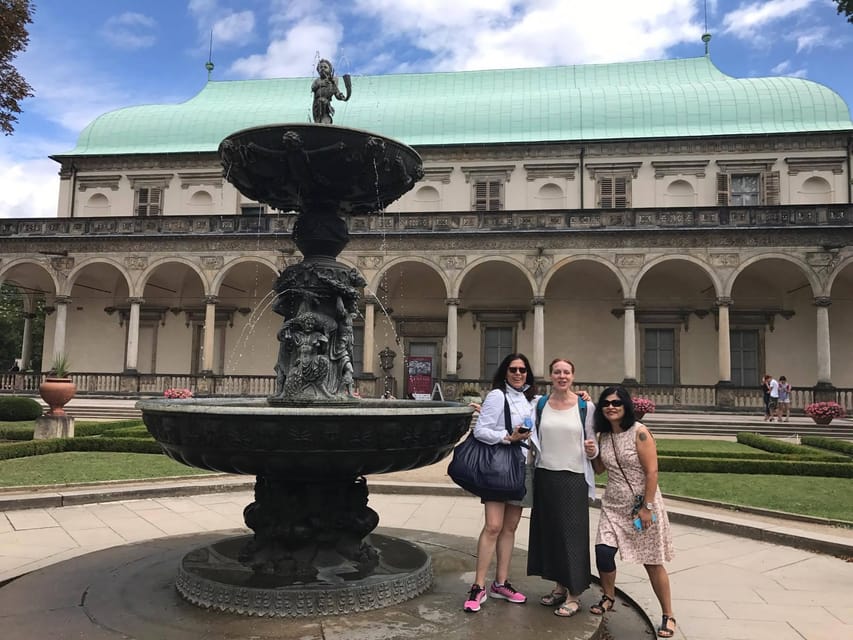
One of the Castle-area highlights is the Belvedere Summer Palace, commissioned by Ferdinand I as a gift for his wife, Queen Anne. The catch (and it’s a poignant one) is that she didn’t live to see the palace completed.
The palace is designed by the Italian Paola della Stella, and it’s often described as one of the most beautiful Renaissance structures outside of Italy. For your visit, the value isn’t just in the exterior. You learn how the palace communicates a relationship and status—especially through relief work that shows Ferdinand presenting Queen Anne with a flower from the Royal Gardens surrounding the palace.
As you walk around the area in front of the pleasure palace, keep an eye on the way the space sets you up for the next scene: water. That leads directly to one of the most memorable technical details on the whole tour.
The Singing Fountain: bell bronze that turns water into sound
Right in the palace grounds, you encounter the Singing Fountain, cast in 1564 in bell bronze. The trick is how it’s engineered: water drops into a bowl in a way that makes it resonate—so it’s not just decorative. It’s meant to create a sensory effect.
This is one of those details you might otherwise miss if you’re only scanning for photos. With a historian guide, you get the “why” behind the spectacle. It helps you understand Baroque and Renaissance thinking about pleasure: they weren’t just building gardens for looking; they were building them to perform.
If you’re the type who enjoys design details—materials, function, and the intention behind a feature—this part is a payoff. Even if you don’t care about bronze casting, the moment still lands because it reframes the fountains as planned entertainment, not random decoration.
Also, try to time your attention so you’re not rushing through. Let it be a moment. Gardens reward slow notice more than constant motion.





Fig House and Orangery: Central Europe’s early fruit and citrus
After the palace, the tour moves into the Fig House and Orangery area, where figs, almonds, oranges, and lemons were grown for the first time in Central Europe. That alone is a fun historical hook: these were not “everyday” plants for the region at the time.
The guide also ties the garden story to the wider world of trade and diplomacy. As you approach the western end of the garden, you’ll hear how tulips—previous to this—were introduced to the Royal gardens as an exotic gift from the Sultan of Constantinople.
For you, this is useful because it changes the way you think about plant history. You’ll start seeing gardens as global networks. They weren’t closed systems; they were receiving stations for new species, new tastes, and new status markers.
And yes, the practical side matters too. Even if you don’t care about the botanics, these structures help you understand how controlled environments supported court gardening, especially when your climate doesn’t do you favors.
Stag moat, Bull Stairs, and the South Gardens’ terrace rhythm
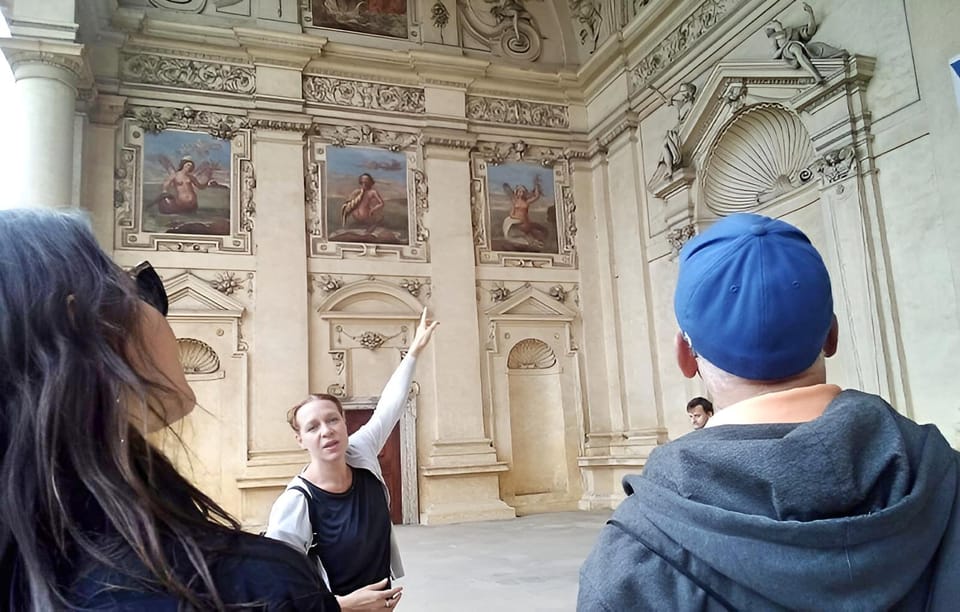
Before you move deeper into the Castle’s lower garden zones, you pass the stag moat and cross into a courtyard. Then the route takes you down the Bull Stairs toward the South Gardens, which is where the garden experience starts to feel like a planned descent.
From there you explore areas like the Garden of Paradise and the Garden on the Bulwark. These names are playful, but the point is serious: the designers used symbolism and layout to create mood shifts as you walked.
This is a good time to pay attention to how terracing changes your sense of space. When you go downhill through the lower gardens, you’re watching how the garden controls sightlines—framing views, breaking up the monotony of long corridors, and creating a feeling of moving through multiple “rooms” of nature.
The one practical drawback is obvious: there’s more stairwork and more slope. If you’re visiting during warm weather, take water breaks when you can. The garden is the story, but your knees still get a vote.
Wallenstein Garden: albino peacocks and myth-made waterworks
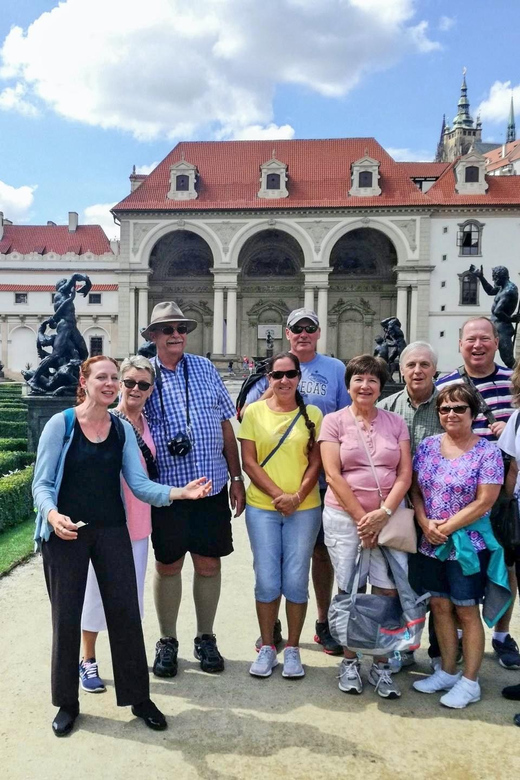
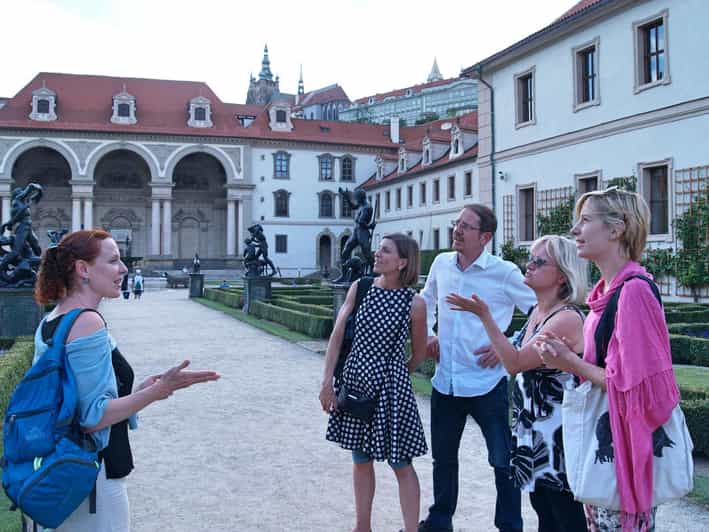
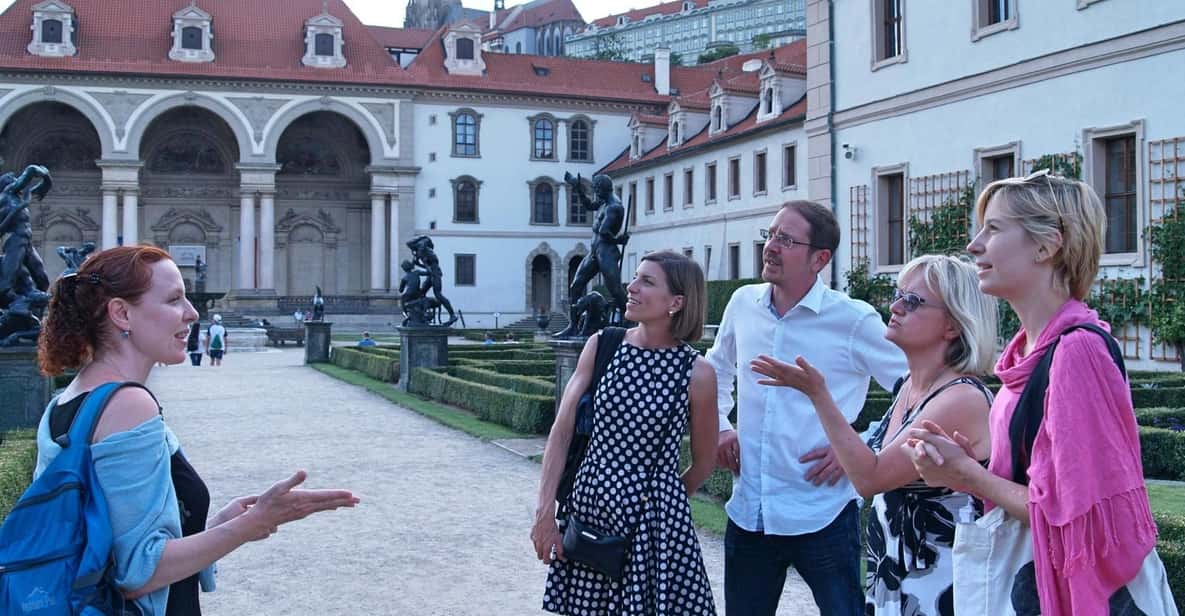
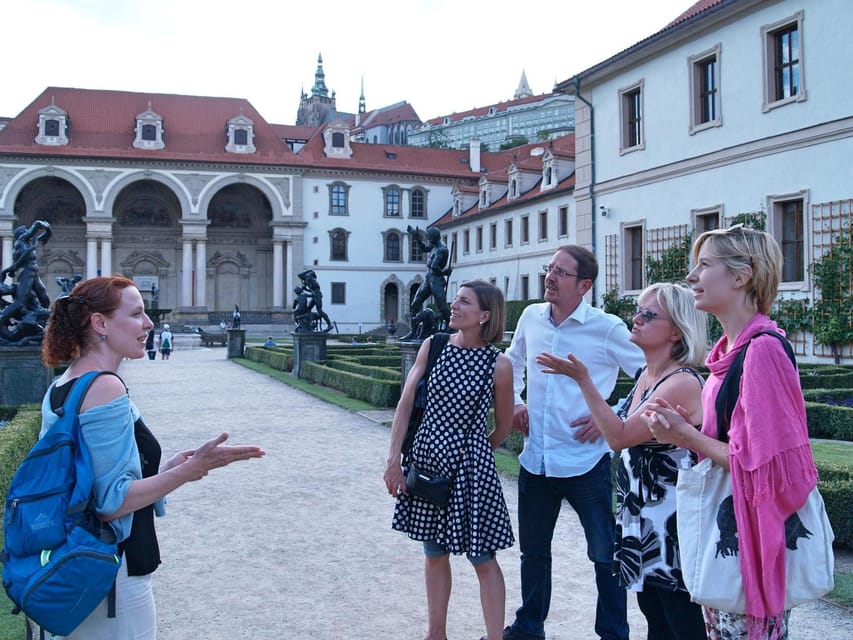
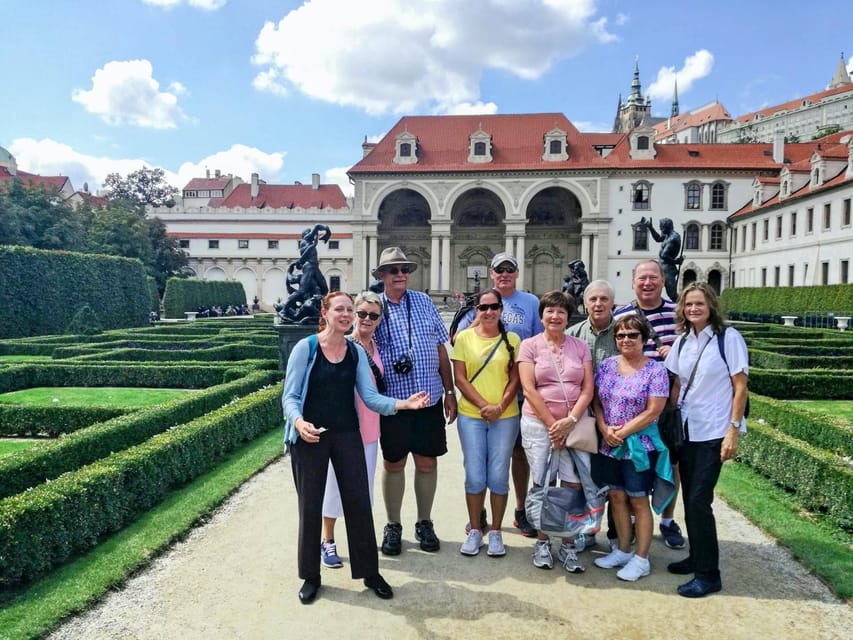
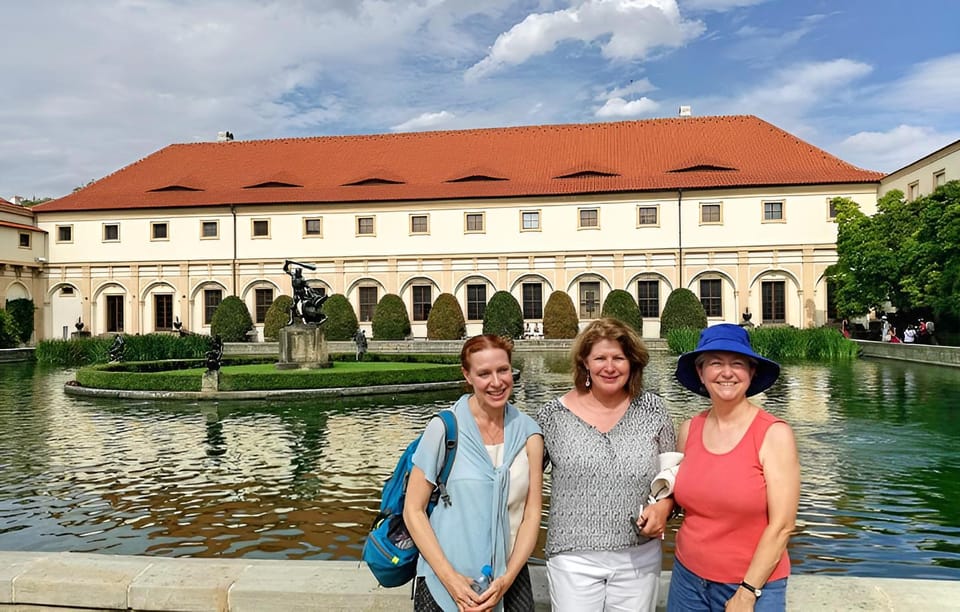
Then comes the big set-piece: the Wallenstein Garden, grand and dramatic, with features that feel almost coded for a legend. You’ll see albino peacocks, Mannerist statues, a grotto wall, and mythical fountains.
This part is where the tour’s political-and-religious theme pays off in a visual way. You’ll learn about the transition from Renaissance classicism to Baroque philosophies—and how that shift shows up in the garden’s mood. Renaissance feels more controlled and composed. Baroque leans harder into effect: surprise, theatrical staging, and emotion.
The guide also brings in the commissioner, Albrecht von Wallenstein, including the dramatic life that shaped why a garden like this could exist and what it was trying to project. When you understand who commissioned it, the garden becomes less random scenery and more like a public message made of stone, water, and animals.
If you like gardens with characters—creatures, sculptures, and story-fed water—this is your moment. You’ll leave with images that stick, not just general “pretty garden” memories.
Vrtba Garden (1720): a quieter Baroque world in Mala Strana
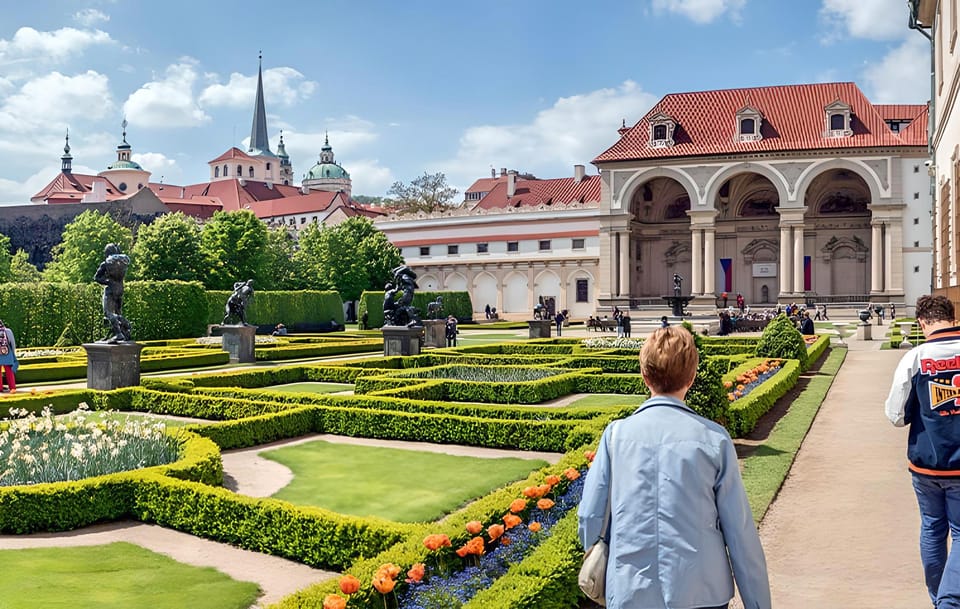
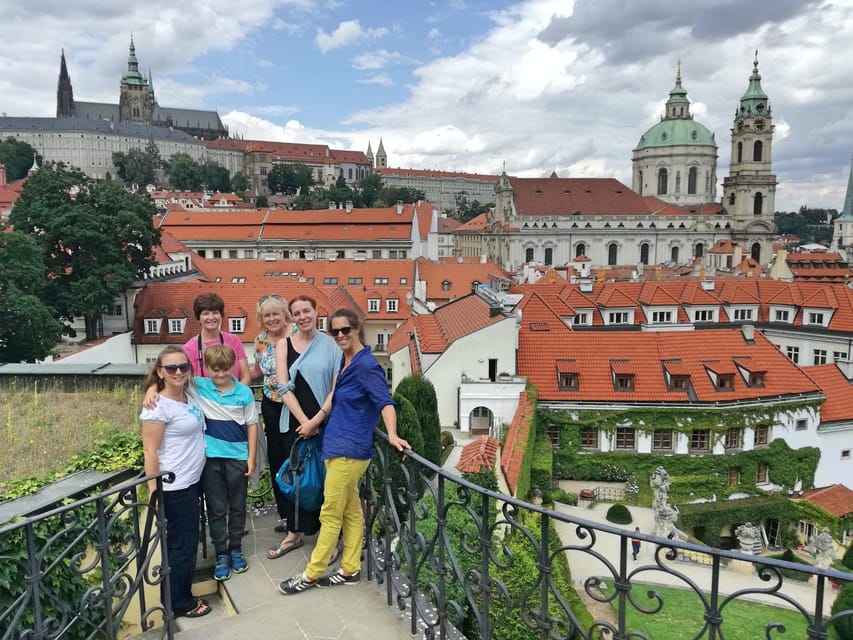
The tour ends with Vrtba Garden, a walled Baroque garden from 1720 located in the Lesser Town (Mala Strana). The best part for your planning: it’s far less seen than the biggest postcard stops, yet it gives you a vivid look at 18th-century noble life and Baroque landscaping choices.
As you move toward the top courtyard, you reach the marine-themed grotto, and you’re also rewarded with wide views over Prague’s cityscape. That view payoff matters because it turns the garden into a lookout—so you get both enclosed intimacy and open city energy before the walk finishes.
If you tend to enjoy details—wall design, the way a garden is shaped for privacy, and how Baroque style uses walls and sightlines—Vrtba is the kind of finish that feels earned.
It also balances the whole experience. Castle gardens are built to impress. Wallenstein gardens are built to perform. Vrtba is built to hold a world inside, then reveal the city at the end.
Price and value: what $123 buys you (and what costs extra)
The tour costs $123 per person for a 3-hour guided history walk with a historian guide. For that price, you’re paying for more than access to places. You’re paying for interpretation: the “why” behind Ferdinand’s choices, the meaning behind water features, and the connection between design and power.
Two things are not included: garden admissions for Prague Castle gardens and admission for Vrtba Garden. That matters for your budget. You’ll likely want to plan for separate entry fees, depending on how those sites are priced on the day you go.
Still, I think the value works well if you want context. A self-paced visit can be pretty, but it usually stays superficial—lots of “look at that fountain” without explaining why it was designed that way, or how those plants ended up here in the first place.
This is also a tour format that helps solo travelers and couples alike: small-group or private options are available, and the guide’s explanations make the walking more meaningful.
The guide experience: what makes the tour feel relaxed
The included historian guide is a key reason this tour lands well. In particular, you may meet Miriam, and the feedback around her is consistent: informative without turning the whole thing into a lecture, and relaxed in how she paces the group.
That style matters because garden walking can get awkward if the guide moves too fast or talks too long. Here, the goal is that you can keep looking while still understanding what you’re seeing.
If you like history that comes with specific visual cues, you’ll enjoy the structure—story first, then a feature you can locate and interpret. It’s a practical way to learn, not just a facts dump.
Who should book this Prague gardens walk
This is a great fit if you want:
- Renaissance-to-Baroque garden design explained in an on-foot format
- Big names tied to specific sites, like Ferdinand I, Paola della Stella, and Wallenstein
- Standout features you can actually locate, like the Fig House, Orangery, Singing Fountain, and Vrtba’s marine grotto
It might be a tougher fit if:
- You need low-stair routes, since there are narrow or steep sections and you may prefer a private tour to tailor the walk
If you’re traveling with time pressure, you may also want to compare this to shorter sightseeing loops. But if you’re planning even a half-day that’s meant to be thoughtful, this one is strong.
One more tip: build in a slower pace for photos. The garden design is meant to be noticed in phases, not captured in one burst.
FAQ
FAQ
How long is the Prague Renaissance and Baroque Gardens walking tour?
It lasts 3 hours.
Where is the meeting point?
Meet at the door of Bagel Lounge Malostranska.
Is the tour guided in English?
Yes, it’s a live English-language tour.
Are the Prague Castle gardens admission fees included?
No. The gardens under Prague Castle admission fee is not included.
Is Vrtba Garden admission included?
No. Vrtba Garden admission fee is not included.
Does the tour involve stairs?
Yes. The tour includes walking up and down stairs that can be narrow or steep. If you have mobility issues, a private tour may be better so the route can be adjusted.
Is cancellation possible if plans change?
Free cancellation is available up to 24 hours in advance for a full refund.
Are private or small groups available?
Yes, private or small groups are available.
Should you book this tour?
Book it if you want your Prague gardens to come with clear context and memorable details: Singing Fountain mechanics, early Central European fruit cultivation, and the story-driven contrast between Renaissance and Baroque garden thinking. It’s also a good choice when you’d rather learn from a historian guide than wander with guesswork.
Skip it or switch to a private format if stairs are a big concern for you, since the Castle-area descent can be demanding. If that’s not an issue, this tour is a smart use of time: you get both major garden showpieces and a less-seen Baroque finish in Mala Strana.