REVIEW · PRAGUE
Prague Renaissance & Baroque Gardens Walking Tour
Book on Viator →Operated by Insight Cities · Bookable on Viator
Prague’s gardens hide their drama. This is a 3-hour small-group walking tour that turns Prague Castle grounds and nearby walled gardens into a story you can actually see—statues, fountains, and architecture on full display.
I love how the route moves through Renaissance to Baroque design in a way that feels logical, not random. I also like that you get standout viewpoints over Prague Castle and the city, especially once you reach Vrtba/Vrtbovská Garden.
The only real drawback is cost and stairs: Vrtbovská Garden has its own admission fee, and you’ll climb some steep stairs to the upper terrace area.
In This Review
- Key things to know before you go
- Starting at Malostranská and riding the 22 tram to the castle gardens
- Prague Castle’s Royal Garden and Belvedere area: where Renaissance geometry becomes real
- Fig House, Orangery, and the garden-as-science story
- Wallenstein Garden and the outdoor sculpture routine: statues, fountains, and peacock energy
- Vrtbovská (Vrtba) Garden: Baroque walls, UNESCO-listed symbolism, and steep stairs
- The smaller stops in the Royal Garden: Queen Anne’s Summer Palace and the Ball Game Hall
- Price and value: what you pay for, and what you still need to budget
- Who this tour fits (and who may want to pick a different format)
- Should you book the Prague Renaissance & Baroque Gardens walking tour?
- FAQ
- What’s the tour length and group size?
- Where do I meet the guide?
- Are there different departure times?
- Is the tour offered in English?
- Which garden admissions cost extra?
- Is the tour hard for people with mobility concerns?
Key things to know before you go
- Small group (max 8 people) means your guide can slow down and answer questions on the spot.
- Prague Castle garden time includes key Renaissance stops plus the classic outdoor sculpture-and-water vibe.
- Vrtbovská Garden is the star move—but it’s an extra entry fee and includes steeper steps.
- 22 tram ride with your group is an easy way to get from the meeting area up toward the castle.
- Guides named for their storytelling (often Bonita, with Vadim also showing up) help connect sculpture details to meaning.
Starting at Malostranská and riding the 22 tram to the castle gardens
This tour starts near public transit in Prague’s Malá Strana area, at Bagel Lounge Malostranská–Letenská, Letenská 118/1, Praha 1 (Malá Strana). From there, you link up with your guide and group and then take the 22 tram together toward the Prague Castle area. It’s a practical choice: you’re not zig-zagging across town, and you get to move as a group while the city scenery slides by.
Once you’re in the castle neighborhood, the pace becomes more “walk and look” than “rush and snap.” The group stays intentionally small (up to 8 people), so the guide can tweak the order or slow down for photos when something matters—say, a particular statue, a fountain alignment, or a detail on a building frieze. If you enjoy context while you walk, this setup tends to work well.
The tour runs about 3 hours total, with departures offered at 10:00am and 2:00pm. Those two start times can matter if you’re sensitive to crowds or heat—morning often feels calmer, while the afternoon can be nice for softer light over the castle views.
You can also read our reviews of more walking tours in Prague



Prague Castle’s Royal Garden and Belvedere area: where Renaissance geometry becomes real
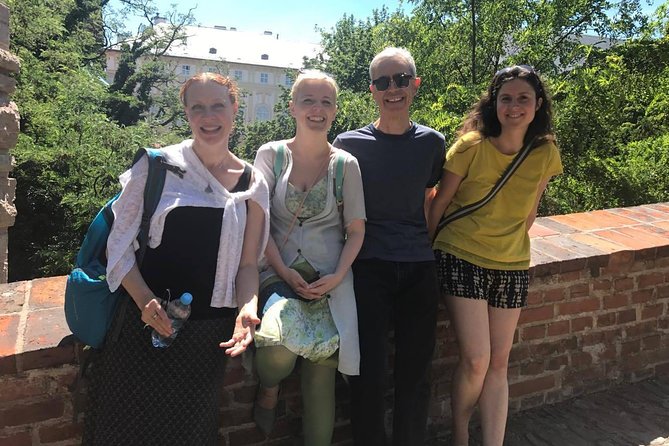
After the tram, you begin in the Belvedere Summer Palace / Royal Garden area inside the castle grounds. This is where the Renaissance garden concept shows up in a way you can actually measure with your eyes: paths, sight lines, terraces, and a staged approach to views.
What makes this part worth your attention is the blend of beauty and purpose. You’re not just looking at greenery. You’re watching how garden designers used architecture to frame scenery and guide your movement. It’s a “walk with choreography” feeling—like the garden is directing where to look next.
A highlight here is the fig-themed growing tradition you’ll hear about at stops such as the Fig House and the Orangery. The tour points out that these kinds of plantings—figs along with almonds and citrus—appeared early in central Europe, which helps you connect the gardens to trade, experimentation, and court culture rather than treating them as pure decoration.
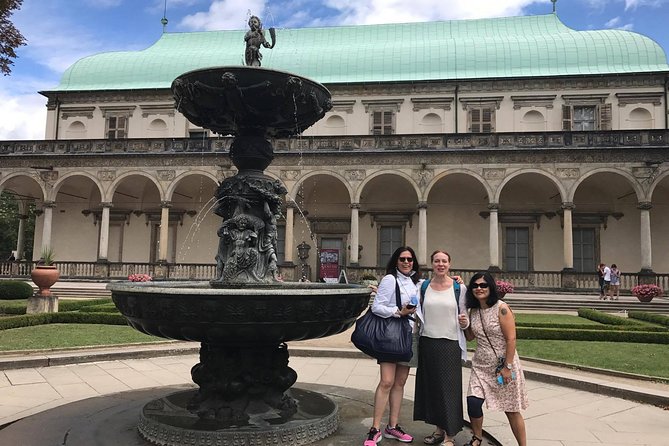
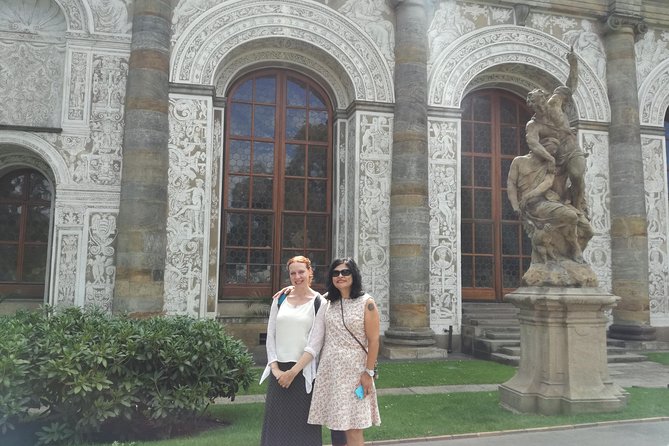
You’ll also spend time around the castle estate paths and viewpoints, including a stop at Queen Anne’s Summer Palace area (with its Renaissance façade details). This is one of those places where the architecture rewards close looking: you’ll see an ornamental, figurative frieze and relief scenes tied to mythology and court symbolism. Even if you’re not a museum person, the garden setting makes those carvings easier to notice and remember.
Fig House, Orangery, and the garden-as-science story
Garden tours can get stuck on flowers. This one doesn’t. You’ll move through the Fig House and Orangery area and learn how those Mediterranean-style plants were introduced and cultivated. That detail changes how you see the space. Suddenly you’re not only admiring views; you’re thinking about experiments, access to plant stock, and the confidence it took to try new crops in a colder region.
This is also where the guide’s story style becomes a big part of the value. In past experiences with this guide team, Bonita is specifically noted for making sculpture and design intelligible through story—often linking Greek and Roman mythology to the visual choices you’re seeing in the garden. That approach works especially well in the castle grounds, where the whole place feels like an outdoor “message board.”
If you like learning how courts used art to communicate power and taste, this is the kind of tour segment that stays with you. If you only want sweeping scenery and don’t care about symbolism, you may feel like you’re spending too long reading details. But for most people, it’s a good trade: garden photos plus meaning, without it turning into a long lecture.
Practical tip: this part is largely walking. Wear shoes you’re comfortable in for uneven ground and keep your camera ready—you’ll be stopping often.
Wallenstein Garden and the outdoor sculpture routine: statues, fountains, and peacock energy
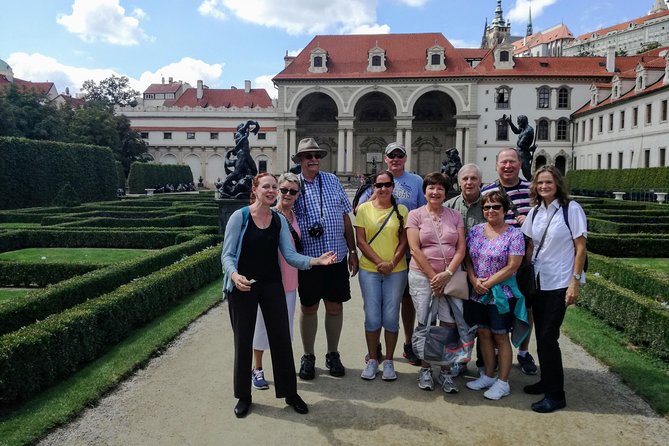
Next you head past the South Gardens and into the Wallenstein Garden zone. This is where the tour leans into the “Prague garden as open-air art collection” idea. Expect to see statues and fountains, plus constant visual prompts—so you’ll want to slow down and actually look at what’s placed where.
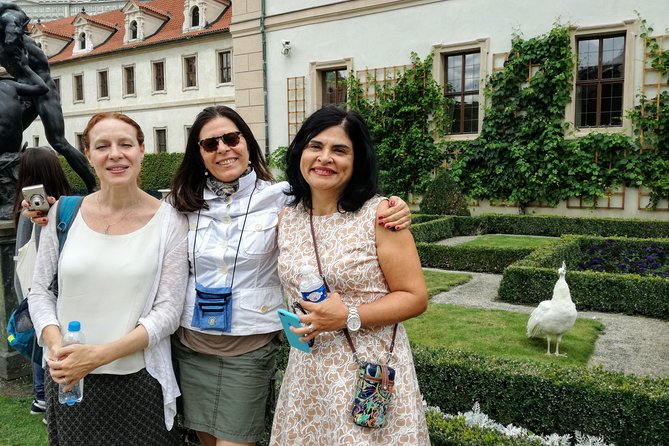
A fun detail you’ll likely notice here: the garden includes peacocks. Whether they’re on-stage and visible or you catch them in the background, they add to that courtly, slightly theatrical feel. It’s one of the reasons this area often feels calmer than the main Prague landmarks—your attention isn’t pulled toward a big ticket building; it’s pulled toward the art and water features.
The Wallenstein-style setting also lets you see how garden designers used symbolism. In earlier conversations on this tour, the guide team has been praised for connecting the figures you see to myth and political messaging. That means if you take a minute at a fountain or a sculptural group, you get a payoff beyond “that’s pretty.” You start to understand the garden as a planned conversation between art, power, and the person viewing it.
The itinerary gives you a short, focused stop here (about 25 minutes). That’s a good length: enough time to notice multiple pieces, not so long that you feel trapped in one spot while the day keeps moving.
Vrtbovská (Vrtba) Garden: Baroque walls, UNESCO-listed symbolism, and steep stairs

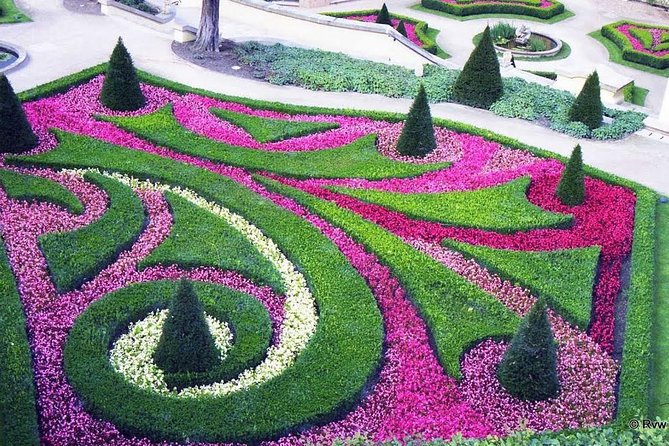
Then comes the moment that makes this tour special: Vrtbovská Garden, a Baroque walled garden from around 1720. This is the stop that shifts the mood. The walls create a sense of privacy and concentration, and the design feels like it’s built to surprise you—angles change, views open, and the garden reads almost like a sequence of scenes.
Two big reasons to care here:
- The garden’s sculptural and landscaping symbolism is tied to historic cultural values recognized by UNESCO (you’ll hear how the design choices connect to meaning).
- You get some of the best views of Prague and Prague Castle from within the garden grounds.
The catch is obvious and important: Vrtbovská Garden admission is not included. The cost listed is CZK 130 for adults, and CZK 100 for students and seniors. Also, the tour includes steep stairs to reach the highest terrace.
The operator provides a real solution if stairs are an issue. If you have trouble climbing, you can wait for the group on the second terrace, and they’ll come back in about 10 minutes. If you need extra flexibility, there’s also an option for a private tour where that route segment can be modified for your group.
Time-wise, your visit here is around 25 minutes, and it’s designed to give you the view payoff without exhausting you. If you want the terrace view the most, prioritize staying with the main group and going up. If stairs aren’t your thing, use the waiting option and still get the best of the setting.





The smaller stops in the Royal Garden: Queen Anne’s Summer Palace and the Ball Game Hall
Between the major garden areas, the tour drops you into a couple of compact “wow in a small package” stops.
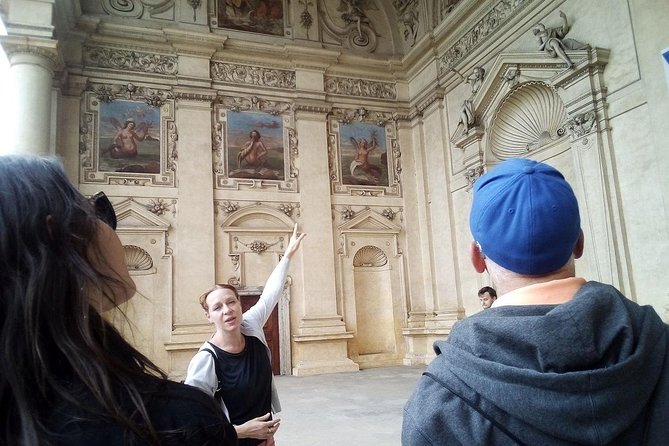
At Queen Anna’s / Queen Anne’s Summer Palace, built in the mid-1500s, the guide points out Renaissance architectural purity and figurative detail. You’ll hear how the building is wrapped in an ornamental frieze, and how elements like Tuscan heads and mythology/hunting/war relief scenes are used to communicate status and narrative. One specific story detail mentioned is the founder Ferdinand I with the Order of the Golden Fleece, presenting Queen Anna with a fig tree blossom—a clever tie-in to the garden’s plant life theme.
Then you’ll briefly visit the Ball Game Hall in the Royal Garden, a Renaissance building on the south side above the Stag Moat. It started as a ball games hall and later served as a riding school and stables. Even if you only stop for a few minutes, it’s a useful reminder that these places weren’t always “pretty garden Instagram backdrops.” They were functional spaces for court life and recreation.
Those quick stops are short (about 5 minutes each), which keeps the tour moving without turning it into a long circuit through buildings you can’t fully explore.
Price and value: what you pay for, and what you still need to budget
At $126.03 per person, the price sits in the “worth it if you like meaning” zone. Here’s why that cost can feel fair:
- You’re paying for a scholar-style guide who doesn’t just point out plants; the tour is built around interpretation of design, sculpture, and symbolism.
- You’re getting a small group experience (max 8 people), which usually leads to better pacing and more direct answers.
- You also get guided time across multiple high-status Prague garden spaces rather than spending your day hopping between them alone.
Now for the part you should plan for: admissions.
- Vrtbovská Garden entry is extra, listed at CZK 130 (CZK 100 for students/seniors).
- The Prague Castle garden admission fee is shown as CZK 90 for adults and CZK 60 for students/seniors. Depending on how your booking is set up, you’ll want to treat this as something to verify on your ticket details before you arrive.
If you’re budgeting tightly, the admission fees are the main variable. But the guided structure helps you make better use of those paid-entry spaces—especially Vrtbovská, where you’ll want the view and the context, not just a quick pass.
Also, you’ll receive a mobile ticket, which is convenient if you travel light and don’t want paperwork.
Who this tour fits (and who may want to pick a different format)
This is a strong pick if you like:
- gardens that connect art + architecture + symbolism
- Prague Castle views without the stress of planning a long self-guided route
- a guide who tells stories about why sculptures and layout were chosen
You might want to think twice if:
- you hate walking on uneven ground or dealing with stairs (Vrtbovská includes steep climbs)
- you only want broad sightseeing and don’t care about fig trees, myth references, or the meaning behind sculptural choices
It can also be a good fit for both first-timers and repeat Prague visitors. The format is short enough to work into a busy schedule, but it still covers multiple distinct garden identities—Renaissance Royal Garden, Wallenstein’s Italian-leaning sculpture-and-water feel, and the Baroque walled experience of Vrtbovská.
Should you book the Prague Renaissance & Baroque Gardens walking tour?
If you want a Prague experience that’s more than just pretty scenery, I’d book it. The mix of Renaissance garden design, Wallenstein’s sculptural setting, and the Baroque Vrtbovská finale gives you a nice “styles in motion” arc for a reasonable time investment.
My main caution is the practical one: budget for Vrtbovská admission and take the stair guidance seriously. If stairs are a concern, use the waiting option on the second terrace, or consider the private modification offer.
If your idea of a great Prague day includes walking with a guide who can explain why details matter, this tour is a smart use of half a day—and it tends to leave you wanting to look closer at everything you see afterward.
FAQ
What’s the tour length and group size?
The tour lasts about 3 hours. It has a maximum group size of 8 people.
Where do I meet the guide?
You meet at Bagel Lounge Malostranská–Letenská, Letenská 118/1, Praha 1 (Malá Strana). The tour starts there.
Are there different departure times?
Yes. The tour offers a 10am departure and a 2pm departure.
Is the tour offered in English?
Yes, it’s offered in English.
Which garden admissions cost extra?
Vrtbovská Garden admission is not included, listed as CZK 130 for adults and CZK 100 for students and seniors. Gardens under Prague Castle also show an admission fee listed as CZK 90 for adults and CZK 60 for students and seniors.
Is the tour hard for people with mobility concerns?
The tour is described as requiring moderate physical fitness because it involves steep stairs in Vrtbovská Garden. If stairs are an issue, you can wait for the group on the second terrace while they return in about 10 minutes. A private tour may be able to modify this part for your group.