REVIEW · PRAGUE
Discover Prague’s most Photogenic Spots with a Local
Book on Viator →Operated by LocalBini - The go-to platform for Experiences by Locals in Europe · Bookable on Viator
Prague looks good on a postcard, but it looks better with the right stops. This small-group photo-focused stroll mixes modern Prague icons and medieval classics, with a local who helps you aim your camera and notice the details you’d otherwise miss. I especially like the mix of David Černý sculptures and the chance to frame iconic views around Charles Bridge and Letná Park.
One thing to consider: at $76.46 for about 90 minutes, you want a guide who gives specific, accurate context—not vague talking points—so ask questions early if anything feels off.
In This Review
- Why This Photo Walk Works So Well
- Key Highlights at a Glance
- Meeting Point to Final Views: How the Route Feels in Real Life
- Dancing House: Where Prague Gets Playful
- Kafka Head: Watching a Sculpture That Moves Around You
- David Černý Corner: Freud, Intellectualism, and Provocation
- Old Town Square and the Astronomical Clock: The Classic Scene That Still Feels Alive
- Charles Bridge: A 14th-Century Photo Mission
- Wallenstein Palace Gardens: Where a Photo Walk Gets a Pause Button
- Lennon Wall: Color, Message, and Street-Scale Emotion
- Isla Kampa and the Babies by David Černý
- Pařížská Street: The Fashion Avenue Interlude
- Letná Park and the Metronom Monument: End With Big Views
- Value: Is $76.46 Worth It for This 90-Minute Route?
- Who This Tour Fits Best (and Who Should Think Twice)
- Should You Book This Prague Photo Walk?
- FAQ
- FAQ
- How long is the Prague photogenic spots tour?
- What’s the group size?
- Where does the tour start and end?
- Is the tour offered in English?
- What does the price include?
- Are entrance tickets to museums or monuments included?
- Will the itinerary always follow the exact same stops?
- Is the tour suitable for mobility limitations?
- Can I bring a service animal?
- Can I cancel for a full refund?
Why This Photo Walk Works So Well
You’ll get two big wins right away. First, you’re not just “seeing Prague,” you’re walking toward scenes that are naturally camera-friendly, from the Dancing House to the Old Town Square Astronomical Clock area. Second, having a local is what turns photos into understanding: they point out what to photograph and why those details matter in Prague’s story.
The possible downside is value-per-minute. The tour price isn’t outrageous, but if your guide’s explanations feel general, it can feel like you paid mostly for the route rather than the insight.
Key Highlights at a Glance
- Dancing House photo angles: a modern twist on architecture that’s fun to frame from multiple sides
- Kafka’s rotating metallic head: you’re seeing a sculpture designed to change as you move
- David Černý stops in one loop: Freud, Man Hanging Out, and the Babies crawling at Isla Kampa
- Old Town Square timing: you’ll watch the Astronomical Clock in motion and work the best viewing viewpoints
- Charles Bridge + statues: a classic 14th-century “walk slow and look up” moment
- Letná Park views with the Metronom: end with a big perspective over the city
You can also read our reviews of more tours and experiences in Prague.
Meeting Point to Final Views: How the Route Feels in Real Life
The tour starts at Jiráskovo náměstí in Prague 2 and finishes near Letenské sady in Prague 7 (Letná area). That matters because you’re not doing a dead-end out-and-back. You’ll gradually work your way through different “Prague moods”—from modern street-level architecture to historic squares, then up toward one of the best view zones.
Expect about 1 hour 30 minutes and a small group (up to 8). The pacing is meant to be adjustable, so if your camera needs a minute, it shouldn’t become a problem. Also, stops may shift with weather. That’s not a bad sign here—it often means you’ll still get the photo targets, just with less waiting in bad conditions.
Tickets for museums or monuments aren’t included, so if you want a paid entry anywhere, plan to cover that separately. For the sights that are outside or viewable from the street, you’re good.
Dancing House: Where Prague Gets Playful
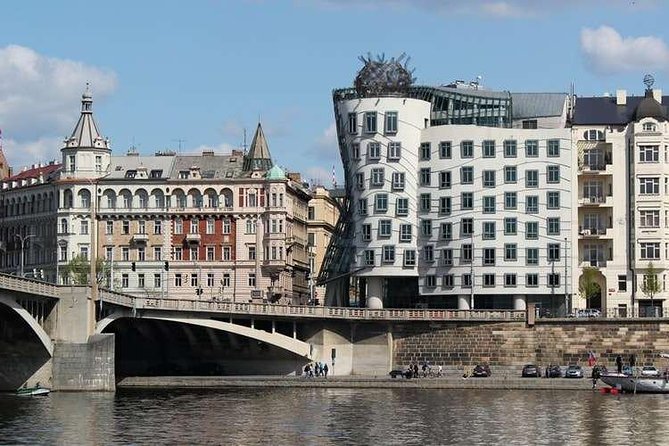
The first major architecture stop is the Dancing House. This building is known for doing the opposite of what most people expect: it looks like it’s mid-motion, as if the structure is twisting to music. It’s a great place to start your photo walk because it immediately teaches you a simple strategy—don’t only shoot “front on.” Try side angles and step back to catch how it interacts with surrounding streetscapes.
What I like about beginning here is how it sets expectations for the whole tour. Prague isn’t only stone towers and old bridges. It also has modern design that’s happy to be a little strange, and that playful energy fits the rest of your route—especially the David Černý stops later.
If you’re worried about rain, this is also a practical early stop. Even in gray weather, the building’s shapes and reflections give you something to photograph.
Kafka Head: Watching a Sculpture That Moves Around You
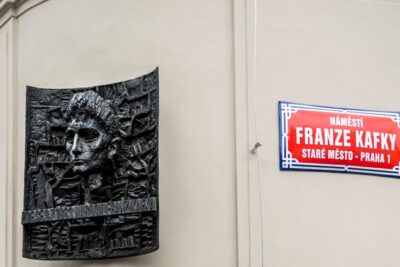
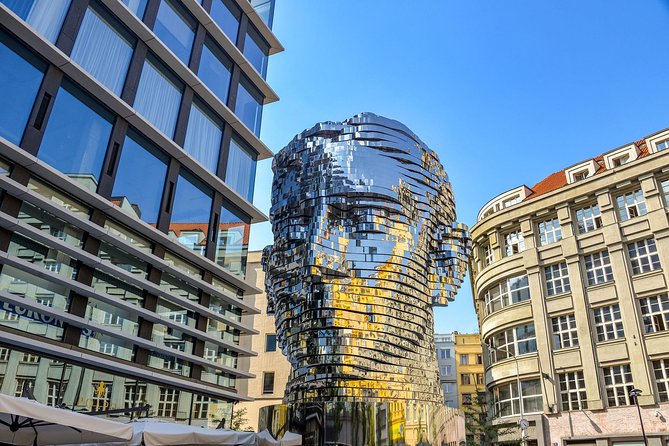
Next comes a star for people who love concept design: Prague’s Kafka rotating head. You’re looking at an 11-meter metallic sculpture with 42 moving layers. The key idea is motion. This isn’t a statue where you just stand and shoot; you’ll want to reposition so you catch how different layers reveal themselves from different angles.
Why this is valuable for your photos is simple: you get changing visuals without needing a special light show. Your walking position becomes part of the composition. A local can help you decide where to stand so you don’t spend your time “wandering and hoping.”
Practical note: bring your camera in a way that lets you move fast. This is one of the stops where a tripod vibe can slow you down more than it helps.
David Černý Corner: Freud, Intellectualism, and Provocation
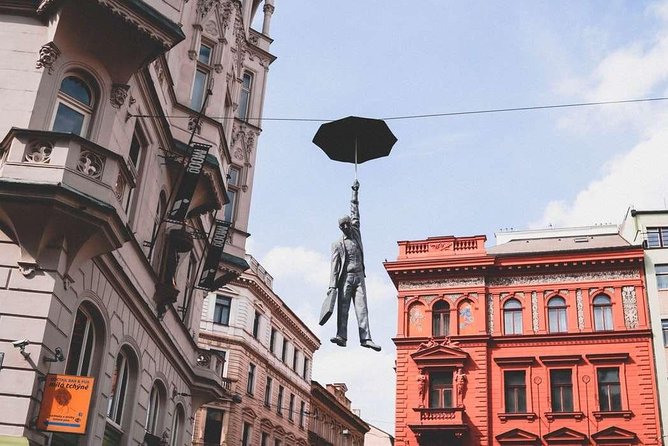
Then you’ll hit another David Černý moment: Man Hanging Out – Sigmund Freud, a provocative installation by the Czech artist. It’s the kind of artwork that’s hard to explain with one sentence, and that’s exactly why a local matters. Instead of only pointing out what you can see, they help you interpret the vibe—how 20th-century ideas can feel uncomfortable, strange, or even confrontational when translated into public art.
If you’re traveling with teens or anyone who likes thought-provoking stuff, this stop often lands well. And if you don’t know anything about Freud or modern intellectual history, don’t worry. The route is built to make the context feel accessible, not like a lecture.
One small consideration: since this is street-level art, it can draw crowds. If you arrive at the busiest moment, give yourself permission to reframe and wait for clear lines, rather than forcing a shot through people.
Old Town Square and the Astronomical Clock: The Classic Scene That Still Feels Alive
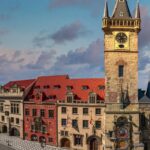
At Old Town Square, you’ll get the historic backbone of Prague. Your main target here is the Astronomical Clock, which you’ll see in motion. Even if you’ve seen photos online, seeing it moving in person changes the experience. It’s built around multiple mechanisms, and that’s what makes it compelling—your eyes can’t stop at just one detail.
I like that your local doesn’t just point at the clock. They help you connect the clock to the surrounding architecture—how the square feels like a stage, and how people gathered in past centuries for daily life and major events. That context also makes the photos feel more intentional. Instead of snapping the clock alone, you’ll frame it as part of a wider scene.
A drawback to keep in mind: this is one of the most famous areas in Prague. Crowds are normal. If you prefer quiet photos, you’ll likely enjoy the surrounding streets more during breaks, then come back when you get a workable angle.
Charles Bridge: A 14th-Century Photo Mission
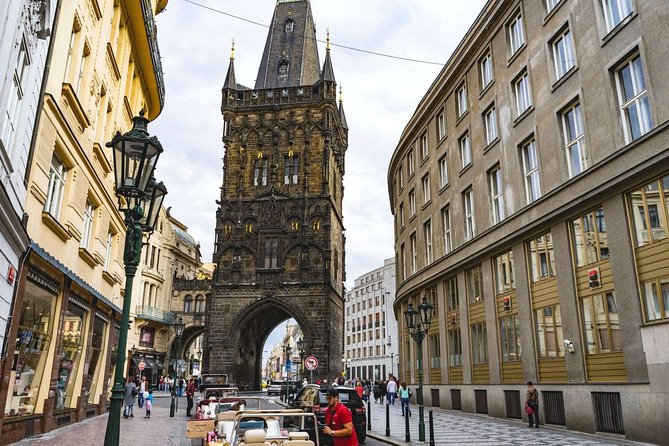
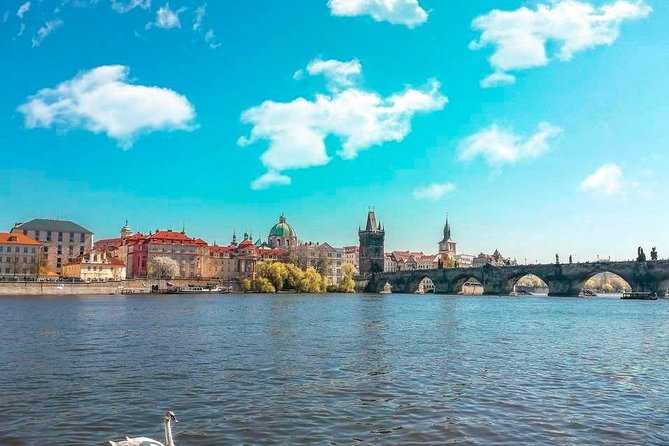
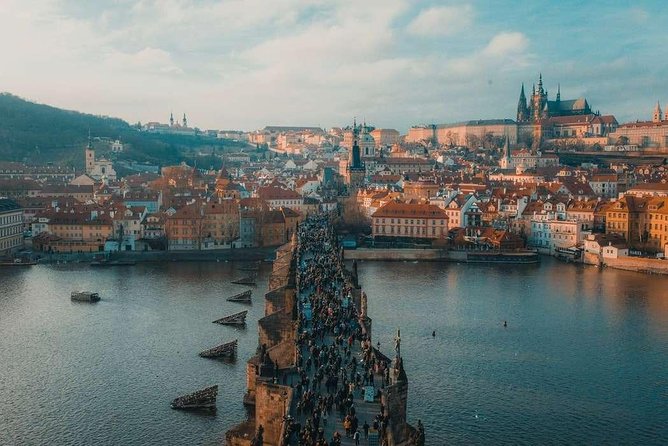
Then it’s time for Charles Bridge, dating back to the 14th century. This is where Prague turns into a slow-walk, look-up kind of place. You’ll see statues and learn the bridge’s cultural significance, which helps you photograph with purpose.
Here’s how you’ll get better results on a bridge like this: shoot for depth, not just height. Use the line of the bridge to pull your viewer forward, then include statues or architectural rhythm as visual anchors. A local can guide you toward spots where the background doesn’t turn into a messy wall of buildings.
If you’re carrying luggage or have short legs, this section can feel like a lot of step-count. The route is manageable for most people, but wear shoes you’d trust for cobblestones.
Wallenstein Palace Gardens: Where a Photo Walk Gets a Pause Button
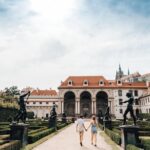
One highlight included in the overall experience is time in the Wallenstein Palace Gardens. This is a welcome change of pace after the dense photo stops of Old Town and the bridge area. Gardens like this are valuable for two reasons: you get cleaner backgrounds for portraits and architecture shots, and you get a breather from the crowd energy.
For your camera, this is a place to slow down. Try compositions with straight lines from pathways, then add greenery as a natural frame. If it’s windy, watch your shutter speed—plants can move more than you expect.
If weather is bad and the route shifts, you might not get the full garden moment. That’s one reason the tour is designed to adapt with conditions.
Lennon Wall: Color, Message, and Street-Scale Emotion
The Lennon Wall is next, a famous canvas associated with freedom and peace messages linked to John Lennon. The reason this stop works in a photo-focused tour is that it gives you layers: you’re photographing not only an object, but also the handwriting, the textures, and the patchwork feel of a wall that evolves over time.
To photograph it well, move your viewpoint a little instead of shooting from the exact same place. One step left or right can turn a crowded message area into something more readable. A local can also help you avoid wasting time hunting for the “best corner” and point to a spot where your composition won’t fight the crowd.
Isla Kampa and the Babies by David Černý
You’ll also stop for Babies by David Černý. These eerie bronze sculptures crawl around Isla Kampa, giving the sense of something both playful and unsettling. That “creepy-cute” mix makes it fun to photograph, but you’ll want the right angle to show movement and placement.
Why I think this is a strong mid-tour anchor: it’s a different kind of Prague than the bridge and clock. It’s small-scale, character-driven, and it rewards close looking. If you’re the kind of traveler who likes to zoom in on symbolism and weirdness, you’ll likely have a great time here.
Pařížská Street: The Fashion Avenue Interlude
After the intense art stops, you’ll walk down Pařížská Street, described as Prague’s most prestigious boulevard, where history, art, and luxury show up together. This section is useful in a practical way: it gives you long sightlines for street photos and a change from the heavy historic center energy.
What you’ll get from a local here is context—how the street’s role differs from the squares and bridges. Even if you’re not shopping, it’s a great corridor for photos where storefronts and architecture create a clean urban rhythm.
Because this is a more upscale area, you might feel like the rules are stricter about where you linger for photos. Keep it polite, stay aware of pedestrians, and you’ll be fine.
Letná Park and the Metronom Monument: End With Big Views
The tour ends at Letná Park near Letenské sady 173, with the Metronom Monument and some of the best city views you can walk to. This is the perfect way to finish a photo tour: after all the close details (clocks, sculptures, statues), you get a broad perspective.
For your camera, think “framing.” Use the park elements as a foreground layer, then capture the city beyond. This is also where you can review what you’ve shot and decide what needs a second angle. A local can help you see which viewpoints tend to work better based on where your tour wrapped up.
One practical note: park viewpoints can be windy. Protect your lens and keep a quick wipe cloth handy.
Value: Is $76.46 Worth It for This 90-Minute Route?
At $76.46 per person for about 1.5 hours, you’re paying for three things: (1) access to a local who organizes your route, (2) time saved compared to figuring out all these photo stops alone, and (3) the small-group size (up to 8), which keeps the experience from feeling like a sprint through Prague.
Where the value really lands is in the overlap between your interests. If you love architecture, public art, and iconic Prague scenes, this route fits neatly. Also, since stops adapt to walking pace and weather, you’re more likely to get a satisfying mix without forcing every stop.
The caution is interpretation quality. In one piece of feedback I saw, a guide named Stefan was described as prompt and text-communicative for the meeting spot, but some found his building descriptions too general or his answers potentially inaccurate. That doesn’t mean every guide will be like that. It does mean you should engage early: ask one or two follow-up questions at the first stop. If you don’t get useful detail, you’ll know quickly.
Who This Tour Fits Best (and Who Should Think Twice)
This tour is a strong match if you:
- want a camera-friendly route that hits both famous and thought-provoking Prague sights
- enjoy public art and architectural design, not just sightseeing checklists
- like having a local help you translate what you’re seeing into something memorable
It may not be the best fit if you:
- have impaired mobility (it’s not recommended)
- hate crowds and prefer long quiet time at fewer places
- expect a museum-level lecture in a short walking window
If you’re somewhere in the middle, you can still make it work—just manage expectations. This is a photo walk with context, not a deep academic tour.
Should You Book This Prague Photo Walk?
If you want a short, efficient route that touches Charles Bridge, the Astronomical Clock area, major David Černý installations, Lennon Wall, and the high-view finish at Letná Park, this is the kind of tour that can genuinely upgrade your Prague photos. The small group size and adaptable pacing are the practical reasons it feels better than a big bus-style sightseeing plan.
I’d book it if you’re the type who likes to ask questions and you’re happy to walk a bit for great angles. I’d think twice if you know you need step-by-step accessibility or if you’ve been burned by tours where the guide info stays too generic.
FAQ
FAQ
How long is the Prague photogenic spots tour?
It’s listed at about 1 hour 30 minutes.
What’s the group size?
It’s limited to a maximum of 8 travelers.
Where does the tour start and end?
It starts at Jiráskovo náměstí and ends at Letenské sady 173 in Prague.
Is the tour offered in English?
Yes, it’s offered in English.
What does the price include?
It includes a knowledgeable local, a small group experience, and personalized recommendations. Public transportation and other entry fees are not included.
Are entrance tickets to museums or monuments included?
No. Entry tickets for public transportation, museums, and monuments are not included.
Will the itinerary always follow the exact same stops?
Stops may vary depending on weather conditions, and the route adapts to your interests and walking pace.
Is the tour suitable for mobility limitations?
It’s not recommended for guests with impaired mobility.
Can I bring a service animal?
Service animals are allowed.
Can I cancel for a full refund?
Yes, there is free cancellation. You can cancel up to 24 hours in advance for a full refund.