Prague turns weirder when you play. This self-guided Kafka’s Prague mystery walk uses your phone to guide you through historic corners while you solve clues that connect the sights. I like that you can go your own speed and pause as often as you want, and I also like the price point for a one-person device-led city game.
The main thing to consider is the style of the puzzles. Some clues are written as codes or riddles by design, so it can take a little time to get the hang of how the challenges work.
In This Review
- Key things to know before you go
- Kafka’s Prague: a phone puzzle walk that replaces the “tour” feeling
- How the Questo app works (and why it matters for your experience)
- The route: start at Franz Kafka, end at Café Louvre
- Stop-by-stop: what you’ll do at each chapter of the walk
- Franz Kafka area: your first clue start moment
- Old-New Synagogue: a good place to slow down
- The former house site of Franz Kafka’s birth (as referenced in the game)
- The House at the Minute: turning story clues into directions
- National Gallery area: keep your pace without losing the plot
- House at the White Unicorn: another narrative landmark stop
- Charles University area: a familiar name, a timed clue moment
- Powder Tower: end-game momentum without rushing
- Palác Generali (Generali Palace) area: a final set of landmark clues
- Old Town Square to Lucerna Arcade: finish strong, then head to coffee
- Photo and viewpoint moments you’ll want to plan for
- Time, crowds, and walking comfort: make the game work for your body
- Value: why $8.40 can make sense in Prague
- Who should book Kafka’s Prague puzzle walk?
- One more reality check: the puzzle learning curve
- Should you book it?
- FAQ
- FAQ
- How long is Kafka’s Prague: Self-Guided Mystery Puzzle Walk?
- How much does it cost?
- Do I need a guide with this activity?
- Where does the walk start and end?
- What app do I use for the clues and directions?
- Can I pause or take breaks during the walk?
- Are entry tickets to attractions included?
- Is the experience available year-round and at different times?
- Is this suitable for most people?
Key things to know before you go
- Phone-guided story: You’ll solve clue steps on your phone, and it points you to the next stop.
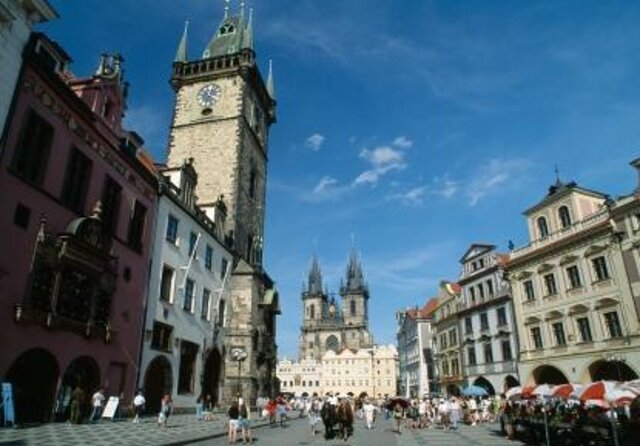
- See major Prague landmarks: Expect a route that passes places like the Old-New Synagogue, Charles University, and Powder Tower.
- Self-paced flexibility: Take breaks, continue later, and explore longer around whichever stop you like best.
- Outdoor, low-crowd feel: It’s open air and designed to avoid busy crowds.
- English puzzle experience: The game is available in English, and some clues are intentionally coded.
- Good value for the time: At about 1 hour 10 minutes to 1 hour 40 minutes, it’s a quick way to get a story-driven walking plan.
Kafka’s Prague: a phone puzzle walk that replaces the “tour” feeling
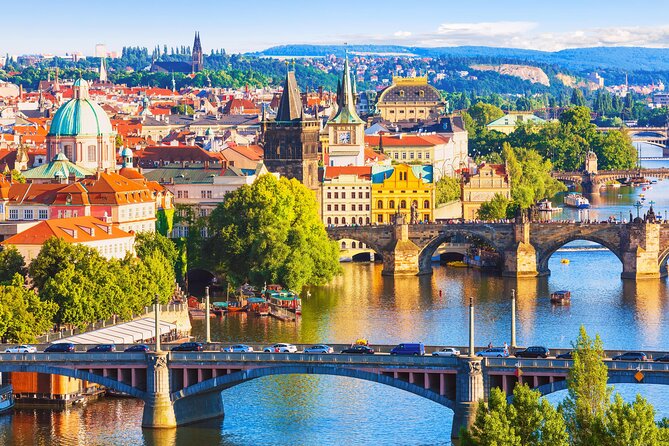
This isn’t a sit-down, lecture-style Prague tour. It’s more like a city walk where the plot shows up in pieces, and you earn the next set of directions by solving clues on your phone. You’re still outdoors, but the guidance is practical: follow the next step, look around, solve the next prompt, then move on.
I like this format because it gives you structure without forcing you to march as one big group. You can spend an extra 10 minutes staring at a detail you noticed, then jump back into the story when you’re ready. If you’re the type who wants to see Prague, but also wants something a bit more active than just walking and snapping photos, this hits that sweet spot.
It also has a clear theme: Kafka’s Prague, told through a writer’s lens. Along the route, you’ll encounter named Prague landmarks tied to the story, plus some stand-out public sculpture moments mentioned as highlights. That mix turns a walk through central streets into something more memorable than a simple checklist.
You can also read our reviews of more walking tours in Prague


How the Questo app works (and why it matters for your experience)
The whole engine here is the Questo app. You’re not meeting a guide, and you’re not getting handed a paper map. Instead, you use the app for clues and exact directions to the next location.
That’s a big deal in Prague, where streets can look similar and your legs might know where to go before your brain does. The phone directions help you keep momentum without feeling lost, and they also keep the day stress-light. There’s no need to ask someone for directions mid-game.
Another practical win: the experience is listed as available 24/7, every day of the year. That means you can slot it into almost any schedule, including slower afternoons when you don’t want a rigid tour time.
One more thing: because it’s self-guided and private to your group, you won’t be slowed down by a larger group pace. If your group is fast, you’ll finish closer to the shorter end of the time range. If you like stopping often, you’ll naturally drift toward the longer end.
The route: start at Franz Kafka, end at Café Louvre
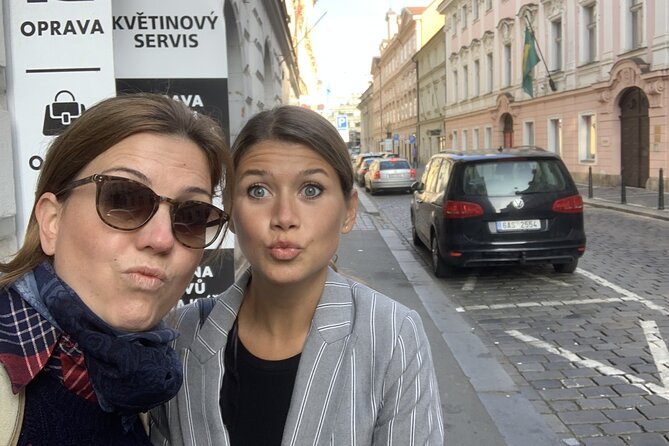
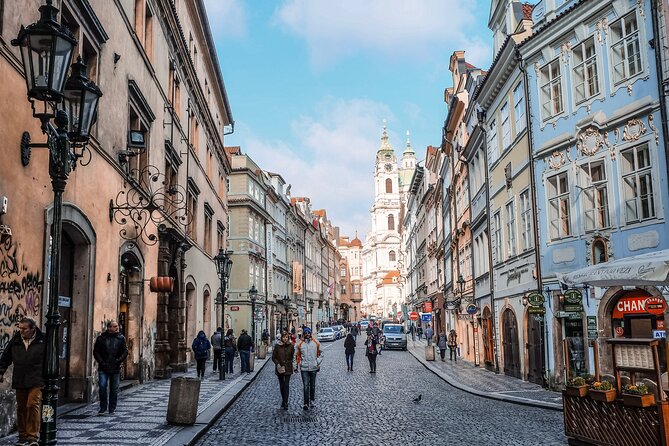
You start near the Statue of Franz Kafka at Dušní, in Prague’s Old Town area. Your first clue happens around that starting point, and it’s the launchpad for the story. If you want a smooth start, give yourself a few minutes before you begin to orient your phone, signal, and comfort level with the clue format.
You finish at Café Louvre at Národní 22 in Prague’s New Town area. The ending is set up so that both the story and the city-game part wrap up there, so you don’t feel like you’re still hunting for the “last clue” when you’re ready to sit down.
Also notice the practical timing: the listed duration is about 1 hour 10 minutes to 1 hour 40 minutes. That’s long enough to feel like a real walk, but short enough that it won’t ruin an evening plan. It’s the kind of activity that fits nicely between other landmarks, or even as your main “thing to do” for a half afternoon.
Stop-by-stop: what you’ll do at each chapter of the walk
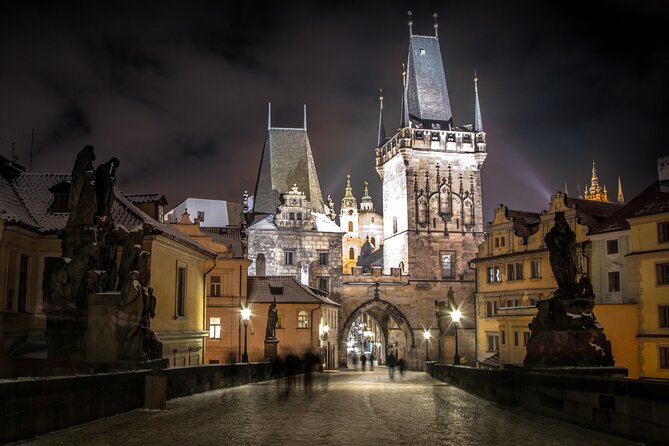
The itinerary is built as a sequence of clue points. At each stop, you solve the clue connected to where you are, and that unlocks the next directions.
Franz Kafka area: your first clue start moment
At the Statue of Franz Kafka, you begin with your first clue. This first step sets expectations for how the game plays. If you’re cautious about puzzle-style content, treat this as your “learning round.” Once you understand the pattern, the rest of the walk usually feels easier.
A small tip: if the clue seems confusing, don’t jump ahead too fast. Re-read it like a riddle, not like a straightforward instruction. The game sometimes uses codes and riddles on purpose, not translation errors. That design choice is part of the challenge.
You can also read our reviews of more guided tours in Prague




Old-New Synagogue: a good place to slow down
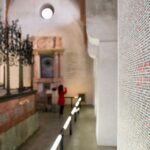
The next clue location is around the Old-New Synagogue. This is one of those moments where you’ll likely want a little time just to look around before solving. You can stop as long as you like, then continue when you’re ready.
This is where I like these games most: Prague streets aren’t just scenery; you’re using the environment to think. You don’t just pass by a landmark—you connect it to the story you’re solving.
The former house site of Franz Kafka’s birth (as referenced in the game)
Another clue point is around the place where Franz Kafka’s birth house once stood. Even if you’re not focused on the exact spot as a historical marker, it works as a narrative anchor: the game keeps returning you to Kafka’s real-world footprint in Prague through the clues.
Consider this a moment to be present. Look up, take note of what you see around you, then try solving. It’s often easier when your eyes are still moving rather than when you’re stuck staring at your phone with no scanning.
The House at the Minute: turning story clues into directions
Next up is the House at the Minute. This is a clue point where the theme leans into wordplay and storytelling. Again, you can take your time here, and you don’t have to rush to be “correct.” The app gives you the next step after you solve, so you can focus on the puzzle without worrying about falling behind.
If you’re someone who likes logic games, this section is likely to feel rewarding. If you’re more casual, just treat it like a scavenger hunt for meanings you can spot in the street layout and landmark surroundings.
National Gallery area: keep your pace without losing the plot
Your next clue is around the National Gallery. By now, you’ve probably found your rhythm: look around first, then solve. This part is useful if you’ve been walking Prague all day already and want a reason to keep moving without feeling like you’re doing the same loop again.
One nice thing about the self-guided format: you’re not locked into a guide’s pace. If your group wants to linger near a particular building view, you can.
House at the White Unicorn: another narrative landmark stop
The game continues to the House at the White Unicorn for your next clue. This is another built-in pause point. You’ll get a prompt tied to your location, and the app will move you onward once you’ve completed it.
This stop also shows the practical benefit of the city-game format. Central Prague can feel like an endless run of “next street over.” Here, the puzzle steps create a gentle checkpoint system.
Charles University area: a familiar name, a timed clue moment
Next is around Charles University. Even if you’ve seen it on postcards before, the game gives you a “do something here” purpose. You’re not just standing near a landmark—you’re engaging with the clue connected to it.
If you’re traveling with someone who usually gets bored on structured tours, this is often a good compromise. Everyone gets to do the same thing: solve, look, move.
Powder Tower: end-game momentum without rushing
Your clue point around the Powder Tower keeps the pace moving while still letting you stop as long as you want. By now you’re probably thinking about whether you’ll finish closer to one hour ten or closer to one hour forty. Either way works—the game doesn’t punish you for a slow walk.
When you approach this area, I’d recommend you check your phone battery state. You’ll be using directions and reading clues the whole time.
Palác Generali (Generali Palace) area: a final set of landmark clues
The next clue is at Palác Generali / Generali Palace. Then the game pushes you toward the older core again with the Old Town Square clue point.
This part is good for people who want Prague’s headline sights without hiring a guide for every minute. You get the landmarks, plus you get a reason to look closely rather than just pass through.
Old Town Square to Lucerna Arcade: finish strong, then head to coffee
Your next clue around Old Town Square is likely a natural photo stop. Then you move to Lucerna Arcade for another clue before ending.
The game finishes at Café Louvre, so once you reach the end point, you can relax with a coffee or snack. That matters because you won’t feel like you need to “schedule the payoff” elsewhere.
Photo and viewpoint moments you’ll want to plan for
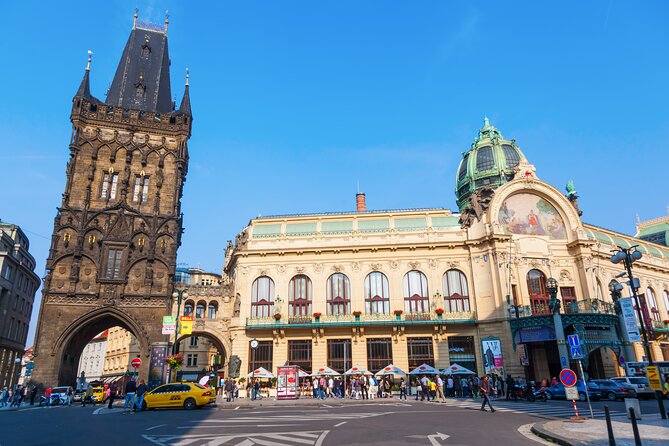
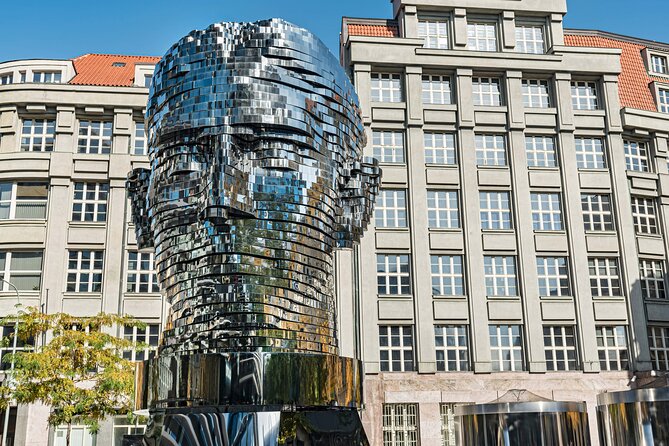
The experience highlights a few specific Prague visual moments. As you move through the route, you’ll have chances to look for the inverted horse statue of St. Wenceslas and Kafka’s Turning Head statue, plus other named sights along the way like Kafka Memorial, Kinsky Palace, and The Powder Tower.
I suggest treating these as “pause and look up” moments rather than quick stops. They’re the kind of things you can miss if you’re only focused on reading the next clue. If you want good photos, take 30 seconds to reposition your angle before solving the next step.
Time, crowds, and walking comfort: make the game work for your body
This is an outdoor walk. That seems obvious, but it has real impact on your enjoyment. You’ll be moving between clue points, and you’ll be scanning your surroundings while reading your phone.
The upside: it’s designed to avoid crowds, and the self-guided format makes it easier to slip into calmer pockets of central Prague. The downside: because you’re the one controlling the pace, it’s easy to overdo it if you’re already tired.
A smart approach: treat the game as your “activity block” and plan a lighter evening after. If you’re combining it with other sightseeing, I’d avoid stacking long tours right before or right after.
Also, the stated time range gives you flexibility. If you move briskly and solve quickly, you may hit the shorter duration. If you stop often, especially at the more interesting landmark areas, you’ll likely land near the longer duration without it feeling stressful.
Value: why $8.40 can make sense in Prague
At $8.40 per person, this is priced like a budget-friendly activity, not a full guided tour. The value comes from what’s included: the city exploration game on your phone, directions and clue prompts through the Questo app, full availability 24/7, and 24/7 customer support.
What you don’t get is a human guide. You also don’t get attraction entry tickets. So if you’re hoping to pay once and walk into museums without additional costs, you’ll want to plan tickets separately.
Where this still shines is as a “structure layer.” Prague can be expensive when you stack guided tours and paid admissions. A low-cost game that still sends you past major landmarks often fills the gap between paid attractions. It can be especially useful for first-time visitors who want a city walk with a narrative spine.
And if you’re traveling with a group, there are group discounts, which can make the per-person cost even easier to swallow.
Who should book Kafka’s Prague puzzle walk?
This works best if you like doing something with your feet besides just walking. You’ll probably enjoy it if:
- you want a practical itinerary without committing to a guide’s schedule
- you’re comfortable solving simple clue steps on your phone
- you want Prague landmarks connected by story rather than isolated stops
- you prefer fewer crowds and a self-paced route
It may be less ideal if you strongly dislike puzzles or if you want a purely historical narration. This is a city game first, not a speaker-led tour.
One more reality check: the puzzle learning curve
If you’re worried about confusion, here’s the honest way to approach it: the clues can be coded or written like riddles. That’s part of the design. Also, the game is available only in English, so if you don’t read English comfortably, you might struggle more than you expect.
If the first clue feels off, take 5 minutes to understand the format before you judge the whole experience. Once you get the rhythm, the walk tends to feel smoother.
Should you book it?
Yes, if you want a low-cost way to get a structured, story-based walk through central Prague and you’re okay solving clue steps on your phone. The price is friendly, the time commitment is reasonable, and the self-paced style makes it easy to fit into your day.
I’d skip it only if you hate puzzle-style activities, need a guided explanation at every stop, or you’re counting on included entry tickets. For everyone else, it’s a fun alternative to a standard tour, and it turns key Prague landmarks into something you actively work for as you go.
FAQ
FAQ
How long is Kafka’s Prague: Self-Guided Mystery Puzzle Walk?
The experience is listed as about 1 hour 10 minutes to 1 hour 40 minutes.
How much does it cost?
It costs $8.40 per person.
Do I need a guide with this activity?
No. It’s self-guided, and you use your phone to solve clues and get directions.
Where does the walk start and end?
It starts near the Statue of Franz Kafka (Dušní, Prague 1 – Staré Město) and ends at Café Louvre (Národní 22, Prague 1 – Nové Město).
What app do I use for the clues and directions?
The city exploration game is available in the Questo app.
Can I pause or take breaks during the walk?
Yes. You have flexibility to start, take a break, and continue at your own pace.
Are entry tickets to attractions included?
No. Entry tickets are not included.
Is the experience available year-round and at different times?
It’s listed as available 24/7, every day of the year.
Is this suitable for most people?
It’s listed as: Most travelers can participate, and it’s a private tour/activity for your group only.