REVIEW · PRAGUE
Medieval Prague Through a Nightwatchman’s Eyes
Book on Viator →Operated by Night Watchman of Prague · Bookable on Viator
Night turns Prague into a living story.
This costumed nightwatchman walk gives you a medieval lens on familiar sights, with a guide who explains everyday life, order, and fear—then ties it to what you’re looking at in the streets. I love the small-group feel (max 15, often closer to a handful), and I love that the guide isn’t just reciting facts but acting out the role with props and humor. One thing to consider: it’s still a walking tour in uneven Old Town streets, so you’ll want moderate fitness and good weather clothes.
You also end at the start of Charles Bridge, with the best kind of payoff: Prague’s big landmarks feel less like postcards and more like places where real people lived. The price is low enough to fit a busy itinerary, but the format matters more than the cost—this is built for atmosphere, orientation, and stories you can’t easily find on your own.
In This Review
- Key Highlights You Should Not Miss
- A Nightwatchman Turned Your Old Town Guide
- Price and Timing: Why $26.62 Makes Sense for 90 Minutes
- Start at Náměstí Republiky: Powder Gate as Your “Welcome to the City” Scene
- Ovocný trh: Fruit Market Traditions and the Food of Common People
- Theatre Des États, Don Giovanni, and Why Mozart Shows Up in Prague Streets
- The First University in Central Europe: Learning Power in Stone
- Old Town Hall, the Astronomical Clock Zone, and Stories of Public Punishment
- Jan Hus Monument: Hussite Memory and Civic Identity
- Church of Our Lady before Týn: An Old Landmark With a Medieval Anchor
- Rudolfinum Riverside Break: View Time Toward Prague Castle
- Charles Bridge Finale: Charles IV and Nobles From the Other Side
- What the Guides Do That Makes This Work (Thomas, Oscar, David)
- Weather, Walking, and What to Wear for a Night Tour
- Who Should Book This Nightwatchman Walk
- Should You Book Medieval Prague Through a Nightwatchman’s Eyes?
- FAQ
- Where does the tour start and end?
- How long is the Medieval Prague night watchman tour?
- How much does it cost?
- Is the tour offered in English?
- How big is the group?
- What’s included in the price?
- Is transportation or hotel pickup included?
- Do I need to pay extra admission at the stops?
- What should I wear or bring?
- Can children join?
- What is the cancellation policy?
Key Highlights You Should Not Miss
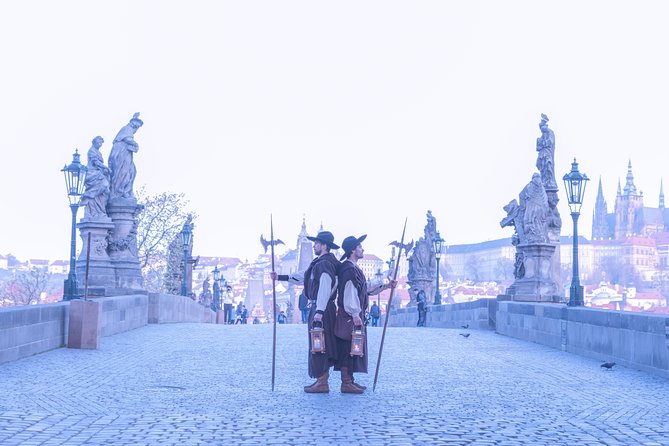
- Costumed nightwatchman storytelling: A character-led tour that keeps you focused on the “why” behind each stop.
- Old Town classics, but at night: You’ll hit major sights like the Astronomical Clock area without the daytime crowd vibe.
- Bread for everyday Prague: At the fruit market, you’re offered bread representing common people’s food.
- Mozart and Don Giovanni connections: Estates Theater and Il Commendatore tie musical history to Prague streets.
- Dark-but-smart context: Defenestration and executions are explained in a way that connects to life, not just shock.
- A riverside break with a Castle view: The Rudolfinum stop gives you a calmer pause and great photo timing.
A Nightwatchman Turned Your Old Town Guide
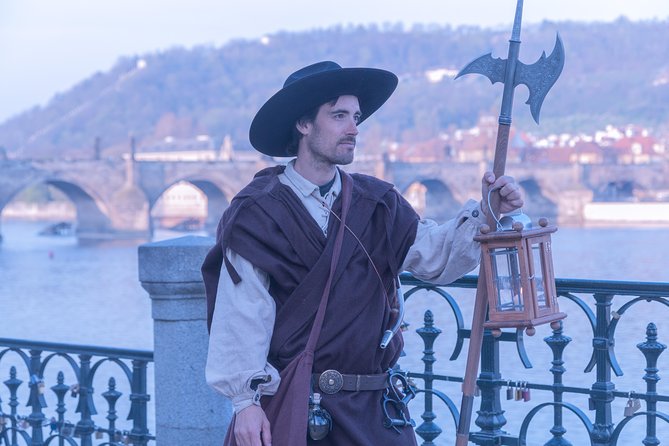
This tour’s main trick is simple: it turns Prague’s medieval streets into a working world. You follow a guide in historical dress who talks like a night watchman—so the usual “look at this building” approach becomes a story about what people feared, enforced, and survived.
I like that it doesn’t treat history like a museum label. It gives you reasons—about city gates, markets, law, religion, and public punishment—so you understand what you’re seeing instead of just memorizing dates.
You can also read our reviews of more tours and experiences in Prague.
Price and Timing: Why $26.62 Makes Sense for 90 Minutes
At about $26.62 per person for roughly 1 hour 30 minutes, this tour is priced like a practical add-on, not a splurge. That matters in Prague, where you’ll find plenty of tours that cost more for the same basic “walk and talk” format.
The value here comes from three places:
- You get a small group and an energetic character guide.
- You cover multiple Old Town anchors in a short window.
- The stops include narrative moments you’d miss solo—like how execution stories connect to specific civic spaces.
So if you’re trying to get bearings fast on your first night (or after a long day), this is an efficient use of time.
Start at Náměstí Republiky: Powder Gate as Your “Welcome to the City” Scene
You meet at the Powder Tower area, Nám. Republiky 5, and the tour starts with a gate story that sets the tone. The first stop is Prasná brána (Powder Gate), tied to the 15th-century fortifications and the gunpowder storage that gave the gate its name.
This opening matters because Prague’s medieval layout wasn’t an open-plan city. It was protected, controlled, and watched. Once you hear that idea out loud at the gate itself, the rest of the Old Town starts to feel structured—like you’re walking a system, not just a set of views.
Ovocný trh: Fruit Market Traditions and the Food of Common People
Next comes Ovocný trh, the fruit market area. Here you learn how markets worked as social engines: where everyday food was bought, argued over, and shared across classes.
What I like most is the simple, tactile touch: you’re offered bread of the common people to your group. It’s not a fancy culinary lesson, and that’s the point. It’s a reminder that the medieval city ran on basics, not royal luxuries.
A practical note: this is also a good moment to reset your energy. After the gate, the market helps you shift from defense to daily life.
Theatre Des États, Don Giovanni, and Why Mozart Shows Up in Prague Streets
At Theatre Des États, the story jumps to Mozart-era Prague. The guide connects this stage to the premiere of Don Giovanni, then threads it into local hero context from Czech history.
This stop is where the tour becomes more than medieval-only. You’ll hear how later cultural moments (like Mozart’s work and its performance history) get anchored to specific places you can actually point at on the street.
You’ll also pass reminders tied to the opera, including Il Commendatore’s statue, which brings up the first performance of Don Giovanni in 1787. Even if you’re not a music fanatic, these details make the urban landscape feel layered instead of flat.


The First University in Central Europe: Learning Power in Stone
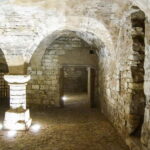
The tour includes a pass by the first university in Central Europe. This isn’t a long stop, but it’s an important mental shift.
Night watchmen weren’t just dealing with drunken noise and lost travelers. Cities also ran on ideas, training, and institutions. Even a quick moment like this helps you understand why people in Prague invested in education alongside trade and defense.
If you enjoy historical cause-and-effect, watch how the guide keeps linking “who controlled knowledge” to “who controlled order.”
Old Town Hall, the Astronomical Clock Zone, and Stories of Public Punishment
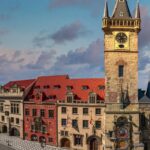
The biggest “stop-and-gawk” moment lands at the Old Town Hall with the Astronomical Clock area. The guide explains the town hall’s role as a civic center, then pulls in famous Prague episodes like defenestration and well-known executions tied to public life.
I appreciate how this kind of story can go wrong. It can turn into a shock parade. Here, the framing is different: the guide explains these events in a way that connects to how authority worked and how fear circulated in the streets.
This is also a smart time to slow down and look at the surrounding squares. If you only glance at the clock, you’ll miss how the space around it functioned like a stage for city decisions.
Jan Hus Monument: Hussite Memory and Civic Identity
From the executions and civic power, you move to Jan Hus Monument. This stop brings the tour into the 14th and 15th century world of the Hussites of Prague, and it’s a respectful pause in the storyline.
Why this works in a nightwatchman-led walk is that it completes the “order” picture. It’s not just law enforcement and punishment. It’s also belief, reform, and the tensions that shaped how people organized themselves.
Even if you only know Jan Hus in passing, the stop helps you place him as a marker of Prague’s long religious and political memory.
Church of Our Lady before Týn: An Old Landmark With a Medieval Anchor
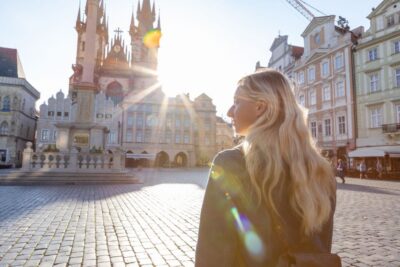
A short hop takes you to Church of Our Lady before Týn, described as one of the oldest churches you can still see today, with origins tied to 1368.
This stop is brief, but it gives you context for the city’s religious spine. In a tour like this, churches aren’t just “pretty buildings.” They’re part of how communities gathered, argued, and interpreted daily events.
If it’s dark and showery (Prague nights can be that way), the church silhouette and surrounding architecture can look especially dramatic. Just keep your footing on the uneven stone.
Rudolfinum Riverside Break: View Time Toward Prague Castle
Next comes Rudolfinum, followed by a quiet break along the riverside. This is your reset moment—less dense explanation, more breathing space.
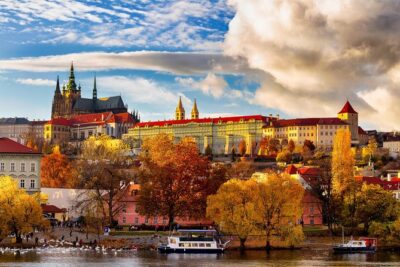
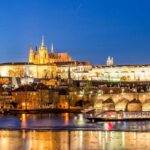
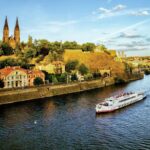
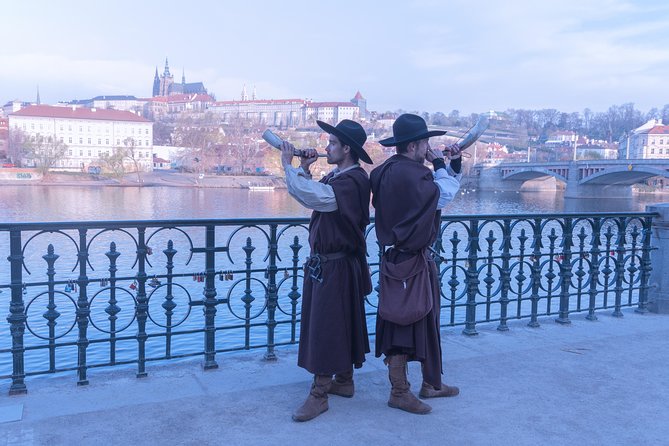
The payoff is the view toward Prague Castle, which gives you one of those “okay, I get it now” moments. You see how Old Town, the river corridor, and the castle hill connect visually, not just on a map.
It’s also a smart time to take photos, especially if the weather is cooperating. If it isn’t, focus on the view for orientation, not perfect shots.
Charles Bridge Finale: Charles IV and Nobles From the Other Side
The tour ends at the beginning of Charles Bridge, at the Charles IV statue area. The guide ties the bridge to the idea of people moving between worlds—then brings up Charles IV and the nobles associated with the other side.
This ending feels right because Charles Bridge is the “final page” in Prague’s Old Town storybook. Once you hear it framed as a crossing tied to power and social life, you’ll notice more on the way—how the bridge operates as a connector between neighborhoods and status.
What the Guides Do That Makes This Work (Thomas, Oscar, David)
This is not a generic script. The best part is the performance quality—guides stay in character as night watchmen, and the tone stays playful without turning sloppy.
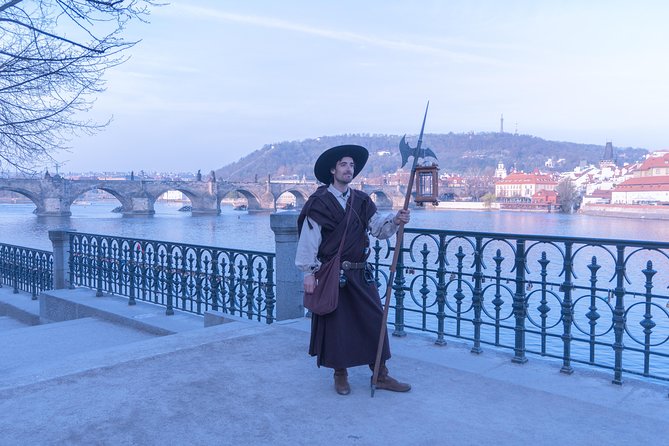
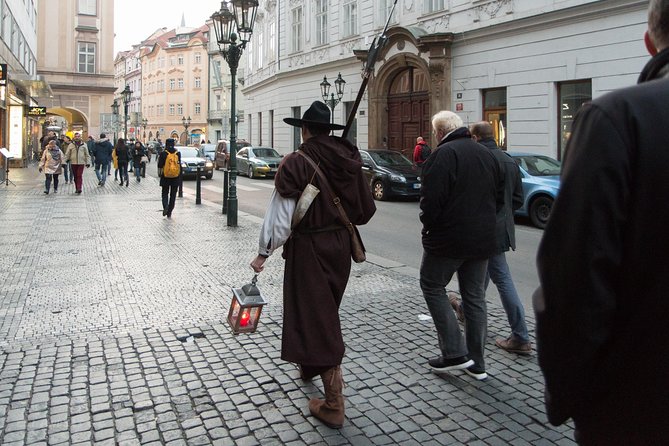
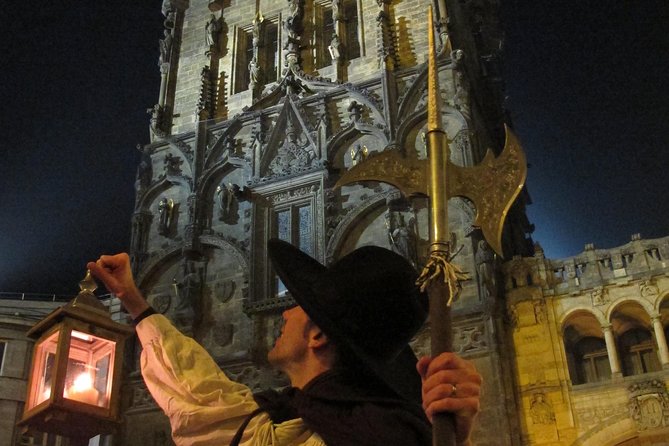
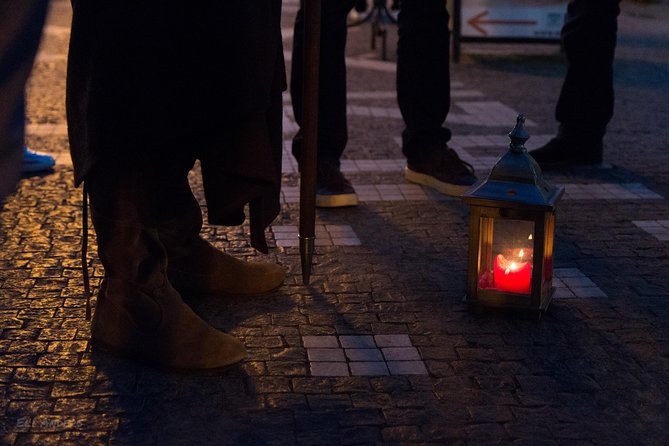
Names from recent experiences include Thomas, Oscar, and David. Across these guides, the same pattern shows up: humor, quick answers to questions, and a strong sense of scene-setting. Several guides also bring out props—like a lantern and staff/halberd—and even keep photo moments part of the experience.
If you’re the type who gets bored with lecture tours, this is built to keep you in motion with story beats and character voice.
Weather, Walking, and What to Wear for a Night Tour
This runs in all weather conditions, so you’re planning for rain or cold at least once in the year-round calendar. Dress appropriately, because the walk happens outdoors for the whole duration.
Also, bring a practical mindset. It’s about streets, squares, and turns, not smooth boardwalks. Wear shoes you trust on cobblestones, and you’ll feel a lot less stressed.
Because the tour is led at night, visibility matters. If your phone flashlight is your only light source, keep it charged.
Who Should Book This Nightwatchman Walk
This tour is especially good for you if:
- You want a first-night orientation to Old Town Prague.
- You like history that talks about daily life, not just kings and dates.
- You’re traveling with teens who think tours are boring.
- You want a different angle from other big Prague walks, even if you visit the same core areas.
It can also be a solid family choice, since the format is entertaining and the group stays small. Still, children must be accompanied by an adult, and the walking is continuous enough to require attention.
If you hate darker streets, or you’re not comfortable walking for 90 minutes on old stone, you might prefer a daytime option.
Should You Book Medieval Prague Through a Nightwatchman’s Eyes?
Yes—if your goal is to understand Prague like a story, not like a checklist. For the money, you’re getting a character-led guide, a tight route, and a mix of key Old Town landmarks plus smaller, quieter corners that make the city feel lived-in.
I’d book it early in your trip if you can, because the nightwatchman framing helps everything else click: the gate system, the civic square logic, the role of faith and authority, and why the river and castle shape the whole city.
If you’re short on time and want one guided evening that won’t waste your hours, this is the kind of tour that earns its place.
FAQ
Where does the tour start and end?
The tour starts at Nám. Republiky 5, Staré Město (Prague 1) at the Powder Tower area, and it ends at the Charles IV Statue, Křižovnické nám., Staré Město at the beginning of Charles Bridge.
How long is the Medieval Prague night watchman tour?
It runs for about 1 hour 30 minutes.
How much does it cost?
The price is $26.62 per person.
Is the tour offered in English?
Yes, it’s offered in English.
How big is the group?
The tour has a maximum of 15 travelers.
What’s included in the price?
The price includes taxes and handling charges and a local tax, plus a guide in historical dress.
Is transportation or hotel pickup included?
No. Hotel pickup and drop-off and transportation to/from attractions are not included.
Do I need to pay extra admission at the stops?
The stops listed show admission ticket: free for each location, so you should not need additional ticket payments for those specific sights.
What should I wear or bring?
Wear clothing appropriate for the weather because the tour operates in all weather conditions. Plan for outdoor walking on Old Town streets.
Can children join?
Yes, but children must be accompanied by an adult.
What is the cancellation policy?
You can cancel for a full refund if you cancel at least 24 hours before the experience start time. If you cancel less than 24 hours before, the amount paid is not refunded.