REVIEW · PRAGUE
Prague Immersive Tour: Travel back in time with virtual reality
Book on Viator →Operated by Numinos Praga · Bookable on Viator
Prague changes every time you look. This VR time-travel tour strings together four centuries in short, guided stops—Staré Město, Charles Bridge, Josefov, and Staroměstské náměstí—so you get more than photos. I like how the guide’s narration turns those dates into a story you can follow, especially with strong explanations in English.
What really sells it for me is the small group size (up to 15 people) and the tight 1 hour 45 minute format. Everything stays focused on a few key places, so you aren’t stuck wandering with a headset the whole time. One thing to weigh: it needs good weather, and there’s always a small chance a VR-style tour run can be delayed or disrupted if something goes wrong on the day.
In This Review
- Quick hits: what you’re really getting
- VR time-travel in Prague: the vibe and what to expect
- Meeting point at Numinos on Celetná: easy to find, central to start
- Stop 1: Staré Město in 1377 and a different Old Town Square
- Stop 2: Charles Bridge approach and a 1342 river-view moment
- Stop 3: Josefov and Prague under Rudolph II in 1600
- Stop 4: Back to the central square in 1621 and a turning-point event
- Guides matter: why the narration makes the VR hit harder
- Price and value: why $18.15 can work in Prague
- The main drawbacks to watch for (so you’re not surprised)
- Who should book this VR time-travel tour
- FAQ
- FAQ
- How long is the Prague VR time-travel tour?
- What does the tour cost?
- Where does the tour start?
- What language is it offered in?
- How many people are in the group?
- Is it easy for most people to participate?
- What if the weather is poor or I need to cancel?
- Should you book this Prague Immersive VR time-travel tour?
Quick hits: what you’re really getting
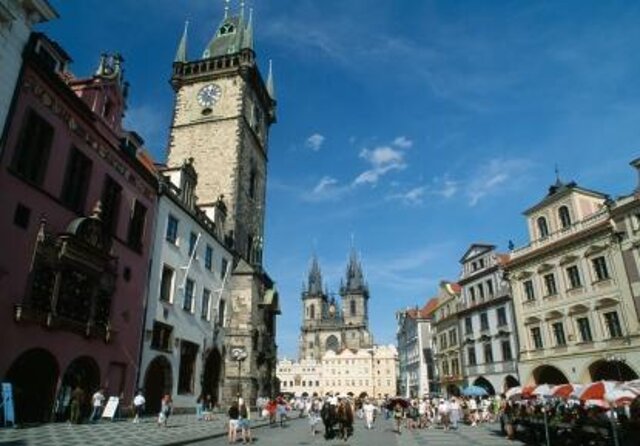
- Four time jumps: 1377, 1342, 1600, and 1621, matched to real Prague landmarks
- A guided VR experience in English, so you’re not decoding history on your own
- Stops stay short and efficient: about 20 minutes at each location
- Prague Old Town to Josefov to the central square, all in one block
- Limited to 15 people, which helps the pacing stay smooth
VR time-travel in Prague: the vibe and what to expect
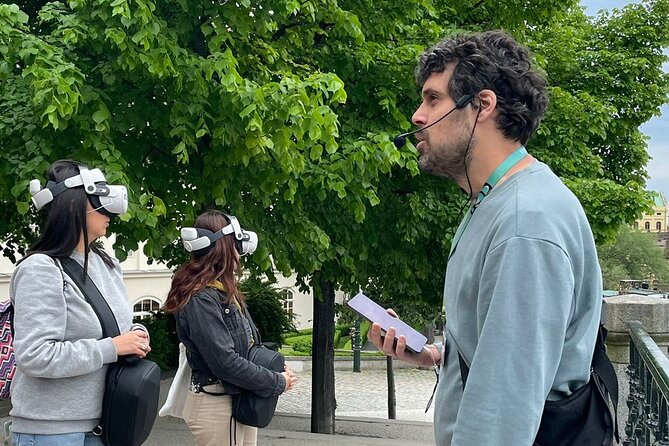
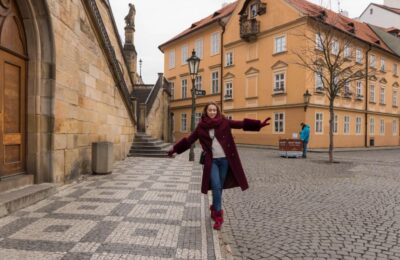
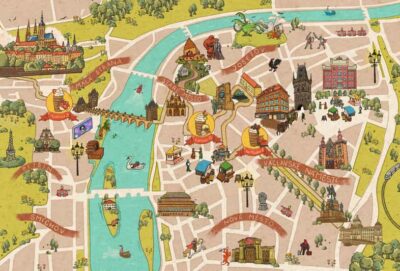
This is the kind of Prague activity you do when you want history, but you also want your feet moving through the city. You’ll start in Old Town, then the tour walks you toward the Vltava River area, continues into Josefov, and finishes back at the central square—each stop paired with a VR moment tied to a specific year.
The whole session is about 1 hour 45 minutes total, and each location is roughly 20 minutes. That matters because you don’t get bogged down. You can think of it like a guided sampler: a few landmark areas, a clear timeline, and a finish that doesn’t swallow your entire afternoon.
And yes, it’s mobile-ticket based. That’s a practical win when you’re juggling maps, tram apps, and where you left your phone charger.
You can also read our reviews of more tours and experiences in Prague.


Meeting point at Numinos on Celetná: easy to find, central to start
You meet at Numinos – Travel back in time with Immersive Tours, at Celetná 558/12, 110 00 Praha 1-Staré Město. This location is in the heart of Prague 1, which helps if you’re already touring around Old Town.
The tour runs with a start time of 3:00 pm, and it ends back at the same meeting point. That makes planning simpler: you don’t have to figure out a separate drop-off or line up another transport right after.
It’s also noted as being near public transportation, which is handy if you’re arriving from farther out or bouncing between sights by tram.
Stop 1: Staré Město in 1377 and a different Old Town Square
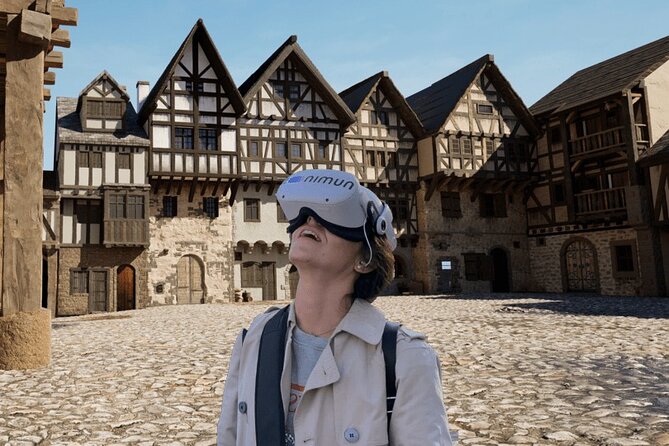
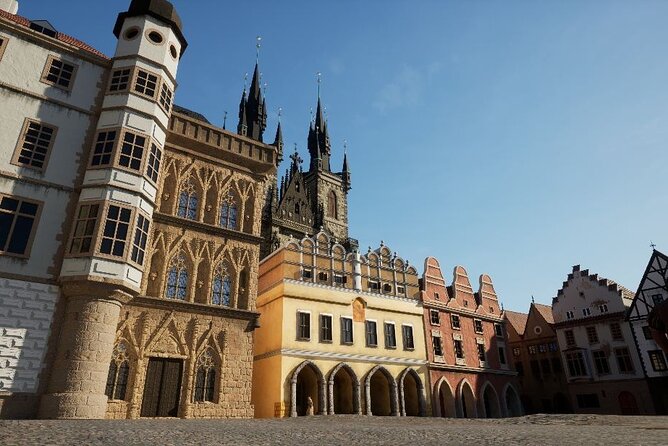
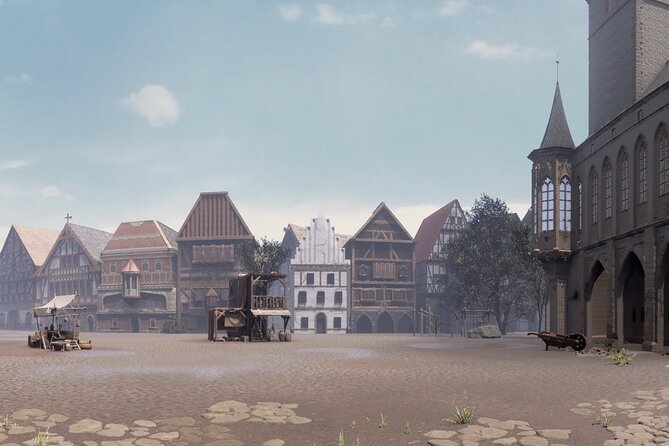
Your first time jump lands in 1377, focused on what Charles IV’s medieval Prague looked like. In practical terms, this is your “set the stage” moment. You’re not asked to memorize dates. The goal is to help you recognize the shape of the place—then see it through a different lens.
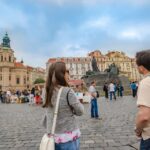
Old Town Square today can feel like a finished product: pretty, busy, and photo-friendly. But when you shift to 1377, the same space becomes something else. The VR component is the key here—it’s built to show you the square as if it’s part of a living medieval city, not a museum backdrop.
What I like about starting here: you get a foundation before you move toward Charles Bridge and beyond. If your brain needs a map of the timeline, this first stop gives you one.
Possible drawback: because each stop is only about 20 minutes, you’ll want to arrive mentally ready to absorb. If you’re the type who likes to linger and read every plaque, this part may feel quick. The tradeoff is that you get to cover more eras in one outing.
Stop 2: Charles Bridge approach and a 1342 river-view moment
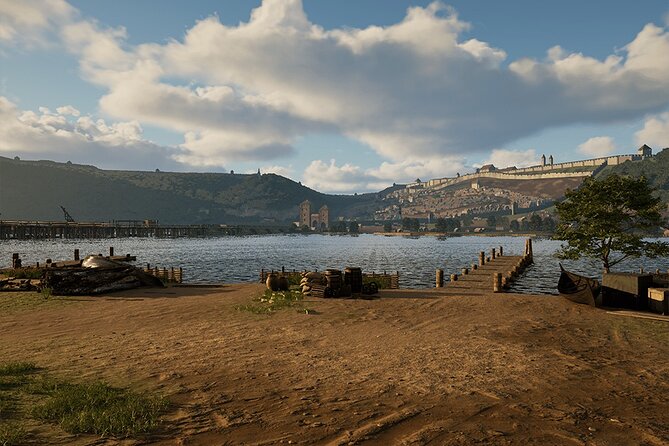
Next you head toward the Vltava River with a time jump to the city’s beginnings in 1342. This stop is less about a single viewpoint and more about how Prague connects to water—movement, trade, and the way the city forms around what the river enables.
You’re promised an impressive panoramic view across both banks, and the VR story ties that scenery to the old Judith Bridge in its last moments, plus a look at medieval Malá Strana with its walls.
Even if you’ve been to Charles Bridge before, the value here is the comparison. You don’t just look at the bridge—you get an era-by-era feel for why that crossing mattered.
Why this works for first-timers: Charles Bridge is the postcard spot, but Prague’s real magic is in the connections. Seeing the river banks paired with a time jump helps you understand why this bridge area keeps getting reinvented through history.
One thing to consider: this stop’s impact depends on where your group stands for the views and how you handle short bursts of guided VR. If you’re in a hurry to catch other sights right after, plan some breathing room. Your eyes will want to keep scanning the real skyline after the VR moment ends.
Stop 3: Josefov and Prague under Rudolph II in 1600
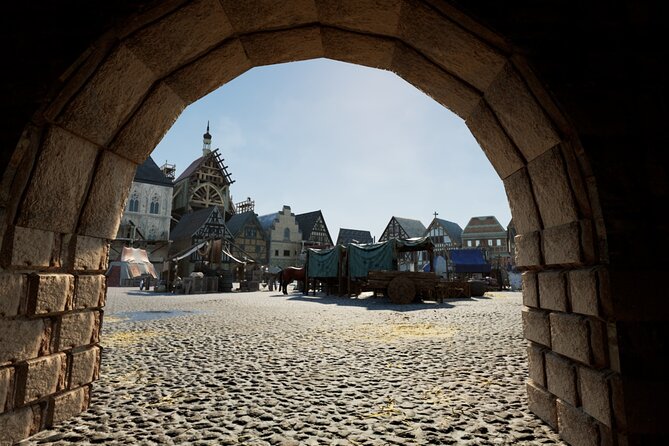
Then the tour shifts to Josefov, with a time jump to Prague of Rudolph II and the former Jewish ghetto in 1600.
This is the stop that tends to broaden people’s understanding. It’s not just architecture and scenic bridges. It’s a reminder that cities are shaped by laws, communities, and power structures—plus the daily life that still happened under those conditions.
You get to see the former ghetto area through the lens of the year 1600, which helps you understand the neighborhood’s identity beyond what you might notice on a casual walk.
What I appreciate about this sequencing: placing Josefov after Staré Město and the bridge approach makes the story feel like a journey through Prague’s changing centers. You start with the core medieval square, move through a crossing point tied to the river, then move into the city’s complicated social geography.
If you want a balanced Prague experience—pretty views plus context—this stop is the kind that gives your day more weight.



Stop 4: Back to the central square in 1621 and a turning-point event
Your final moment returns you to the central square, but it’s not the same year. You’re taken to 1621, with a reference to an event that would condition Prague’s history forever.
I like endings like this because they don’t leave you with only scenery. They leave you with a sense that Prague has “before” and “after,” and that key historical moments ripple through the city’s later life.
This stop also functions as a recap. After covering the bridge approach and Josefov’s 1600 setting, coming back to the central square in 1621 gives your brain a way to tie everything together: Prague isn’t just a collection of sights. It’s a timeline where locations keep taking on new roles.
Guides matter: why the narration makes the VR hit harder
A VR experience lives and dies by storytelling. In this tour, the guides are the engine. The names Anna and Lara show up in positive feedback for clear explanations and for making the city’s development across centuries feel understandable. Another set of Spanish praise mentions Santi and María for a magical, interesting experience.
That’s the practical takeaway for you: if you like history told in plain language—no stuffy lectures, no jargon overload—this format seems to match. You’re not just watching scenes. You’re hearing how the pieces fit together.
And since the tour is offered in English, you can follow the story without needing a guidebook translation.
Price and value: why $18.15 can work in Prague
Let’s talk money. At $18.15 per person, this isn’t a full-day ticket price. It’s priced like a focused experience, not a major museum day.
What makes it feel fair for me is that you get multiple locations and multiple centuries in one outing, within a short time window. You’re paying for:
- Guided VR time jumps connected to real Prague landmarks
- A route that covers major Old Town areas without needing extra planning
- An organized group structure capped at 15 people
Could you learn Prague history on your own for less? Sure. But this is designed for people who want the story delivered while you’re standing in the exact space it’s describing.
If you’re building a Prague itinerary and you’re trying to balance paid activities with free wandering, this is a strong slot. It fills time between big attractions and adds a “wow” factor that’s hard to recreate with only walking.
The main drawbacks to watch for (so you’re not surprised)
Here are the realistic considerations, based on what the tour description and on-the-day needs suggest:
- Weather is required. If conditions aren’t good, the experience may be canceled and you’ll be offered a different date or a full refund.
- Short stops mean fast pacing. About 20 minutes per location doesn’t leave much time for personal wandering. You’ll follow the schedule.
- One rare risk: day-of reliability. There is at least one report of a no-show problem, so I recommend you check your confirmation message and keep an eye on any updates close to the start.
Most people should be fine. But a little day-of vigilance is just smart when your activity depends on a specific meeting point.
Who should book this VR time-travel tour
This is a good fit if:
- You’re a history fan, but you also want a visual experience that helps dates stick
- You want to cover Old Town + Charles Bridge area + Josefov in one chunk
- You like structured tours but don’t want a full-day commitment
- You want something different from the usual walking tour format
It’s also attractive if you’re traveling with different ages. Reviews specifically call it out as something people of any age can enjoy, and the pacing fits a wide range of attention spans.
If you hate VR headsets, or you prefer long, self-guided wandering with lots of reading, you might not love the strict timeboxing. But for many first-timers, it’s a fast way to get oriented.
FAQ
FAQ
How long is the Prague VR time-travel tour?
It runs for about 1 hour 45 minutes.
What does the tour cost?
The price is $18.15 per person.
Where does the tour start?
It starts at Numinos – Travel back in time with Immersive Tours, Celetná 558/12, 110 00 Praha 1-Staré Město, Czechia.
What language is it offered in?
The tour is offered in English.
How many people are in the group?
The experience has a maximum of 15 people.
Is it easy for most people to participate?
The tour notes that most people can participate, and service animals are allowed.
What if the weather is poor or I need to cancel?
The experience requires good weather. If it’s canceled due to poor weather, you’ll be offered a different date or a full refund. You can cancel for a full refund up to 24 hours in advance. If you cancel less than 24 hours before, the amount paid isn’t refunded.
Should you book this Prague Immersive VR time-travel tour?
Yes, if you want history you can actually feel while you’re standing in Prague’s real spaces. The biggest win for me is the way it compresses a timeline—1377, 1342, 1600, and 1621—into a guided format that doesn’t drag.
Book it if you’re the type who likes clear explanations and you’re happy to follow a schedule for 1 hour 45 minutes. And before you go, keep an eye on weather and updates, because this one depends on day-of conditions.
If you’re unsure where to fit it, schedule it after you’ve seen a few core sights around Old Town. It’s the kind of experience that helps everything else click afterward.