REVIEW · PRAGUE
Prague: Private Prague Art Nouveau and Cubism Tour
Book on GetYourGuide →Operated by Prague Articulate · Bookable on GetYourGuide
Prague’s modern buildings have secrets. This private Art Nouveau and Cubism tour strings together Prague’s early-20th-century style shifts, starting at the rebuilt Central Train Station from 1909 and ending in the more daring geometry under Vyšehrad. I love how the story makes those facades feel like part of real 20th-century change, and I also like that you’re constantly shown details you’d normally walk past without noticing.
One thing to consider: it can feel like a lot of time in one sitting, especially toward the final portion, so if you’re short on energy, pick your pace. The good news is that the narration is sharp—guides like Max and Eva are able to explain the style timeline clearly and connect it directly to what you’re seeing as you go.
In This Review
- Key takeaways
- Art Nouveau to Cubism: the style story you’ll start seeing everywhere
- Meeting point at Prague Central Station Platform 1 (and what to look for)
- Starting at the 1909 Central Station: modern Prague begins with a station
- The New Town architecture run: Jubilee Synagogue, quieter facades, and the Municipal House
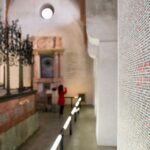
- Jubilee Synagogue: a fast, story-driven stop
- The in-between lesser-seen architecture
- Municipal House: the best place to slow your eyes
- House of the Black Madonna and Wenceslas Square: symbolism meets the city’s real center
- The short public transport ride: why the tour leaves the main tourist loop
- Vyšehrad Cubism zone: Three Cubist Houses, Kovařovicova vila, and the house at Vyšehrad no. 98
- The “Cubism as attitude” connection
- The guide makes the tour: Max’s clarity and Eva’s style map
- Pace and timing: what to expect if you want a quicker or slower tour
- Price and value: $84 for a private, guided architecture day
- Who this tour is best for (and who might not love it)
- Should you book the Prague Art Nouveau and Cubism tour?
- FAQ
- FAQ
- Where is the meeting point for the tour?
- What languages are the guides available in?
- Is the tour private or shared?
- Is public transportation included?
- Is the tour wheelchair accessible?
- How long is the tour?
- What should I wear or bring?
- Is this tour suitable for children?
- What is the cancellation policy?
Key takeaways
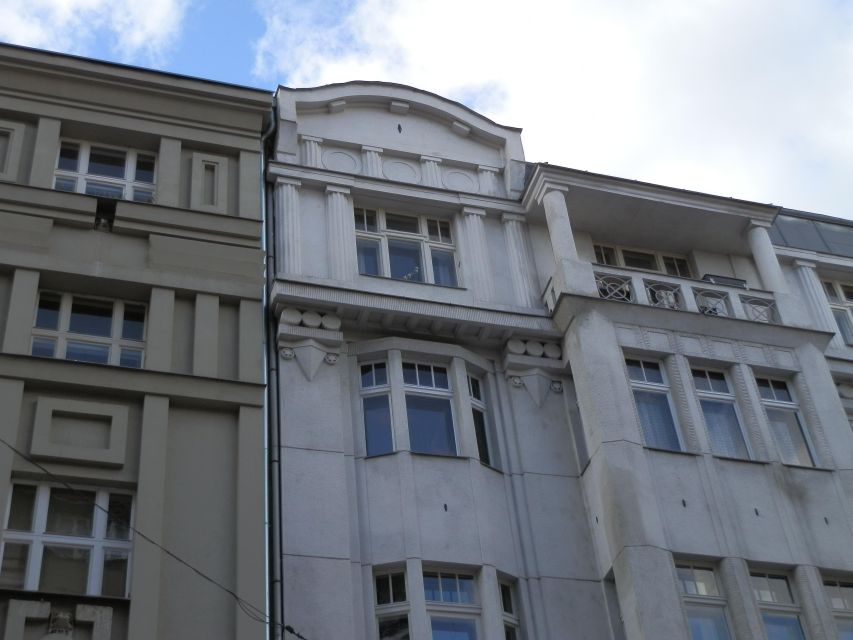
- Art Nouveau’s “why” before the “what”: your guide explains how it grew out of 19th-century tastes and why it felt revolutionary.
- Cubism as a reaction: you see how Cubism started as a revolt against Art Nouveau, then how World War I changed the whole direction of fashion and ideas.
- A route locals actually use: you spend real time in downtown areas, then take public transport for the part most visitors miss.
- Two architectural worlds in one day: Belle Epoque elegance in the New Town, then harder angles under Vyšehrad.
- Short stops with a purpose: you don’t linger forever, but you get enough time to look, read the context, and move on.
- Private-group focus: it’s private, wheelchair accessible, and guided in English and German.
Art Nouveau to Cubism: the style story you’ll start seeing everywhere
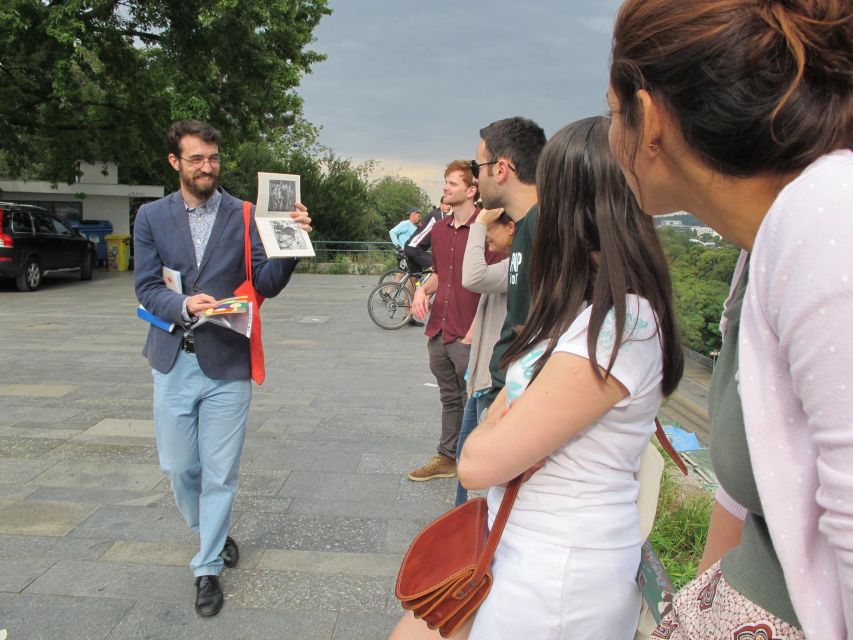
If you’ve already done Prague’s classic sights, this tour hits a different nerve. Instead of treating Art Nouveau and Cubism like museum labels, you get the logic behind them—how aesthetic choices became political, social, and artistic statements in a hurry.
Art Nouveau in Prague didn’t appear out of nowhere. The guide frames it as an evolution: it grew out of 19th-century styles, then pushed hard for new ways of looking at buildings, ornament, and modern taste. That matters because it teaches you what to notice. You stop asking, What style is that? and start asking, Why would someone build it this way in that moment?
Then Cubism enters as a pushback. The tour presents Cubism as a revolt against the dominant look of Art Nouveau—an artistic argument you can feel in the forms. And the timing is key: the guide also connects both styles to the disruptions of World War I, explaining why neither fully survived the world’s rapid changes.
You can also read our reviews of more private tours in Prague


Meeting point at Prague Central Station Platform 1 (and what to look for)
You meet at Prague’s Central Train Station, in the middle of Platform No. 1. The guide carries a red folder, which is helpful when you’re standing among that many signs and suitcases. There’s also a nearby starting reference point at a UniCredit Bank ATM, so if you’re the type who likes to get oriented first, use that as a backup mental marker.
This is a practical choice. Central Station gives you a built-in “before and after” feeling: you’re starting from a reconstructed 1909 landmark and moving forward into the New Town’s Belle Époque energy. It’s also convenient for the guided timing—your walking segments are short, and the stops are spaced so you can keep your eyes sharp.
You’ll want comfortable shoes. This tour mixes walking with public transport, and even if the steps are manageable, you’ll cover enough distance that sneakers matter.
Starting at the 1909 Central Station: modern Prague begins with a station
Your tour’s early focus is the station itself—because it sets the tone. The guide gives you a guided intro here (about 15 minutes), and you’ll get the big-picture framing: Prague’s shift into modern aesthetics didn’t happen only in palaces and theaters. It showed up in everyday infrastructure too.
From there, the walking begins quickly. You’re not led down a long, empty corridor of “approach.” You move from one relevant stop to the next, with brief sight windows that encourage active looking instead of passive watching.
A nice touch: the guide doesn’t treat each building as isolated. They connect it back to the style timeline you’re learning—so even short stops feel meaningful, not rushed.
The New Town architecture run: Jubilee Synagogue, quieter facades, and the Municipal House
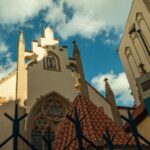
After the station, the itinerary keeps you in the rhythm of the New Town. You hit several points fairly close together, with short on-foot segments between them. One stop is the Jubilee Synagogue, and then you move through a sequence of quick sightings that your guide uses to build comparisons.
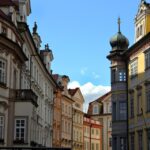
Here’s what I like about this part of the route: it makes Prague’s modernist vocabulary feel conversational. Instead of one “star building,” you see how design ideas appear again and again—sometimes boldly, sometimes in details you’d only notice if someone pointed you toward them.
Jubilee Synagogue: a fast, story-driven stop
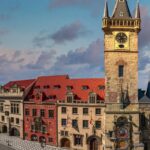
The tour clocks this as a short sightseeing window. That tells you the goal isn’t to treat it like a long museum visit. It’s more like a chapter marker—something the guide uses to broaden context while you’re still early in the narrative.



The in-between lesser-seen architecture
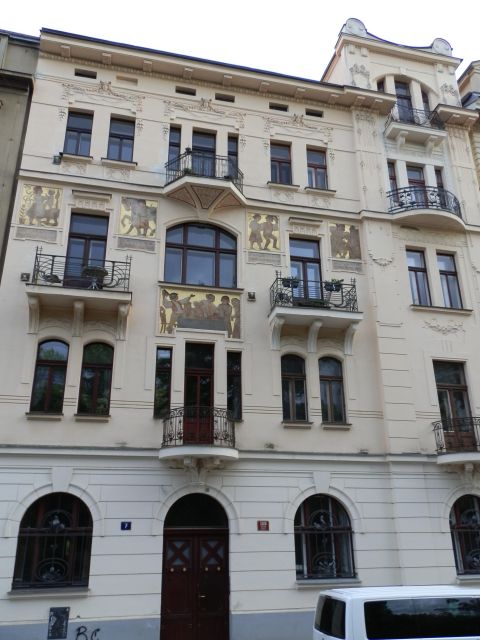
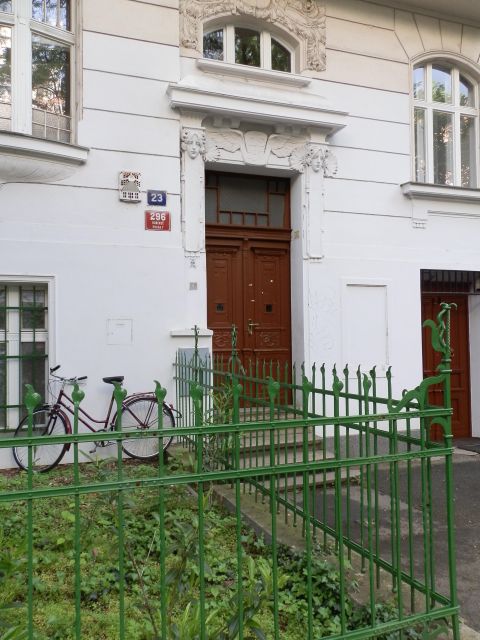
You also get multiple short “look and move” moments at stops without the big headline name. These are there for a reason. They train your eye. Art Nouveau and related styles can be easy to misunderstand if you only focus on the obvious ornament. The guide helps you look for how design choices repeat in subtler ways, and those quick breaks keep you attentive.
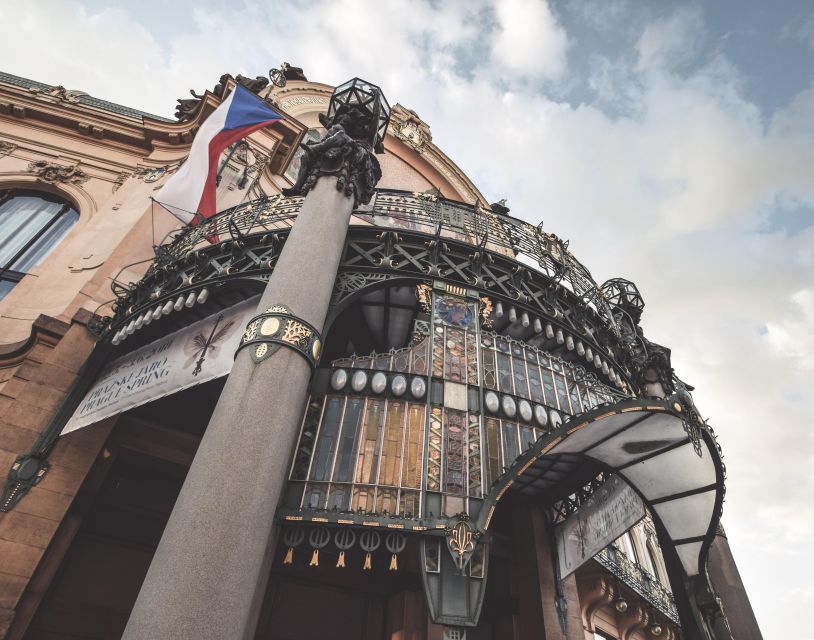
Municipal House: the best place to slow your eyes
Then comes the Municipal House with a longer sightseeing window (about 10 minutes). This is the kind of stop where you’ll likely want to take a moment to stand, scan upward, and then circle back to details. Since you’re already learning the style logic, you can interpret what you see instead of just admiring it.
Practical tip: during a timed tour like this, don’t try to take in everything in one sweep. Look in layers—first the general form, then the ornament logic, then any signature elements the guide points out.
House of the Black Madonna and Wenceslas Square: symbolism meets the city’s real center
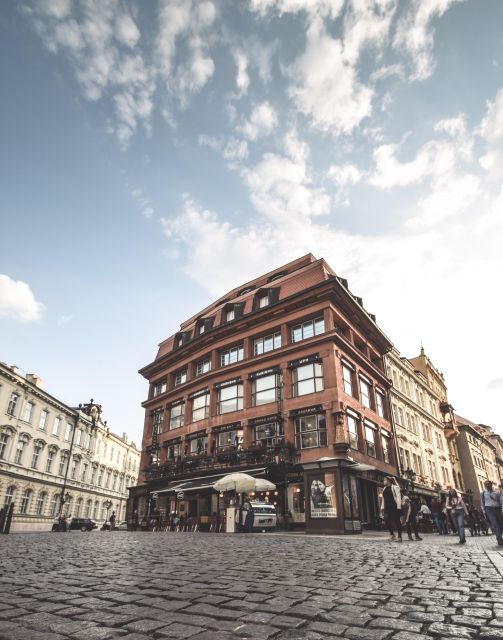
Next, the tour shifts into a downtown sequence that feels more familiar on a map. You’ll spend time at the House of the Black Madonna, another 10-minute sightseeing stop. Like the earlier highlights, it’s not presented only as a photo spot. The guide uses it to keep the story grounded in the idea that styles are tied to their time—not to a random aesthetic preference.
Then the route brings you to Wenceslas Square for about 20 minutes. This longer stop is important because it changes your pace. You’re not just looking at facades now; you’re looking at a major public space and the way Prague’s architectural language behaves in a living urban center.
Wenceslas Square can be a “heads up, get your bearings fast” kind of place, especially if you’re tired. Use the time to reset: pause for a breath, watch how people move, and let your guide’s style narrative connect to the street level reality of the city.
If you’ve done Prague with a checklist approach before, this part can feel like the bridge between postcard architecture and the city you’ll actually walk through later.
The short public transport ride: why the tour leaves the main tourist loop
Once you’ve covered substantial downtown areas, the itinerary takes public transportation for a short ride to a more remote area under the Vyšehrad fortress. This is the moment when the tour starts earning its “architectural contrast” promise.
Your guide isn’t just taking you to a different neighborhood—they’re taking you to a different intensity level of architecture. Under Vyšehrad, the tour focuses on Cubist-era work and the daring side of Prague’s modern forms.
You’ll also be glad the tour includes public transportation tickets. The stop near the end is also conveniently located so you can catch tram service back toward the downtown area, with tickets included for that return ride as well.
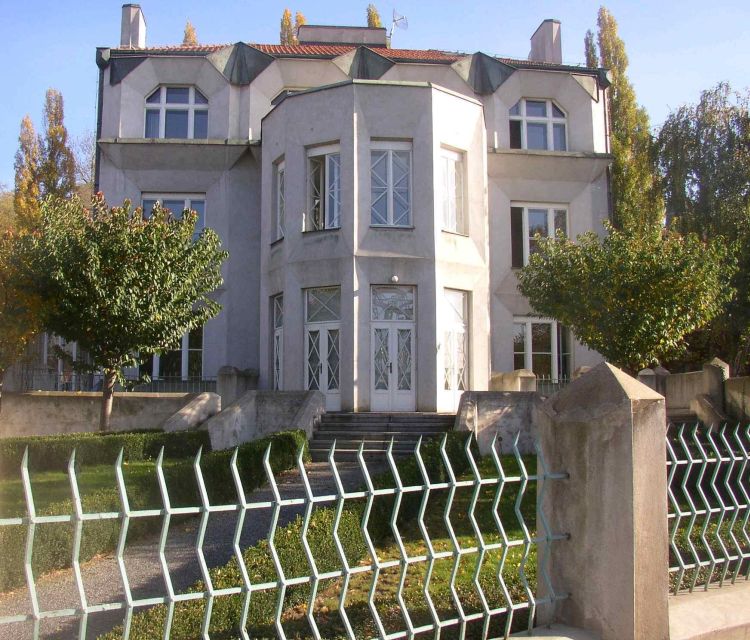
Vyšehrad Cubism zone: Three Cubist Houses, Kovařovicova vila, and the house at Vyšehrad no. 98
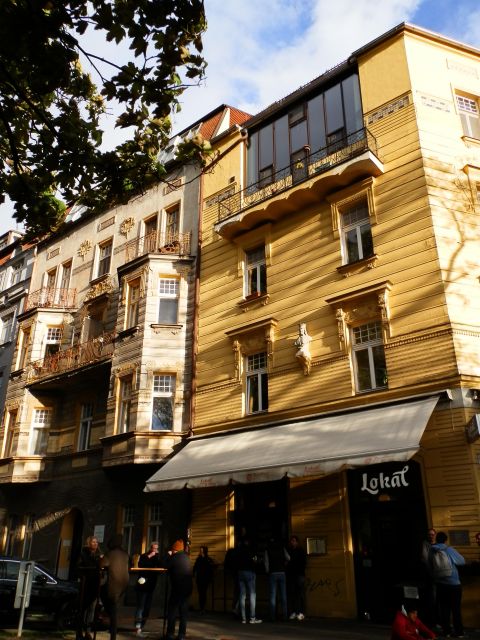
This is the sharpest change in the day. The earlier part of the tour teaches you how Art Nouveau evolved and why it felt revolutionary. Now Cubism becomes the physical argument you can read with your eyes.
The route takes you to Three Cubist Houses (about a 5-minute sightseeing window), then to Kovařovicova vila (around 5 minutes), and finally to a Cubist house Vyšehrad, house number 98 (about 5 minutes). Those windows might sound short, but the tour’s structure is built around targeted observation: you’re supposed to look, relate what you see to the narrative, and then move before you lose focus.
Here’s how to get the most out of these stops:
- Don’t only stare at the “angles.” Look for how the building seems to reorganize space visually.
- Use your guide’s framing of Cubism as a revolt against Art Nouveau. That comparison is often what makes the forms feel meaningful instead of random.
- Take one slow second to compare the Cubist shapes with what you saw earlier in the day. Your brain will do the connection if you give it a moment.
The “Cubism as attitude” connection
The guide also addresses the timing: Cubism didn’t just replace Art Nouveau cleanly. World War I and the rapid changes afterward disrupted the arc of both. That’s why the tour doesn’t treat Cubism like a style fad. It’s presented as a response to its moment—and a reminder that design choices can be tied to upheaval and uncertainty.
The guide makes the tour: Max’s clarity and Eva’s style map
The highest praise in this kind of architecture tour always comes down to the guide. In this case, it’s easy to see why. Guides like Max deliver a clear, compelling explanation of how Art Nouveau flourished locally, and they connect the story tightly to what you’re looking at.
One guide strength you’ll feel quickly: the explanations don’t float above the street. They’re grounded. You get enough architectural cues to see what the guide is talking about. That’s the difference between a tour that feels like a lecture and one that feels like a guided visual training session.
Eva is another standout name tied to the experience. The focus is practical: she’s able to cover a lot of ground while staying clear about the differences among architectural styles—so you don’t leave with a blur of buildings, you leave with a usable framework.
Also, if you’re the type who likes Prague beyond the big posters, the route’s mix of downtown time and out-of-the-way architecture is a smart match. The less famous stops are part of the teaching plan, not random filler.
Pace and timing: what to expect if you want a quicker or slower tour
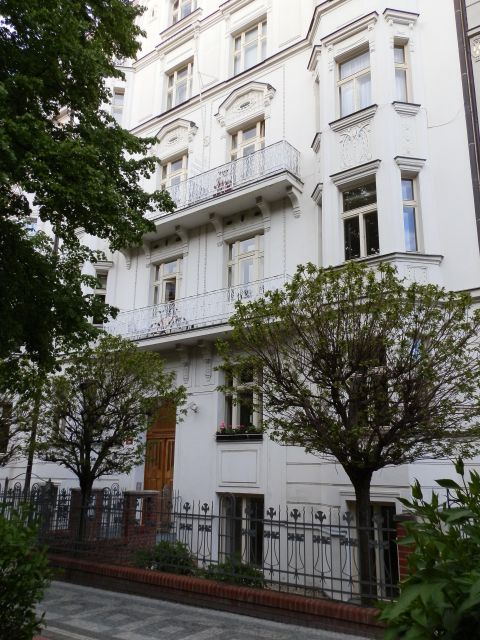
The overall feel is “active and structured.” You’ll move through many stops, with multiple short sight windows and a couple of longer ones (like Wenceslas Square and the Municipal House).
There’s one reasonable caution: some people feel the schedule runs a bit long toward the end and wish the final stretch were shorter—so if you like to take your time and linger, this format may feel like it’s asking you to keep up. On the flip side, that briskness is also what keeps the narrative coherent: you learn the style logic and then you use it right away on the next building.
My practical advice: bring a small water habit (even if the tour doesn’t provide it). Build in micro-pauses during transitions between stops. If you see you’re getting tired, pick one stop each section to focus on fully and let the others be “guided observation,” not “complete analysis.”
Price and value: $84 for a private, guided architecture day
At $84 per person, the question isn’t just whether the price is fair. It’s whether the format justifies it.
Here’s what you’re getting for that amount:
- A private group with a live guide
- English and German language options
- A focused architecture narrative that links Art Nouveau and Cubism (not just a checklist)
- Public transportation tickets included, plus tram return coverage near the end
- A route designed to mix recognizable downtown stops with more remote architecture under Vyšehrad
- Wheelchair accessibility
For Prague, that’s solid value if you want meaning, not just movement. If you enjoy architecture but don’t want to “schedule your own story,” the guide does that work. And since the tour is timed with short sight windows, you’re not paying for time you’d otherwise spend deciding where to go next.
If you only care about the most famous postcard exteriors and nothing else, a self-guided walk might be cheaper. But if you want the style framework—how Art Nouveau turns into Cubism and why the world wars matter—the private guided structure can be worth it.
Who this tour is best for (and who might not love it)
This tour fits best if:
- You’ve already visited Prague’s big highlights and want alternative architecture within a clear story.
- You enjoy learning the “why” behind styles, not just photographing facades.
- You’re comfortable with walking plus short transit segments.
- You like structured time on the street with a guide who points out what to notice.
It may be less ideal if:
- You’re traveling with children under 12, since the tour isn’t suitable for that age group.
- You need a very relaxed pace. The itinerary has several short stops and an active schedule.
Should you book the Prague Art Nouveau and Cubism tour?
If your goal is to see Prague as a city of evolving ideas—not just a city of landmarks—this is a smart booking. The route makes Art Nouveau and Cubism feel connected, and the guide-led narrative helps you read details you’d normally skip. The public transport inclusion also keeps the day efficient.
I’d book it if you want a guided architecture day that still leaves room to breathe in the real city. I’d think twice if you’re sensitive to longer pacing or you only want the biggest, most famous exteriors.
FAQ
FAQ
Where is the meeting point for the tour?
You meet at Prague’s Central Train Station, in the middle of Platform No. 1, and the guide is carrying a red folder.
What languages are the guides available in?
The live tour guide is available in English and German.
Is the tour private or shared?
It’s a private group tour.
Is public transportation included?
Yes. Public transportation tickets are included, and there are tram segments during the route.
Is the tour wheelchair accessible?
Yes, the tour is wheelchair accessible.
How long is the tour?
It’s listed as a 1-day experience, and the route is structured with multiple sightseeing stops plus a short public transport ride.
What should I wear or bring?
Wear comfortable shoes.
Is this tour suitable for children?
It’s not suitable for children under 12.
What is the cancellation policy?
You can cancel up to 24 hours in advance for a full refund.