REVIEW · PRAGUE
Kutna Hora Private Day Trip from Prague by Train
Book on Viator →Operated by Explore Prague · Bookable on Viator
A day trip that starts with bones. This private Kutná Hora outing is built for smart logistics and big contrasts: Gothic churches, the famous Ossuary, and a real medieval silver mine—without the headache of Prague traffic. I love that the train-based route keeps the day moving on schedule, and I love having a private guide to stitch it all together. The main drawback is simple: it’s a long 10-hour day with steady walking, and the mine isn’t for everyone.
The Sedlec Ossuary is only part of the story. I also like how the itinerary pairs dark and surprising art with impressive architecture—then finishes with St. Barbara’s Cathedral. One consideration: depending on the day and season, the mine stop may be swapped for Italian Court interiors, and if you’re claustrophobic (or need to avoid the mine), the tour can be adjusted.
You’ll start early with a Prague pickup (exact time comes after booking), then head out by train and bus, with a schedule that gives you short, efficient visits and enough space to actually look around. Private means just your group, in English, with tickets handled for the key stops.
In This Review
- Key things that make this day trip work
- Prague to Kutná Hora by train: less stress, more looking
- Morning pickup and your first stops: the pace is intentional
- Cathedral of the Assumption: Santini’s Gothic-Baroque mix
- Sedlec Ossuary: bone art that hits harder than expected
- Italian Court and minting history: where Czech kings made money
- Hradek and the medieval silver mine: the main event (with limits)
- St. Barbara’s Cathedral: the pride-of-town finale
- Price and value: what you’re actually paying for
- Day-trip stamina: walking, timing, and how to prepare
- Who should book this Kutná Hora private tour
- Should you book it?
- FAQ
- How long is the Kutná Hora private day trip from Prague?
- What’s included in the price?
- Are food and drinks included?
- Do you visit the silver mine every day?
- What if I have claustrophobia or I’m concerned about the mine?
- Is this a private tour?
- Is the tour in English?
Key things that make this day trip work
- Train travel from Prague reduces stress and avoids traffic chaos.
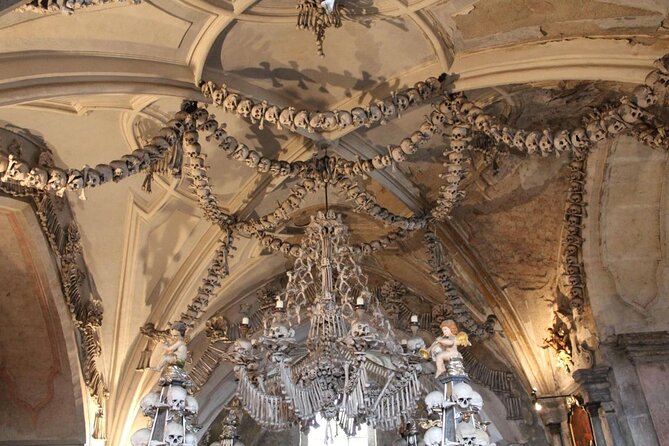
- Sedlec Ossuary is quick but unforgettable, with bone art you can’t really picture until you see it.
- St. Barbara’s Cathedral is a real architectural payoff, not just a quick photo stop.
- Hradek silver mine time is the big “hands-on” moment, with a museum visit if you need an alternative.
- Italian Court timing can change on Mondays and in winter, when interiors replace the mine.
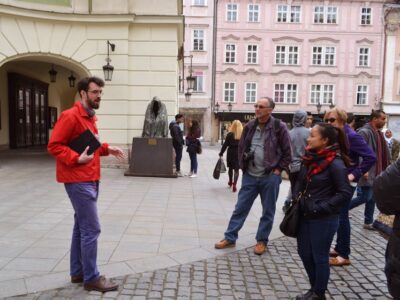
- Guides like Anna, Petra, Jack/Honza, and Hounza are praised for turning Czech history into something you can follow without feeling rushed.
Prague to Kutná Hora by train: less stress, more looking
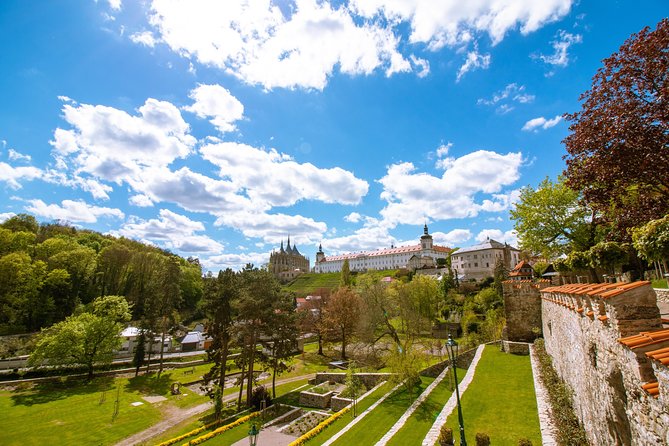
This tour is designed like a day should be: you get the hard parts handled, then you spend energy on the sights. Getting from Prague to Kutná Hora is done by train, and that matters. You’re not trying to fight traffic, parking, or unpredictable delays in town centers.
From there, you still use local transport for short jumps, but the big “connect the dots” part is taken care of. In practical terms, it means you can wake up, meet your guide, and let the day unfold instead of constantly checking timetables and platform changes.
Another reason I like this approach: the day’s pacing is built around scheduled entry windows. You’re not left guessing how long you’ll need at each stop.
You can also read our reviews of more private tours in Prague


Morning pickup and your first stops: the pace is intentional
You’re set to start at 8:00 am, and pickup time is updated based on where you’re staying in Prague. After that, you’ll be guided through transport to Kutná Hora, with a first major sight that doesn’t waste time.
The first two stops are close together, and that’s smart. You do the Cathedral of the Assumption first, then you move right into the Cemetery Church of All Saints with the Ossuary.
The total feel is: efficient, but not chaotic. You don’t spend the whole day marching in a line. There are short visits where your guide points out what matters, then you get moments to slow down and look.
Cathedral of the Assumption: Santini’s Gothic-Baroque mix
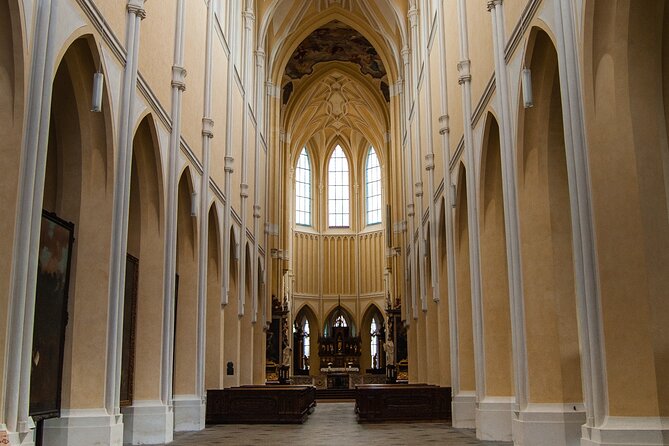
Your first real wow factor is the Cathedral of the Assumption of Our Lady and Saint John the Baptist. It sits in the complex of what used to be the biggest Cistercian abbey in Central Europe, so you’re not just looking at one church—you’re stepping into a larger religious and architectural legacy.
The cathedral is where Jan Blažej Santini Aichl’s work shows up in a very specific way. You’ll get guided pointing-out of the features as you walk inside, which helps a lot if you’re not an architecture expert. With only about 20 minutes here, the guide’s job becomes crucial: they help you see the details you’d otherwise miss.
Practical tip: give yourself permission to step back and look upward. With churches like this, the “story” isn’t only at eye level.
Sedlec Ossuary: bone art that hits harder than expected
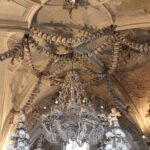
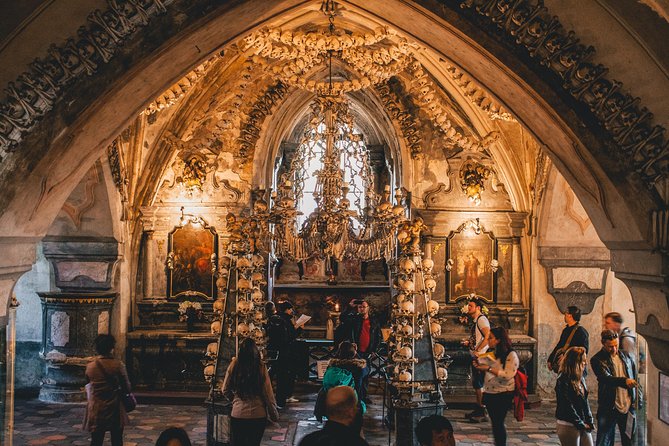
Next is the Cemetery Church of All Saints with the ossuary, just a short walk from the cathedral. This is the stop people talk about for a reason. You’ll learn why and how the ossuary was created, then you’ll see art made from human bones—bones used as decoration, arranged into shapes and designs that feel both crafted and unsettling.
The visit is about 15 minutes. That short time window is good: it prevents numbness. If you stay too long, the shock can turn into repetition. Here, the timing keeps it emotional instead of just creepy.
If you’re sensitive to death-themed sights, this is the moment to decide how you want to experience it. Some people want to look quickly and process later. Others want to linger. Either way, go in with context—your guide will explain the “why,” not just the “what.”
Italian Court and minting history: where Czech kings made money
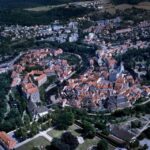
After the lower-town churches, you’ll ride by bus briefly into the city center for the Italian Court. This used to be a royal mint and a residence tied to Czech kings, so it’s a different flavor of history than the churches—more practical, more economic, more everyday power.
The exterior time is short—about 10 minutes—and the tour notes that Italian Court interiors are handled differently based on timing. If it’s Monday, or you’re traveling from December to March, the mine visit can be replaced, and you’ll instead spend time at Italian Court interiors, including the royal rooms of Czech kings.
What I like here is the “mental switch.” After the ossuary and cathedral, you get a chance to think about wealth, production, and how silver shaped authority in the region.
You can also read our reviews of more tours and experiences in Prague


Hradek and the medieval silver mine: the main event (with limits)
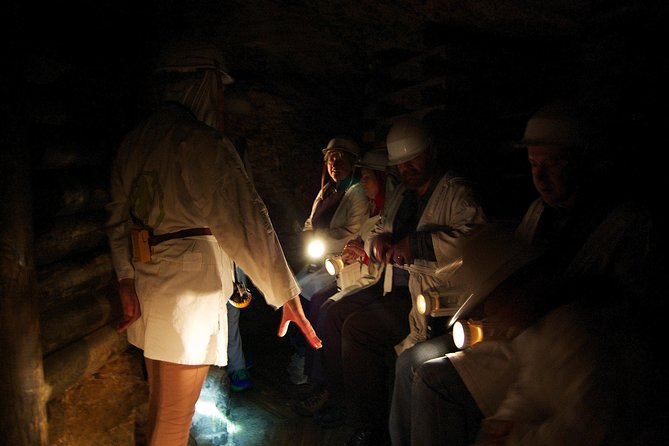
Lunch comes next in the plan, and then you get the star experience: exploring silver-mining life at Hradek. The tour includes a museum tied to Kutná Hora’s mining tradition, then you get to experience a real medieval silver mine.
The mine time is about 1 hour 30 minutes. That’s long enough to feel real, but short enough that it stays part of the full day instead of taking it over completely.
Important reality check: this mine is a physical experience. It’s not described as “easy.” The tour info specifically says the silver mine isn’t recommended for participants with claustrophobia or for overweight guests, and in those cases the silver mines museum visit can be replaced with an Italian Court interior excursion.
If you’re unsure, treat the mine as the deciding factor for your tour choice. People love it—especially if you like historical “in the bones” experiences—but it’s not built for everyone.
Also, consider height and mobility. One guide-led mine experience is described as fine but sweaty for an older tall traveler, which is a practical reminder that underground spaces can feel warm and tight.
St. Barbara’s Cathedral: the pride-of-town finale
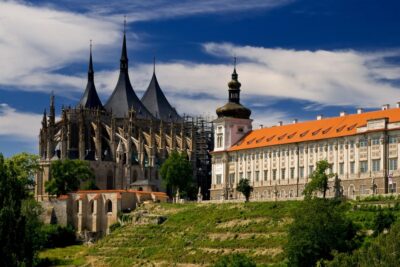
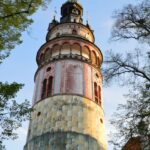
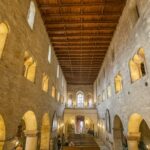
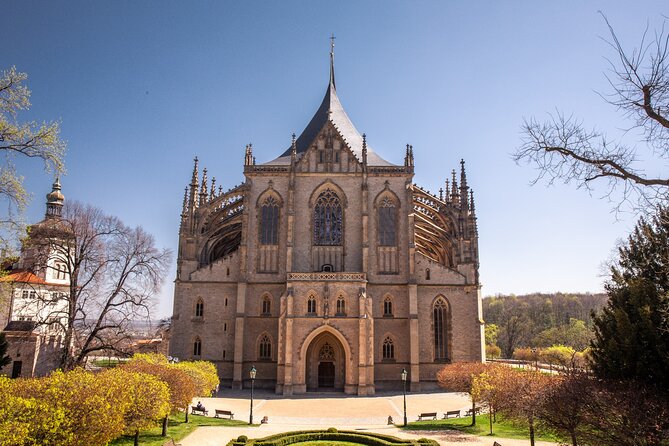
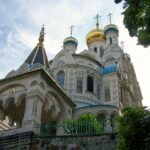
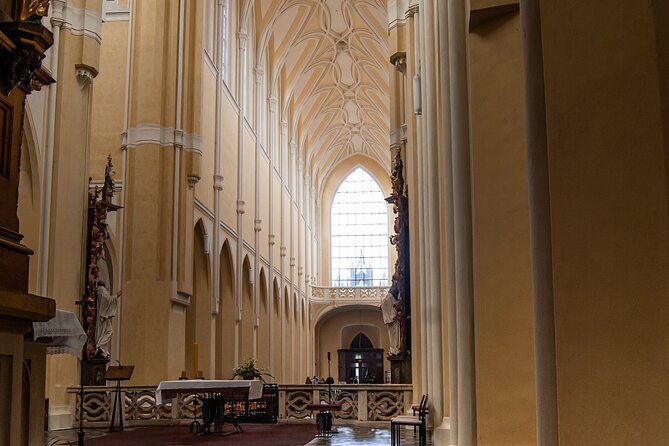
Finally, the day closes with St. Barbara’s Cathedral, which the tour describes as a symbol of pride for Kutná Hora’s burghers. It’s a Gothic cathedral, and what you’re looking for here isn’t just the exterior silhouette.
The tour includes time to see original medieval frescoes on the walls. That makes it a good last stop: the ossuary unsettles you, the mine challenges you, and then the cathedral lets you land with something visually complex.
You’ll have about 20 minutes for this final cathedral visit, then you’ll return by train to Prague, ending at Prague’s main train station.
Price and value: what you’re actually paying for
At $163.93 per person for an approximately 10-hour day, the price can look steep until you break down what you’re getting.
You’re paying for:
- a professional guide through multiple major stops
- Prague hotel pickup
- train travel out of Prague and back
- admission tickets for key sights (cathedral, ossuary, mine, St. Barbara’s)
- and a private format, meaning you’re not squeezed into a large group pace
Not included are food and drinks, plus hotel drop-off. That’s normal for a day trip, but it does mean you should plan to budget for lunch on-site. Many guides are also praised for local food recommendations, so don’t be shy about asking—your guide can usually point you to something convenient and genuinely local.
One more value note: the tour requires a minimum of 2 people per booking, and it’s private, so it’s often a strong deal for couples and small groups compared to trying to coordinate the same day’s connections on your own.
Day-trip stamina: walking, timing, and how to prepare
This itinerary is packed into one long day, and the “walking” is part of why it feels complete. You’re moving between churches, city center, and the mine area, plus exploring on foot at each stop.
To get the best out of it:
- wear comfortable walking shoes
- plan for a long stretch without a full reset (you’ll have lunch, but not a long break)
- bring a little patience for tight scheduling (short visits are built in)
If you want a more relaxed day, consider that the mine stop alone takes up a big chunk of time. You can still pace yourself inside stops, but you’re not going to turn this into a slow countryside wander.
Who should book this Kutná Hora private tour
I’d point you toward this tour if you want:
- a structured day outside Prague without constant logistics
- the big three Kutná Hora hits: Sedlec Ossuary, St. Barbara’s Cathedral, and the silver mine experience (when suitable)
- a guide who can explain what you’re seeing, not just list facts
It’s also a great fit for couples and friends who like history but don’t want to manage train connections, tickets, and timing on their own.
If you’re claustrophobic, or you’d rather avoid mines, you’ll still likely enjoy the day, but the mine may be replaced by Italian Court interiors. Make sure you tell your guide what you need.
Should you book it?
If your must-dos include Kutná Hora’s most famous sights and you want an organized, private day that avoids Prague traffic headaches, this is a very solid choice. The price makes more sense because the big-ticket parts—private guiding, admissions for the major stops, and train logistics—are handled for you.
I’d lean “book” if you’re comfortable walking all day and you’re open to the mine as the centerpiece. I’d ask questions or choose the mine-less option if underground spaces or tight interiors are a concern.
In short: this is the kind of day trip where the whole schedule actually matters. Get the logistics off your plate, then let the cathedral, ossuary, and silver mine do their work.
FAQ
How long is the Kutná Hora private day trip from Prague?
It runs about 10 hours.
What’s included in the price?
The tour includes a professional guide and Prague hotel pickup. Admission tickets are included for the Cathedral of the Assumption, the Sedlec Ossuary, Hradek/Silver Mines activities, and St. Barbara’s Cathedral. The Italian Court stop is listed as free (and may vary by day).
Are food and drinks included?
No. Food and drinks are not included.
Do you visit the silver mine every day?
Not necessarily. Due to opening hours, the mine visit can be replaced. On Mondays and from December to March, Italian Court interiors are visited instead.
What if I have claustrophobia or I’m concerned about the mine?
The tour notes that visiting the silver mines is not recommended for participants with claustrophobia or overweight. In those cases, the silver mines museum can be replaced with an Italian Court interior excursion.
Is this a private tour?
Yes. It’s private, so only your group participates. There is a minimum of 2 people per booking.
Is the tour in English?
Yes, it’s offered in English.
If you tell me your travel dates (and whether the mine is a yes or no for your group), I can help you figure out which plan—mine vs. Italian Court interiors—fits best.