REVIEW · PRAGUE
Moser Glassworks and Jan Becher Museum and Karlovy Vary Private Tour from Prague
Book on Viator →Operated by Bohemia Trip · Bookable on Viator
That first taste of hot springs is unforgettable. This private northern Bohemia day blends world-famous glass with a real-life spa town and a medieval castle stop that adds a nice twist to a Prague getaway. You’ll ride out in an air-conditioned vehicle, then walk through Karlovy Vary’s colonnades and learn how Becherovka and Becherlovka became part of Czech drinking culture.
What I like most: the inside-the-factory feel at Moser Glassworks. You get to see the glass working hands-on, with the intensity of the furnaces and the flow of the craftsmen’s work. I also like the balance of stops—castle ruins up on Angel Mountain, then a grounded museum visit, then time in Karlovy Vary for the spa-town atmosphere. One thing to consider: the tour description can imply certain comforts like Wi‑Fi and a minivan, but your actual vehicle may vary with group size, and you may not always get Wi‑Fi as expected.
In This Review
- Key highlights to look forward to
- Prague to Angel Mountain: castle ruins before the spa town
- Watch for how long the stop feels
- The Holy Trinity church: a standout detail near the ruins
- Moser Glassworks: why this factory visit is worth your whole day
- What makes Moser special
- Buying glass without turning it into a stress test
- Karlovy Vary: spa-town sights you can actually enjoy
- Why the spa-town walk matters
- Jan Becher Museum: the story behind the herbal digestif
- The smart way to visit
- Lunch in Karlovy Vary: included, but still choose with intent
- Return to Prague: a long day that stays organized
- Price and value: is $378.31 per person fair?
- Who this private tour is best for
- Should you book this tour?
Key highlights to look forward to
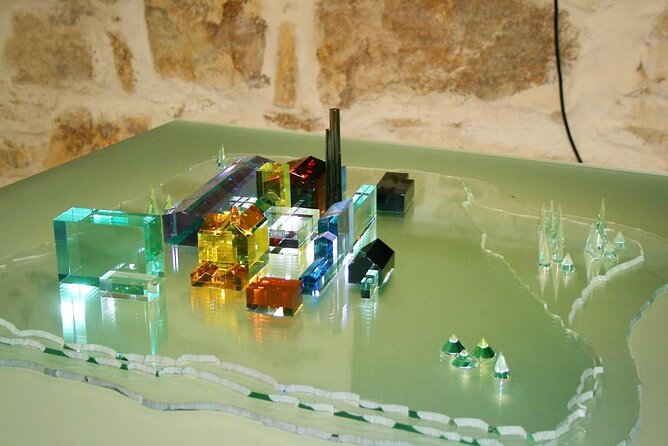
- Moser Glassworks inside the operation: watch the process up close, not just a showroom.
- Karlovy Vary’s spa-colonnade walk: see key sights like the hot spring at Vřídlo.
- Jan Becher Museum and Becherovka/Becherlovka: understand the herbal-herb style digestif story.
- Angel Mountain castle ruins: a Gothic ruin stop with Goethe ties and Thirty Years’ War history.
- Included lunch with local flavor: built into the day so you’re not hunting for food mid-route.
- Private format (max 6): you get more flexibility and personal attention than a big coach.
Prague to Angel Mountain: castle ruins before the spa town
This day starts early from central Prague (pickup is included), with the ride heading out into northern Bohemia. The pace is designed for one long but varied day: you’re not hopping between tiny streets all afternoon, and that matters if you want a relaxed trip with fewer decisions. You’ll have cooled water and the trip is described as air-conditioned, which is a real quality-of-life boost in hotter months.
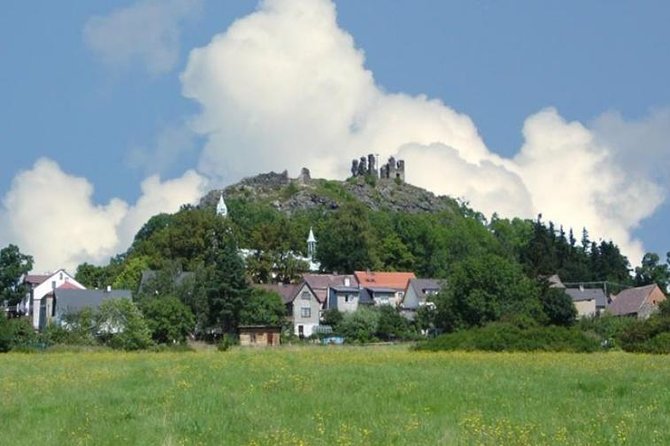
First major stop is the ruins of a Gothic castle above Andělská Hora, on Angel Mountain. The setting is the point here. You’re not touring a fully intact fortress with interpretive screens everywhere—you’re seeing the bones of something older, and that makes the ruins feel more real. You also get a couple of specific historical hooks: the castle predates the 15th-century village below it, and it was later burned down during the Thirty Years’ War. There’s also a literary connection—Goethe and other famous figures were said to favor the castle in its glory days. If you like places that feel like they were important before they became tourist stops, this one delivers.
You can also read our reviews of more private tours in Prague


Watch for how long the stop feels
The castle ruins stop is meant to be a guided sightseeing moment, not a long hike. Still, it’s a medieval ruin on a hill, so plan for uneven ground and some walking. If you have moderate mobility, you’ll want to take your time on steps and paths.
The Holy Trinity church: a standout detail near the ruins
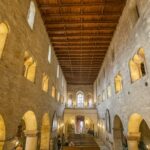
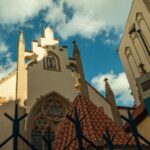
Before you leave the Angel Mountain area, you’ll also see the unique church of the Holy Trinity (built 1698–1712). The tour notes an Italian architect, Allipradi, and that detail is more than trivia—church architecture here helps you understand why the region’s story isn’t only about warfare and ruins. Even when the castle itself fell, the area kept building meaningful landmarks.
If you’re the kind of traveler who enjoys small contrasts—like “a ruined fortress above, a finished church below”—this stop adds depth without adding hours. It’s also a nice visual reset before you shift into something as tactile as glassmaking.
Moser Glassworks: why this factory visit is worth your whole day
Then comes the part many people mark as the reason they booked. Moser Glassworks was founded by Ludwig Moser in 1893, and the tour is built so you actually see the operation, not just browse a gift shop and call it a day.
What makes Moser special
Moser is famous for the style and reputation of its glassware, but the best payoff is the factory atmosphere. One strong theme from visitor feedback is how striking it is to go inside a working glass factory where you can see the blowers and the working hands at the right speed. You get a sense of heat and momentum—the furnaces aren’t a background detail, they shape the whole process. Watching craftsmen do their work makes the product feel less like a souvenir and more like a result of skill.
The tour also frames Moser as a brand with serious historical reach. It references famous clients such as Edward VII of Britain, the Shah of Persia, and Emperor Franz Josef I. You don’t need to be a history buff to appreciate what that means: you’re seeing a workshop tied to elite European tastes, not a random local studio.
You can also read our reviews of more museum experiences in Prague






Buying glass without turning it into a stress test
Yes, there’s a gift shop. That’s not the romantic part, but it’s practical. If you plan to buy, think ahead about what you’re carrying. Glass is fragile, and your hotel bag isn’t always a safe packing plan. If you’re traveling light, consider smaller pieces or items that are easier to protect.
Tip: if you’re serious about shopping, leave enough mental space after the work area so you can compare items calmly rather than rushing because the day is long.
Karlovy Vary: spa-town sights you can actually enjoy
After glassmaking, your day turns into spa-town strolling. Karlovy Vary is the big name here, and the tour gives you the origin story: founded in 1370 after King Charles IV stumbled upon a hot stream while out hunting. That detail helps you connect the hot-water culture to a beginning, not just to modern tourism.
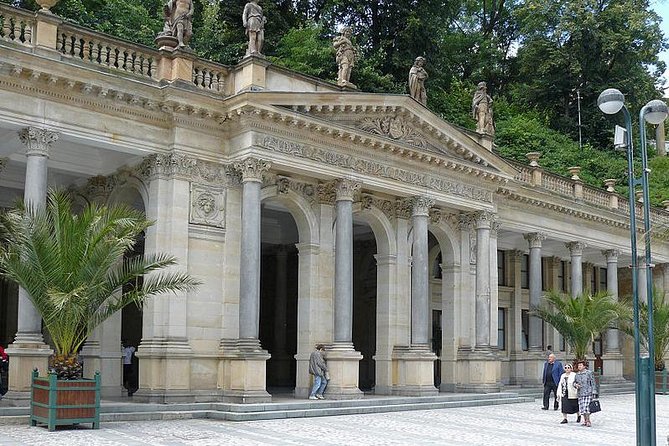
What you’ll do next is walk through the monuments of the picturesque town center and see spa colonades, including the hot spring at Vřídlo. If you’ve ever seen photos of Karlovy Vary’s colonnades, this is where it becomes real. The architecture feels designed for lingering—shops, seating, and long sightlines encourage you to slow down.
Why the spa-town walk matters
This isn’t just a scenic break between bigger activities. You’re learning the setting that made Becherovka/Becherlovka culturally important. Even if you don’t care about alcohol, the spa culture is a major part of the local identity.
If you like places where people still behave like they’re on a health-and-wellness routine—even if it’s partly tourist now—Karlovy Vary is a good match.
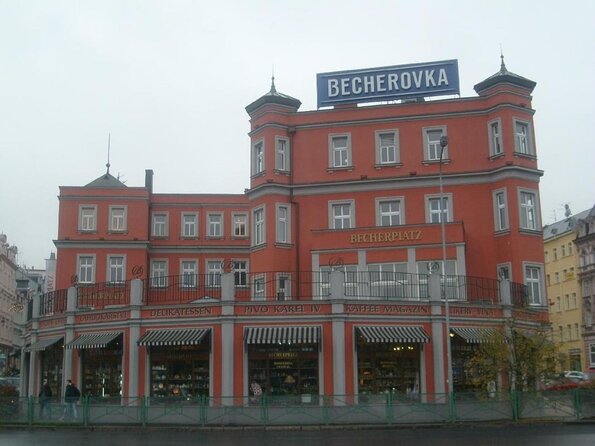
Jan Becher Museum: the story behind the herbal digestif
Next up is the Jan Becher Museum, focused on the digestif Becherlovka (and the broader Becherovka tradition). The tour description keeps it simple and intriguing: the recipe involves a secret concoction of herbs. That secrecy is half the appeal. You’re not getting a “normal museum” vibe where everything is easily explained. You’re getting a story shaped by tradition and a particular kind of Czech pride.
One review also points to the museum being more than plain exhibits—there’s mention of a multimedia presentation and a virtual feature that connects to Vincent through projections and written commentary. I can’t promise those details match what you’ll see on a specific day, but it’s a good sign that the museum experience may use modern presentation styles, not just glass cases.
The smart way to visit
Give yourself time to read at least a few key panels and take the museum in as a story, not a checklist. Even if you don’t drink digestifs, you’ll pick up why locals treat this kind of thing as part of their wellness culture rather than just a bar drink.
Lunch in Karlovy Vary: included, but still choose with intent
Lunch is included during the day, in a local restaurant. That’s one of the practical advantages of booking a guided format: you’re not gambling on finding a good place while you’re already tired and on a schedule.
That said, the tour description doesn’t specify cuisine style beyond traditional local lunch. If you have dietary needs, you’ll want to advise them when booking. The tour info says they can be handled with notification, but the details aren’t spelled out—so be clear about what you can and can’t eat.
Return to Prague: a long day that stays organized
You wrap the day back in central Prague with drop-off at your centrally located hotel. The total day length is about 10 hours, which is long enough that you’ll want to dress like you’re touring, not like you’re going out at night: comfortable shoes, light layers, and water handy.
Even with a full schedule, the private format helps keep the day from feeling chaotic. You’re not squeezed into a loud group tempo, and you can ask the guide questions when something catches your attention.
Price and value: is $378.31 per person fair?
At $378.31 per person, this is not a bargain-basement day trip. But it’s also not trying to be one.
Here’s why the price can make sense:
- Private day format: max 6 people per booking, so you’re paying for a smaller group experience.
- Hotel pickup and drop-off: fewer hassle points than a DIY day with multiple transfers.
- Transport with included lunch: you’re not paying separately for the car/bus and your main meal.
- Two major “wow” experiences: Moser Glassworks (factory atmosphere) and Jan Becher Museum (heritage story tied to a known Czech product).
Where value can feel less strong:
- If your actual vehicle ends up being a smaller car and Wi‑Fi isn’t available the way you expected, then you may feel like the experience didn’t match the comfort details you planned around.
- Because it’s a full day, the value also depends on your interest in all three categories: ruins/architecture, glassmaking, and spa-town culture. If you love only one of them, the day may feel packed.
My take: if Moser Glassworks is a must-see for you and you want Karlovy Vary to feel more than a quick stop, the price is easier to justify.
Who this private tour is best for
This tour fits well if you:
- Want a structured day trip from Prague that doesn’t turn into a “figure it out” scramble.
- Love hands-on manufacturing experiences—especially glassblowing and craft work.
- Are curious about Czech culture beyond beer, including digestifs like Becherlovka/Becherovka.
- Prefer a private group pace over a large coach.
It may be less ideal if you:
- Need Wi‑Fi on the road as a non-negotiable requirement.
- Have very limited mobility, since you’ll do walking on uneven ground at ruins and around the town.
Should you book this tour?
I’d book it if you’re the type of traveler who likes your day trips to be made of distinct “chapters”: a hilltop ruin, a real working glass factory, and then a spa town with time to wander. The Moser visit is the star attraction, and the day is built to let that craftsmanship breathe rather than rushing you through.
If you’re choosing mainly for comfort features like a guaranteed minivan and guaranteed onboard Wi‑Fi, double-check your expectations before you commit—vehicle details can vary with group size. Also, if you want the day to be lighter, this is still a long one, so plan for a full 10 hours.
If you’re looking for a meaningful Prague-to-Bohemia day that feels authentic and hands-on, this is a solid pick.