REVIEW · PRAGUE
Admission Ticket to Museum of Senses in Prague
Book on Viator →Operated by Museum of Senses Prague · Bookable on Viator
Prague’s strangest hour starts with a green gate. Step inside and you get an instant mood shift, from city noise to an oasis of sensations, where I love the nail bed moments and the way the vortex tunnel messes with your sense of balance. One trade-off: the museum is pretty compact, so if you want a long, slow museum day, this can feel short.
I also like how it works at your pace, with interactive exhibits designed for laughing, experimenting, and snapping photos (and yes, short videos to share). It’s offered in English, runs about 50 minutes to 1 hour, and the group size stays small (max 19), which helps keep the experience fun rather than rushed.
In This Review
- Key highlights you should know
- Finding the green gate on Jindřišská
- How the zones play with your senses
- Jungle, then sand dunes for touch and scale
- The nail bed: the classic bravery test
- The vortex tunnel: balance, stretched thin
- The infinite-room effect (and dizziness risk)
- Small exhibits, lots of moments
- The camera-friendly setup (and why it matters)
- Time planning: how not to rush (or overstay)
- Price and value: is $19.35 worth it?
- What the staff and small group size do for you
- Sound, noise, and who will enjoy it most
- Should you book the Museum of Senses ticket?
- FAQ
- How long does the Museum of Senses in Prague take?
- Where is the meeting point?
- What does the ticket include?
- What language is available?
- Is it a mobile ticket?
- What’s the price per person?
- What are the opening hours?
- Is there a group size limit?
- Is free cancellation available?
Key highlights you should know
- A green-gate reset: the entrance zone makes you feel like you left the city for a different world
- Balance and touch challenges: nail-bed and vortex-style illusions do the heavy lifting
- Photo-friendly design: lots of built-in moments to capture what’s happening with your phone
- Real hands-on play: sensory exhibits are interactive, not just something to read about
- Easy pacing: most people can fit it into a busy day, and it’s not an all-day commitment
- Staff help when needed: if an illusion needs two people, the team can jump in to help you get the shot
Finding the green gate on Jindřišská

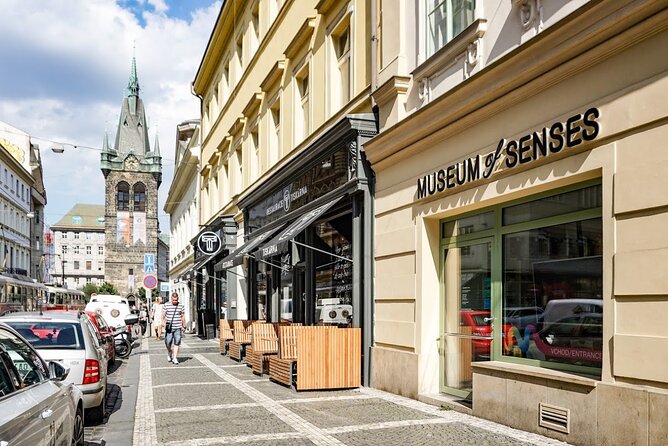
The Museum of Senses Prague sits in Prague 1, in the New Town area, and the visit starts at Jindřišská, Nové Město (110 00 Praha-Praha 1). It’s also listed as being near public transportation, which matters in Prague because walking can add up fast—especially if you’re already juggling old-town sights.
The big practical win is timing. You’re not signing up for a long guided march. This is a ticket for an interactive space you can wander through in about 50 minutes to 1 hour. That makes it a smart “palette cleanser” between bigger attractions, or a plan B when the weather turns.
And since it’s offered in English and uses a mobile ticket, it’s a low-stress add-on. You can focus on the experience instead of logistics.
You can also read our reviews of more tours and experiences in Prague



How the zones play with your senses
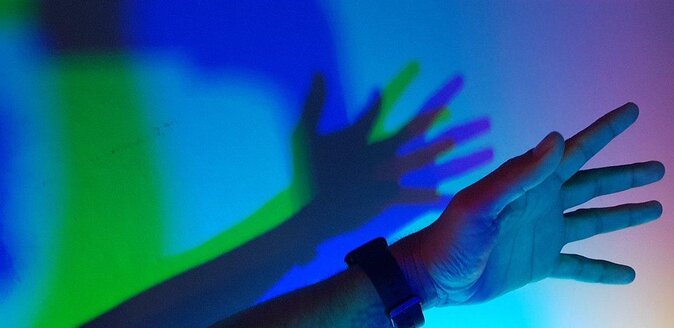
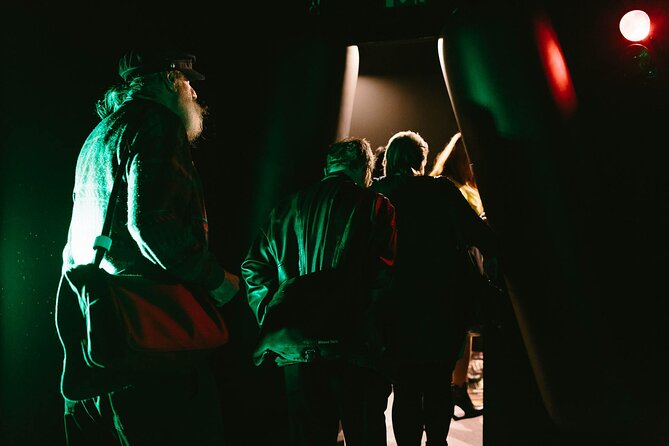
This place is built like a sequence of mini worlds. You enter through a huge green gate and quickly feel like you’ve stepped into a calmer pocket of the city. From there, the journey moves through distinct sensory environments—more like interactive scenes than a traditional museum gallery.
Jungle, then sand dunes for touch and scale
Early on, you’ll hit a wild-jungle-style area that’s meant to get you moving and noticing details. It’s the kind of setting where you stop because your brain wants to figure out how something works. Then the path shifts into a desert-like zone with dunes of sand.
This “move from one environment to another” is more than decoration. It changes how your body reads space—where you think your feet should land, how far you think a surface extends, and how quickly you start trusting your senses.
The nail bed: the classic bravery test
One of the most talked-about attractions here is the nail bed, with hundreds of nails spread over its surface. It’s not subtle, and that’s the point. The exhibit turns touch and fear-management into part of the show.
If you’re the kind of person who likes hands-on challenges, this is your moment. If you’re cautious, still go in with the mindset that the goal is to experience it and then move on—this museum is more about fun interaction than long instruction.
The vortex tunnel: balance, stretched thin
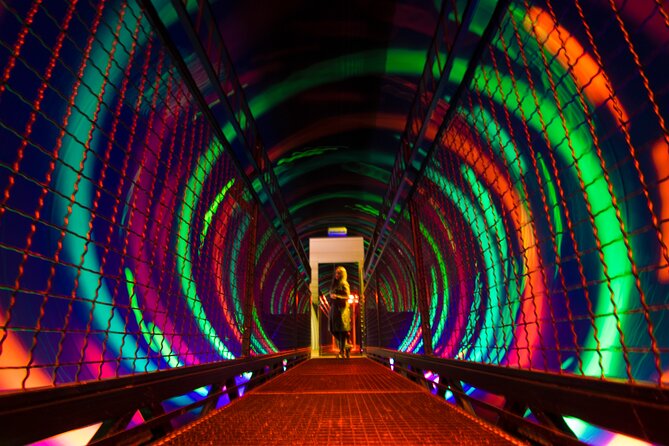
Next comes the vortex tunnel, designed to prove that balance isn’t something you can fully rely on. You move through and your body gets a very different message than your eyes expect.
This is where a lot of people feel that true “wait, what is happening to me?” effect. In a hands-on space like this, that reaction is basically the product.
You can also read our reviews of more museum experiences in Prague






The infinite-room effect (and dizziness risk)
There’s also an illusion-style space people often describe as infinite, and it can make you lightheaded or dizzy. If you’re prone to vertigo or you’re sensitive to shifting visual depth, take it slow here. Stand back for a second before you commit, and don’t feel pressured to charge through for the perfect photo.
Small exhibits, lots of moments
The museum is described as having dozens of interactive exhibits. That doesn’t mean you’ll see hundreds of things like a major art museum. Instead, you get a lot of quick hits—each one aiming at a different sense: touch, balance, sight, and sometimes sound.
The camera-friendly setup (and why it matters)
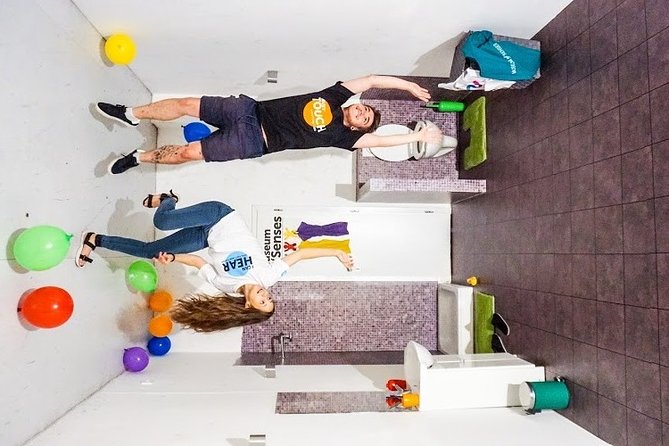
A big part of the Museum of Senses Prague experience is that it actively invites pictures. The space is arranged so you’re likely to pause, try an illusion, and then capture the results.
That’s not just vanity. It changes how you experience the exhibits. When you film or photograph, you slow down just enough to notice what’s really happening—how your position changes the effect, how your angle changes the illusion, and how quickly your brain tries to “fix” the mismatch.
Also, if you go solo, don’t assume you’ll be stuck. Some activities need another person to see or frame the illusion properly, and the staff can help with getting photos.
Tip: bring a camera (your phone is fine). And if you want more interesting shots, don’t just shoot the moment—watch 10 seconds first, then take your picture. The effect often looks different once you stop flailing and settle into the right spot.
Time planning: how not to rush (or overstay)
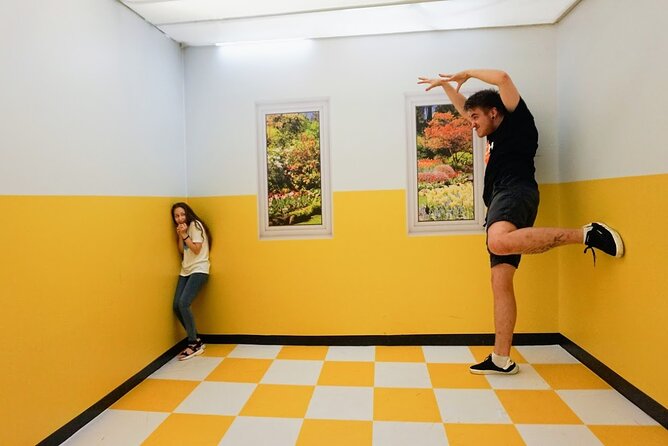
This is the key truth: the museum is small and the visit usually lands around 50 minutes to 1 hour. That’s why it’s great as a short break from walking, and it’s also why you should treat it like a snack, not a main course.
If you schedule it during the middle of the day, it can reset your energy. If you’re tight on time, it’s still doable because you don’t need to line up for long blocks of programming—this is mostly self-paced.
On the other hand, if the first few rooms already feel like enough, don’t force it. You can move on. A lot of the fun comes from the surprise factor, and you don’t want to turn playtime into a chore.
Price and value: is $19.35 worth it?
At $19.35 per person, this ticket is in the “reasonable for something interactive” category. It’s not cheap, but you’re also buying a full hour or so of hands-on, high-repeat fun—especially if you’re traveling with kids, teens, or someone who likes optical illusions and sensory experiments.
Where the value really shows up:
- You can’t speedrun the experience but you also don’t need a full day
- The exhibits are built for engagement, not long reading
- It can work as a weather-proof activity in Prague, since it’s indoor and interactive
Where the value depends on your style:
- If you prefer quiet museums and deep exhibit texts, this may feel like a fast, playful stop.
- If you only want one type of illusion (like purely visual tricks), you might find yourself thinking of it as similar to other illusion-style venues—but still different in focus.
My practical take: if you want a fun, low-effort break that gets people moving and reacting, it’s a good use of money. If you’re chasing a world-class art museum feeling, you’ll probably want to spend your budget elsewhere.
What the staff and small group size do for you
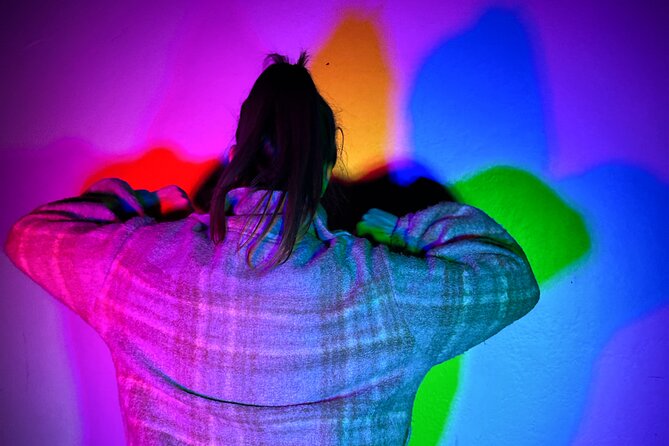
This isn’t a giant crowd machine. With a maximum of 19 travelers, the experience tends to feel more manageable. That matters in interactive museums, where you’re often taking turns at the same point or waiting for someone to finish an illusion.
Also, the staff tend to be friendly—especially helpful for solo visitors or when an exhibit needs another set of eyes for the effect to make sense. That can turn a potentially awkward moment into a smooth one.
Sound, noise, and who will enjoy it most
One of the attractions here is that it uses multiple senses, including sound-based games. That’s fun if you like playful competition or sensory experiments. It can get noisy in certain areas, so if you’re sensitive to loud sound effects, just expect some moments to be a bit chaotic.
Who this fits best:
- Families with kids who want to move and touch things
- Couples looking for a quirky activity that doesn’t require a lot of walking
- Friends who enjoy optical illusions, balance challenges, and taking pictures
- Adults who like a light break between major attractions
If you dislike interactive exhibits or you get uncomfortable with balance challenges, the whole experience might feel like too much stimulation. But if you’re curious, go in with a “try first” attitude.
Should you book the Museum of Senses ticket?
I’d book it if you want a short, fun, indoor Prague activity that’s built around doing, not just looking. The value works when you treat it as a one-hour highlight, especially if you’re traveling with family or you want something different from the usual stone-and-history routine.
Skip it (or think twice) if:
- You only enjoy slow, text-heavy museums
- You strongly dislike anything that could make you feel dizzy or off-balance
- You’re expecting a huge museum with hours of galleries
If you’re deciding between it and another illusion-style stop, go with your mood: this one leans hard into sensory play—especially touch and balance—so it’s a great fit when you want your senses to be the main event.
FAQ
How long does the Museum of Senses in Prague take?
Plan on about 50 minutes to 1 hour.
Where is the meeting point?
The start point is Jindřišská, Nové Město, 110 00 Praha-Praha 1, Czechia, and the experience ends back at the meeting point.
What does the ticket include?
It’s an admission ticket, and admission to the Museum of Senses Prague is included.
What language is available?
The experience is offered in English.
Is it a mobile ticket?
Yes, it’s listed as a mobile ticket.
What’s the price per person?
The price is $19.35 per person.
What are the opening hours?
It runs Monday through Sunday from 9:00 AM to 8:00 PM.
Is there a group size limit?
Yes. The maximum number of travelers is listed as 19.
Is free cancellation available?
Yes. You can cancel up to 24 hours in advance for a full refund.