REVIEW · PRAGUE
Prague: 2.5-Hour Vyšehrad Castle with Gorlice & Tickets
Book on GetYourGuide →Operated by Fun in Prague · Bookable on GetYourGuide
Vyšehrad turns Prague quiet. It’s a guided walk through a royal fortress turned baroque stronghold, with sweeping city views and the breathtaking Saints Peter and Paul Church as the star. I like how the route mixes postcard panoramas with real stop-and-think history, guided by people who actually know how to tell the story—whether you get Martin or Andrea’s style. One heads-up: you may feel a bit short on time for photos at the best viewpoints.
The setting helps. Once you step into Vyšehrad’s grounds, it feels calmer than the main tourist lanes, and the pace is usually relaxed enough to ask questions without feeling rushed. I also love that the tour includes both what’s above ground and what’s underneath, so you don’t just “see a monument”—you get how the fortress worked.
If photos are a priority, plan to move with purpose. Even with a steady pace, at least one guest noted there wasn’t enough time to take every picture they wanted, especially in the most scenic moments.
In This Review
- Key highlights worth your time
- Why Vyšehrad feels like a different Prague
- Meeting point and getting there without stress
- Walking the baroque fortress grounds (and finding St. Martin)
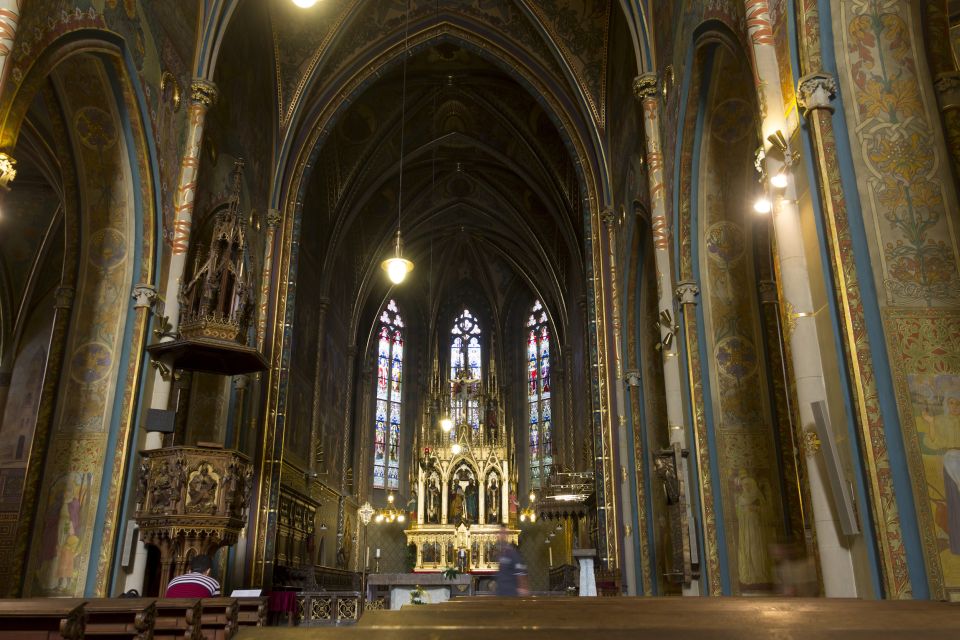
- Inside Saints Peter and Paul: neo-Gothic + Art Nouveau
- Vyšehrad Cemetery: meet Czech legends where they’re buried
- The fortress walls: Prague views you can linger on
- Gorlice underground casemates and the Charles Bridge statues
- Price and value: what you’re really paying for
- What kind of traveler will love this most?
- Should you book this Vyšehrad tour?
- FAQ
- Where is the meeting point?
- How long is the tour?
- What is included in the price?
- Is the tour in English?
- What stops will I see during the tour?
- Will I see Charles Bridge statues on this tour?
- What should I bring?
- Is there a short metro ride involved?
- Is the tour suitable for kids?
- Can I cancel or pay later?
Key highlights worth your time
- Views from the fortified walls: Prague’s skyline from above the Vltava, with a different angle than the usual bridge-and-tower shots.
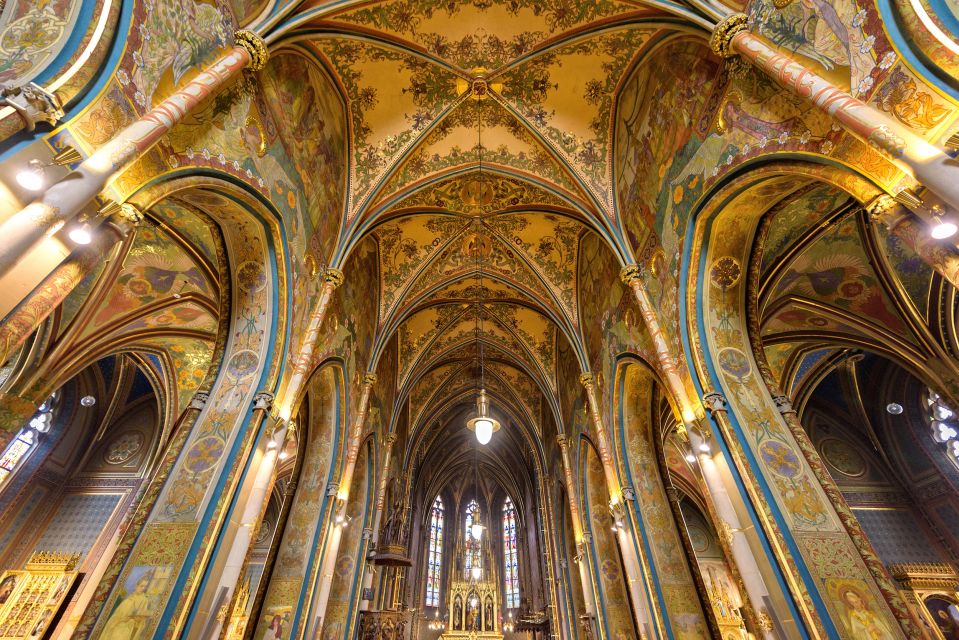
- Saints Peter and Paul Church interior: neo-Gothic grandeur with Art Nouveau frescoes inside.
- Vyšehrad Cemetery names you recognize: Dvořák, Smetana, Alfons Mucha, Karel Čapek—plus context for who they were.
- Romanesque Chapel of St. Martin: a late 11th-century stop tucked into the park grounds.
- Gorlice underground casemates: original Baroque statues from Charles Bridge preserved underground.
Why Vyšehrad feels like a different Prague
Vyšehrad sits on a rocky promontory above the Vltava, and that location changes everything. You still see Prague, but from a higher, steadier perch—less “camera sprint,” more “pause and notice.” The fortress story also matters: this site was once an important royal residence, later scarred during the Hussite Wars, and then reshaped into the baroque fortress you visit today.
The tour gives you two pleasures that don’t compete. First, you get the big, visual payoff—those viewpoints along the walls. Second, you get the human payoff in the cemetery and church, where Czech cultural life is tied to place. When a guide talks with energy (and some do, like Veronica with legend-like storytelling), it turns what could be a quick sightseeing stop into a real understanding of why Vyšehrad matters.
You can also read our reviews of more tours and experiences in Prague


Meeting point and getting there without stress
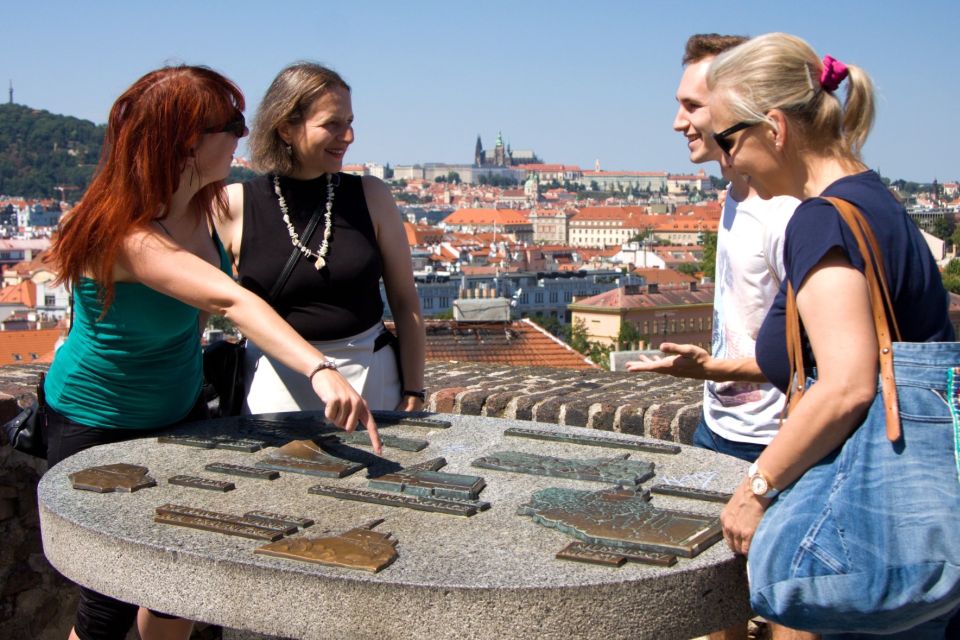
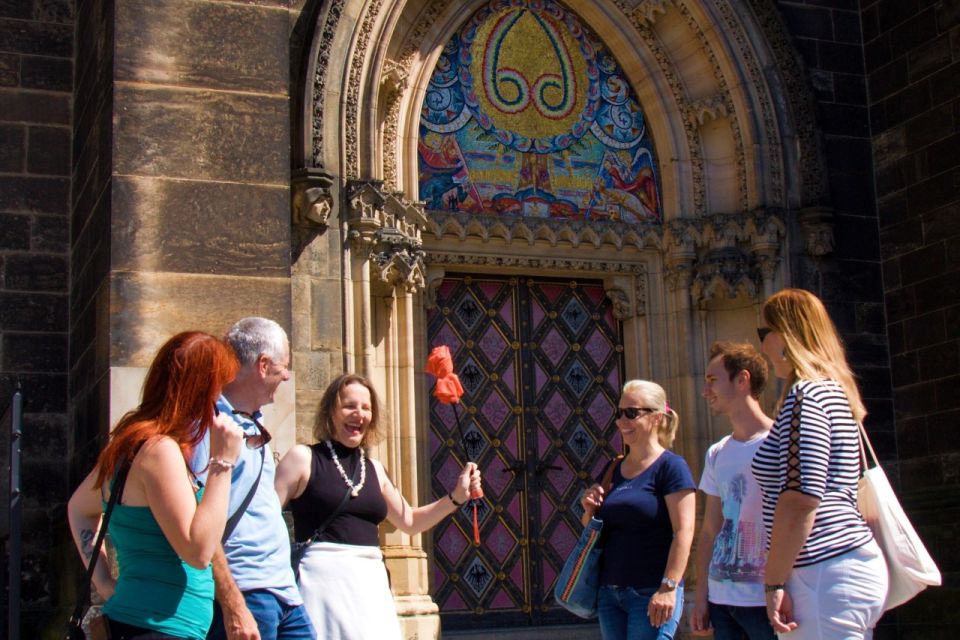
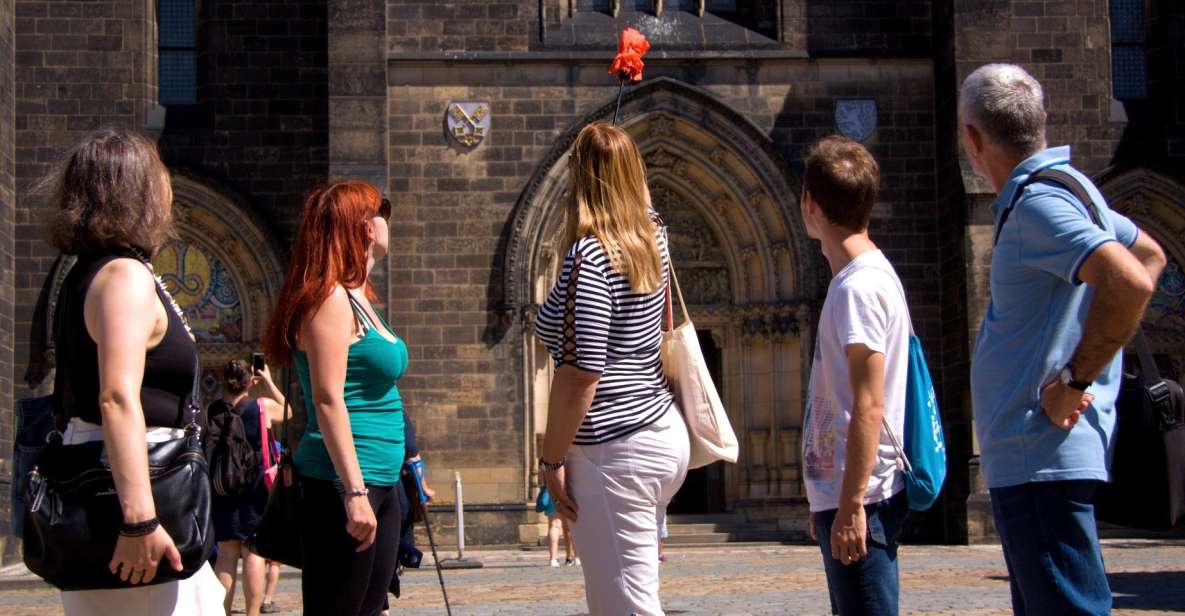
Meet your guide in front of the National Museum, at Vaclavské náměstí 68 (there’s a fountain right there). Your guide will be holding an orange umbrella, which makes the handoff simple. If you want the exact spot, the coordinates are 50°04’45.7″N 14°25’49.2″E.
From there, the tour uses a short metro ride before you enter Vyšehrad’s grounds. The metro ticket is included, so you’re not juggling paper tickets or working out routes mid-trip. For a 150-minute tour, this matters: you’re spending your time at Vyšehrad, not in transit.
Walking the baroque fortress grounds (and finding St. Martin)
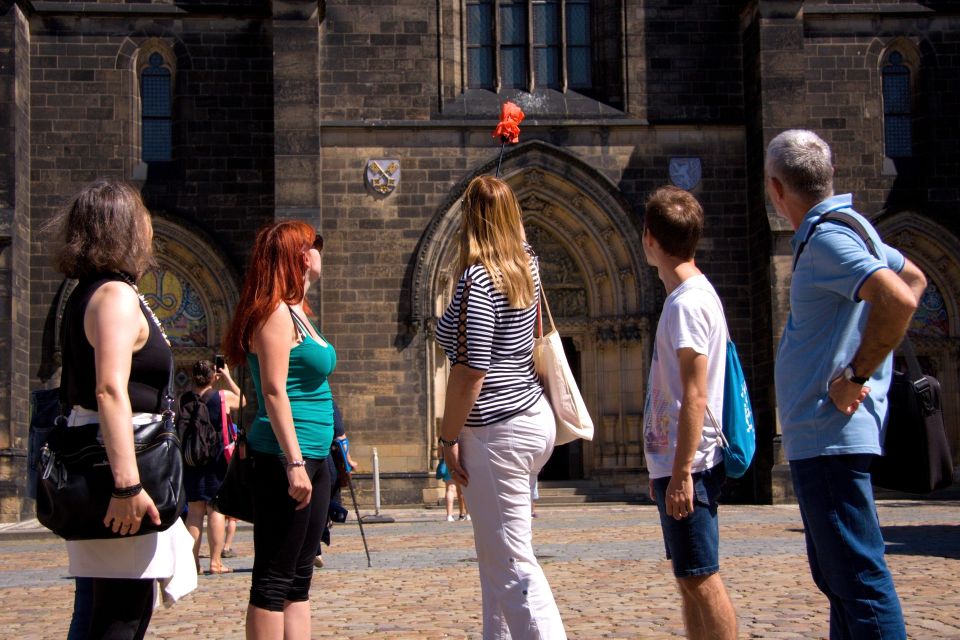
Once you reach the fortress, you enter through the baroque walls and move into the spacious park area. This is one of the best parts for people who like strolling with purpose. It’s not just a corridor to the next ticketed stop—you get time to absorb the setting, see how the fortress sits above the city, and follow the guide’s logic as you walk.
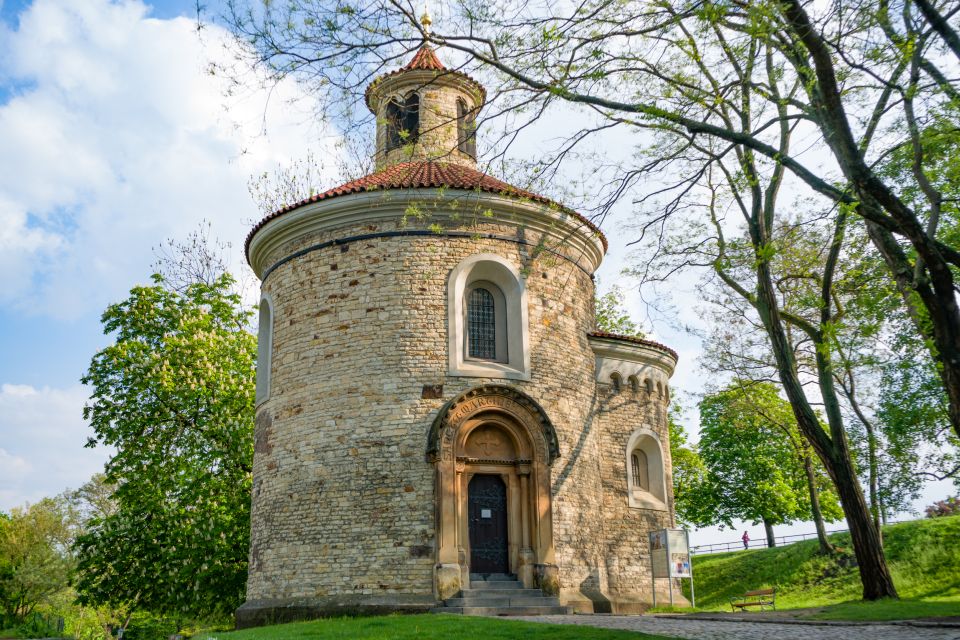
In the park, you’ll find the Romanesque Chapel of St. Martin, dating to the late 11th century. It’s a small detour compared to the church and cemetery, but it changes your perspective. You start to notice how Vyšehrad layers eras: Romanesque roots, later damage and reinvention, and then the baroque fortress design that frames what you see now.
A practical tip: wear comfortable shoes. Vyšehrad is walkable, but you’re on outdoor paths and slopes. A good pair of shoes keeps this from turning into a “why did I wear these?” day.
Inside Saints Peter and Paul: neo-Gothic + Art Nouveau
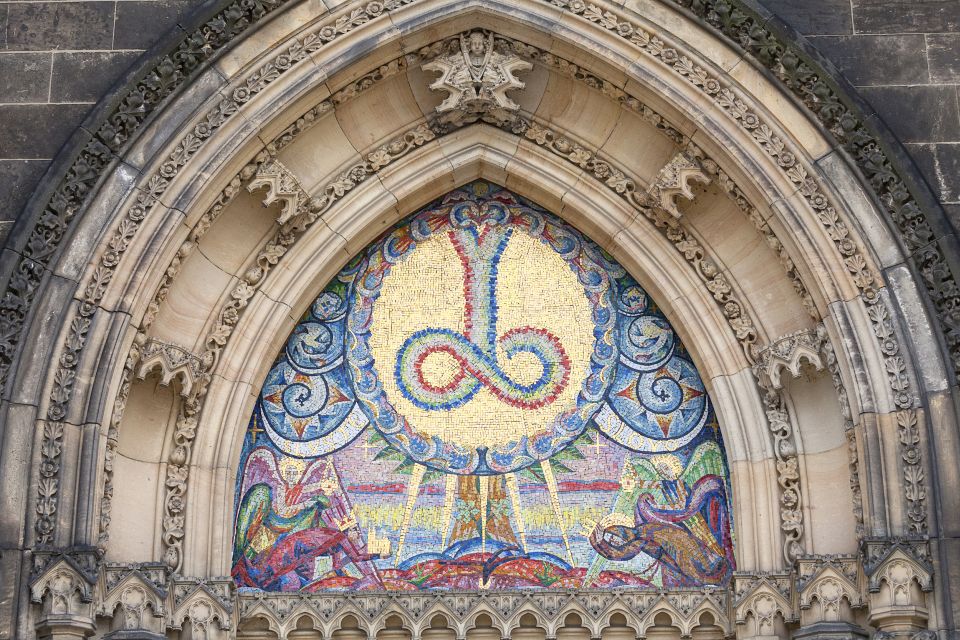
The Collegiate Church of Saints Peter and Paul is attached to Vyšehrad’s Royal Collegiate Chapter, and it’s the interior stop you’ll remember. The church was radically rebuilt in a neo-Gothic style in the late 19th century, and inside you’ll see Art Nouveau frescoes that add color and movement.
What I like about bringing you here is that it’s not just a pretty church exterior. You slow down and actually look at the details once you’re inside. Guides often highlight how the architecture and decoration connect to Czech cultural identity—especially when they’re the kind who enjoy explaining symbols rather than reading facts like a script.
This is also the moment where the tour can feel like “the real experience” rather than a checklist. One reason is simple: when you step into a church like this, the building does part of the storytelling for you.
Vyšehrad Cemetery: meet Czech legends where they’re buried
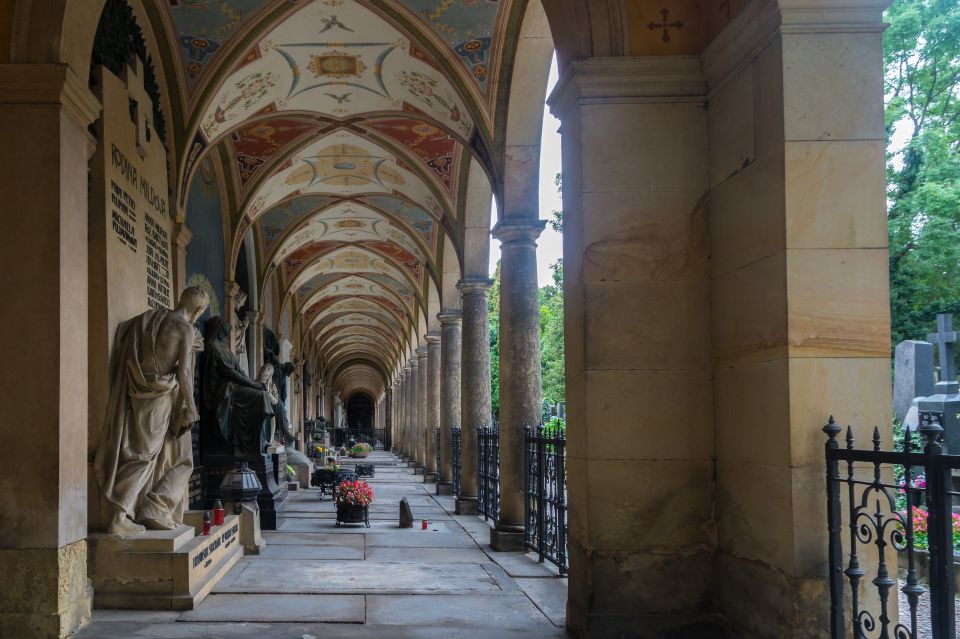
Next comes the cemetery, and it’s surprisingly moving. The grounds connect famous names in Czech culture with the physical landscape of Vyšehrad. The tour points out prominent figures such as Antonín Dvořák, Bedřich Smetana, Alfons Mucha, and Karel Čapek.
If you’ve seen posters by Mucha or heard Smetana and Dvořák through school or concerts, this stop turns recognition into context. Your guide will help you slow down and understand what each person contributed—and why their names belong to Vyšehrad’s story. For me, this is where the tour stops being purely architectural and becomes personal: you walk through a place that honors creativity and public life.
You’ll also appreciate the atmosphere. Several guides and guests emphasize the calm mood at Vyšehrad, and in the cemetery that quiet makes the history land more gently.


The fortress walls: Prague views you can linger on
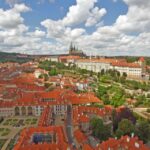
After the cemetery, you’ll spend time along the fortress walls to take in views of Prague. This part is the payoff for the effort of getting out of the center. The Vltava curves below, and the city’s shapes look slightly re-arranged from this angle.
What makes it worth doing with a guide is not just “look at the view.” It’s how the guide ties the viewpoint to the fortress purpose—why this elevation mattered, how the fortification line protects and overlooks, and how Vyšehrad fits into Prague’s geography. You end up seeing the city as something strategic, not just scenic.
One small caution: the tour has a 150-minute limit, so if you’re the type who likes to take a photo, zoom in, take another, then compare angles, you might want to pick your shots carefully. A guest specifically noted the time for photos can feel tight at the viewpoints.
Gorlice underground casemates and the Charles Bridge statues
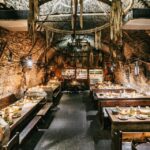
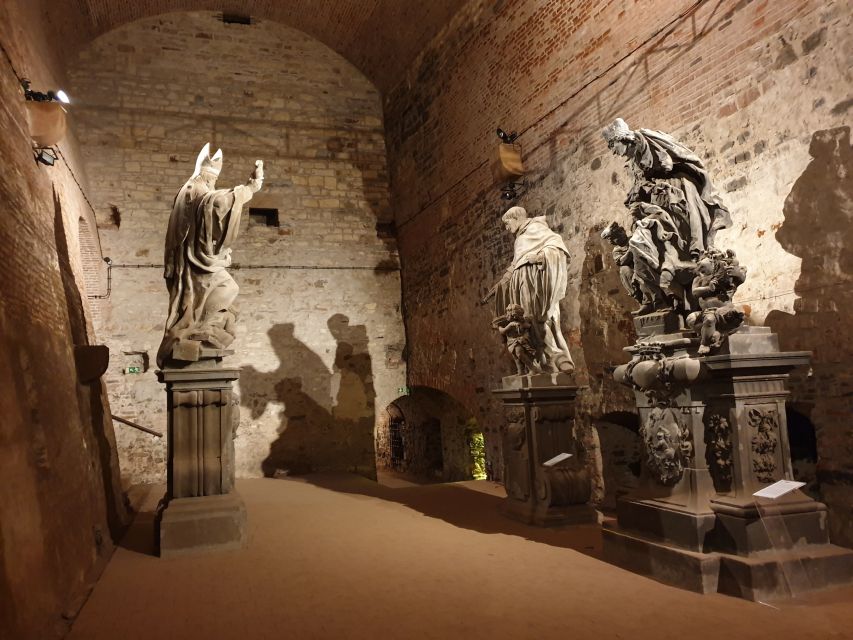
Here’s where Vyšehrad surprises people. If you still want more after walking walls and cemetery, you enter the underground casemates inside the fortress. The tour calls out the Gorlice area, and that’s where the fortification gets physical in a very different way.
Inside, you’ll see preserved Baroque statues originally from Charles Bridge. That’s a neat link across Prague: the bridge is the postcard surface, and the casemates are the preservation story. It’s also an atmospheric experience. Underground spaces change your sense of scale and sound, and the guide’s explanations help you picture what these structures were built to do.
One practical consideration: the underground portion can feel longer depending on your pace. At least one guest said it could be done in about 30 minutes rather than the longer time on their tour, so if you’re sensitive to confined spaces or you hate waiting, tell your guide you prefer a brisker walk.
Price and value: what you’re really paying for
At $44 per person for 150 minutes, the price isn’t just “a guide fee.” You’re also getting ticketed access to multiple key pieces:
- St. Peter and Paul’s Church
- Vyšehrad casemates (Gorlice)
- Metro ticket for the short ride
For value, think of it like this: if you were to do Vyšehrad on your own, you’d still be paying for entrances and spending time figuring out how to move efficiently between the fortress core, church, cemetery, and underground areas. This tour compresses the planning into one route, and the guide adds the context that makes the stops click.
The other value is time quality. Many people do Vyšehrad as a solo wander, but a guided route helps you focus on what’s meaningful—especially in the cemetery, where the names are famous but the stories behind them are the real hook.
What kind of traveler will love this most?
This tour is a great match if you want:
- A calmer side of Prague with less “big crowd energy” than the center.
- A blend of art, architecture, and Czech cultural identity in one loop.
- Time for questions and a pace that doesn’t bulldoze you through.
It’s also a smart choice if you’re in your first days in Prague and want your bearings fast. Your guide will often connect Vyšehrad to wider Czech history, and some guides even touch on modern moments like the Velvet Revolution context while you’re walking the fortress story. That adds depth without turning the tour into a lecture hall.
If you’re visiting mostly for museums and want nothing but indoor stops, you might find the walking parts outside a bit more than you hoped. But if you like a mix, this is a very workable 2.5-hour plan.
Should you book this Vyšehrad tour?
I’d book it if you want a structured visit that still feels like a stroll—views, a wow church interior, a cemetery with meaning, and an underground casemate section that links back to Charles Bridge. The $44 price is easier to justify when you consider the included metro ticket plus paid entry to the church and underground casemates.
Skip it or reconsider if you know you’re photo-obsessed and you need lots of time per viewpoint, because the timing can feel tight. And if underground spaces stress you out, be honest with the guide so you can manage that segment.
If you’re excited by Prague from a new angle and you like learning what you’re looking at, this is one of the best ways to spend a couple hours away from the busiest streets.
FAQ
Where is the meeting point?
You meet in front of the National Museum on Vaclavské náměstí 68 in Prague 1, at the fountain area. Your guide will be holding an orange umbrella.
How long is the tour?
The tour lasts 150 minutes, about 2.5 hours.
What is included in the price?
It includes a metro ticket, the Church of Saints Peter and Paul entrance ticket, the Vyšehrad casemates (Gorlice) entrance ticket, and a local English-speaking guide.
Is the tour in English?
Yes, the live tour guide provides the tour in English.
What stops will I see during the tour?
You’ll visit the baroque fortress grounds and park, the Collegiate Church of Saints Peter and Paul, Vyšehrad Cemetery, and the underground casemates (Gorlice).
Will I see Charles Bridge statues on this tour?
Yes. The underground casemates include original Baroque statues from Charles Bridge.
What should I bring?
Comfortable shoes. You’ll be walking outdoors and in the fortress area.
Is there a short metro ride involved?
Yes. After meeting in central Prague, you take a short metro ride before entering Vyšehrad.
Is the tour suitable for kids?
The tour can work well for families, including kids, since the pace and walking route are designed to be manageable.
Can I cancel or pay later?
Free cancellation is available up to 24 hours in advance for a full refund, and you can reserve now and pay later.