REVIEW · PRAGUE
Prague Jewish Town/Skip-the-Line Official Entry Ticket
Book on GetYourGuide →Operated by Židovské muzeum v Praze/Jewish museum in Prague · Bookable on GetYourGuide
Prague’s Jewish Town is small, but the stories are huge. This skip-the-line ticket gives you straightforward access to major sites like the Old-New Synagogue and the cemetery, all within a flexible 3-day window.
I especially like two things. First, you get smooth entry to each place so you spend your energy looking, not waiting. Second, the stop list is well-balanced: you move from living worship history to memorial history, then back to the graves and legends tied to Rabbi Loew.
The main drawback is also the obvious one: without a live guide, you’ll have to bring your own curiosity (or pick up an audio guide if it’s offered) to get full context at every stop.
In This Review
- Key Points to Know Before You Go
- Why This Prague Jewish Town Ticket Works So Well
- What You Actually Get: Five Synagogues and the Old Jewish Cemetery
- Maisel Synagogue: The Jewish Town Under Rudolf II
- Pinkas Synagogue: A Memorial You Should Plan for Emotionally
- Old Jewish Cemetery: The Maharal of Prague at Rest
- Old-New Synagogue (Altneushul): Europe’s Oldest Extant Synagogue in Active Use
- Spanish Synagogue: Why It’s Called Spanish
- How to Plan Your 3-Day Visit Without Rushing
- Hours, Saturdays, and Jewish Holidays: The One Schedule Detail You Must Respect
- Dress Code and Rules That Can Matter More Than You Think
- Price and Value: Is It Worth $27?
- Should You Book This Prague Jewish Town Ticket?
- FAQ
- What sites are included in the Prague Jewish Town ticket?
- How long is the ticket valid?
- What is the visiting order of the stops?
- What does skip-the-line mean for this experience?
- What are the opening hours and are the sites ever closed?
- Is the ticket wheelchair accessible?
- Are there rules about what I can bring or wear?
Key Points to Know Before You Go
- Skip-the-line entry to five major sites means less time queued and more time inside
- The Old-New Synagogue (Altneushul) is still actively important and dates back centuries
- Pinkas Synagogue functions as a memorial tied to the nearly 80,000 Shoah victims from the Czech lands
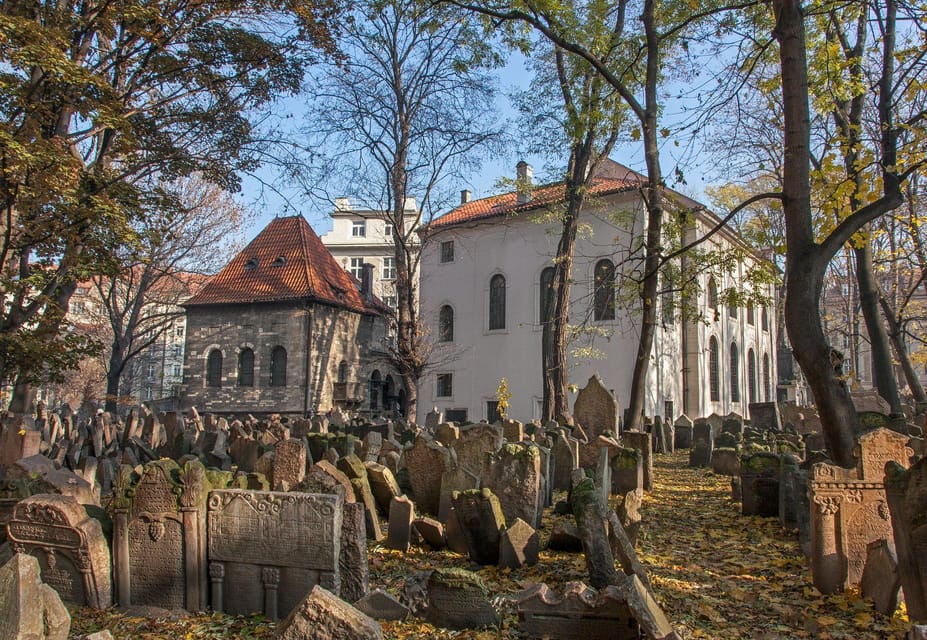
- Old Jewish Cemetery is one of the oldest surviving Jewish burial grounds, founded in the 15th century
- Spanish Synagogue is famous for its Moorish interior design influenced by the Alhambra
- 3-day validity lets you slow down instead of cramming everything into one rushed morning
Why This Prague Jewish Town Ticket Works So Well
This ticket is basically built for people who want a self-paced visit through Prague’s most meaningful Jewish sites. You choose your pace, but you still benefit from organized access. That’s a big deal in Prague, where lines can form and “I’ll just wait” turns into “Why am I still standing here?”
The value here is not just the price. It’s what that price buys: admission to the Old-Jewish Cemetery, plus four key synagogues, all linked to the story of Jewish community life in Prague and Bohemia. You also get a 3-day validity period starting from your first activation, so you can spread things out and avoid the classic mistake of trying to do everything in one go.
You’ll also like how the route is set up. It starts at Maisel Synagogue and ends back where you started, so you don’t have to constantly re-orient yourself or wonder if you’re missing a step.
You can also read our reviews of more tours and experiences in Prague

What You Actually Get: Five Synagogues and the Old Jewish Cemetery
You’re visiting these five stops in the set order: Maisel Synagogue, Pinkas Synagogue, Old-Jewish Cemetery, Old-New Synagogue, and Spanish Synagogue. Each stop has admission included, so there’s no surprise “ticket math” at the door.
Here’s why this lineup matters. Together, the sites cover different kinds of history:
- Community institutions (synagogues used over long periods)
- Commemoration and memory (especially at Pinkas)
- Life, death, and legacy (Old Jewish Cemetery and the Maharal of Prague, Rabbi Judah Loew Ben Bezalel)
- Cultural exchange in art and architecture (Spanish Synagogue’s Moorish look influenced by the Alhambra)
If your goal is to understand what Prague’s Jewish history felt like across centuries, this combination is strong. You’re not only looking at buildings; you’re following themes.
Maisel Synagogue: The Jewish Town Under Rudolf II
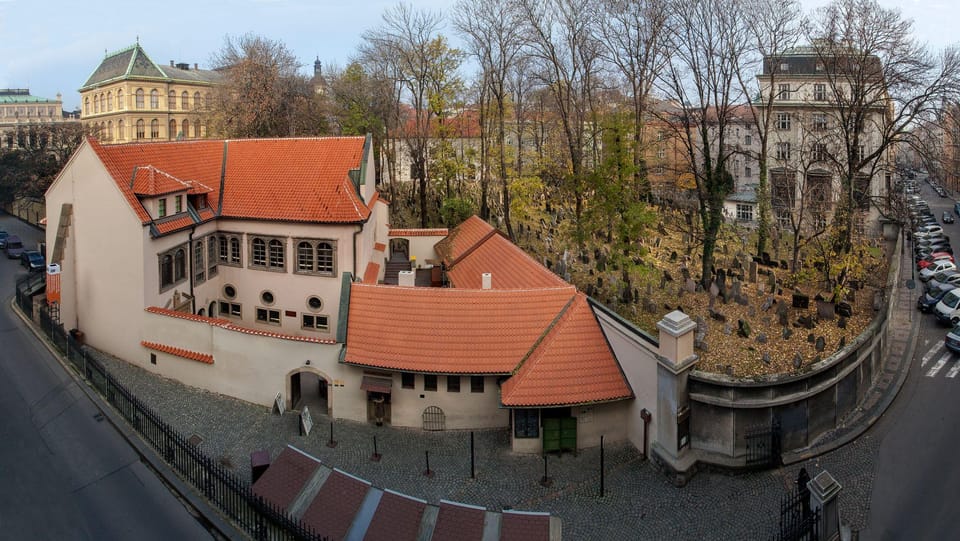
Maisel Synagogue is where the story starts moving in a more political and civic direction. It was founded by Mordecai Maisel, who served as mayor of the Jewish Town during the rule of Emperor Rudolf II.
That connection helps you read the rest of the complex with better context. The Jewish community wasn’t living in isolation from the wider power structure. It had leaders, influence, and a visible role inside Prague’s broader political life. Even if you’re not a history buff, it’s a useful anchor point.
Practical tip: plan a slower moment here. Early on, you’ll be setting your mental map for the rest of the sites. If you take 10 minutes to understand who Mordecai Maisel was and why the synagogue matters, the later stops click faster.
Pinkas Synagogue: A Memorial You Should Plan for Emotionally
Pinkas Synagogue is a memorial space tied to the nearly 80,000 Jewish victims of the Shoah from the Czech lands. That’s heavy material. You should go in with a little extra time and a little extra patience with yourself.
This is one of those places where details matter because the architecture supports the message. If you’re rushing, you miss what makes the memorial powerful.
If you prefer a quieter visit, consider timing your stop so you’re not squeezed between other crowds. You can spend as much time as you want at each place, and this is a strong use of that flexibility.
Old Jewish Cemetery: The Maharal of Prague at Rest
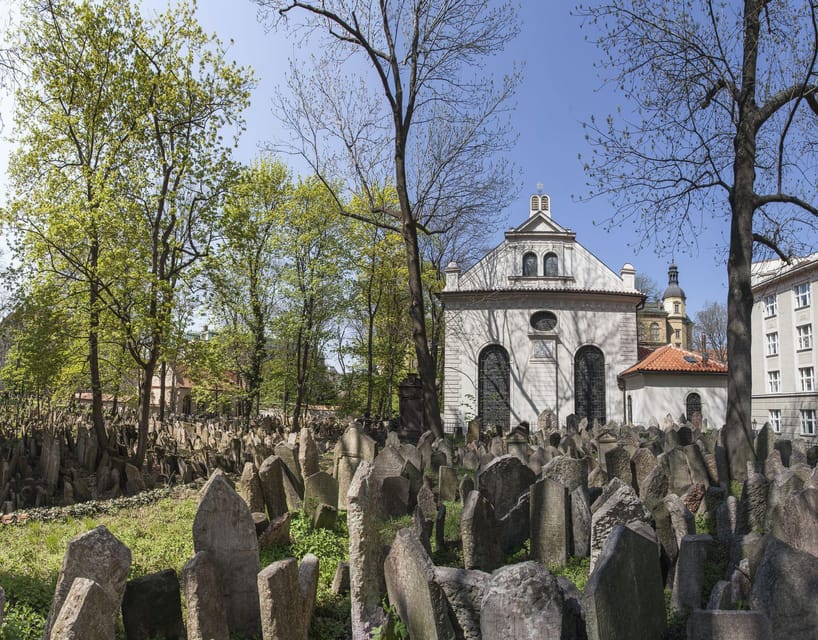
The Old Jewish Cemetery is one of the oldest surviving Jewish burial grounds in the world, founded in the first half of the 15th century. It’s the kind of site that makes you lower your voice, even if nobody tells you to.
This is also where you’ll learn about Rabbi Judah Loew Ben Bezalel, known as the Maharal of Prague. If you’ve heard that name before in books or lectures about Jewish thought, this is where it becomes real and local.
A key point for your expectations: cemetery sites aren’t about fast sightseeing. They’re about reflection and reading the space. Give yourself enough time to slow down. If you treat it like a quick photo stop, you’ll feel rushed and you won’t get much out of it.
You can also read our reviews of more tours and experiences in Prague




Old-New Synagogue (Altneushul): Europe’s Oldest Extant Synagogue in Active Use
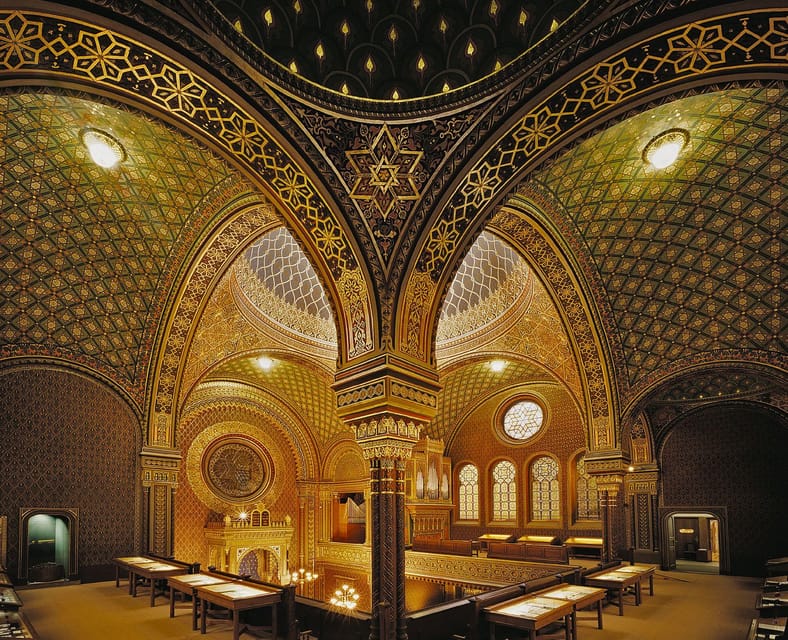
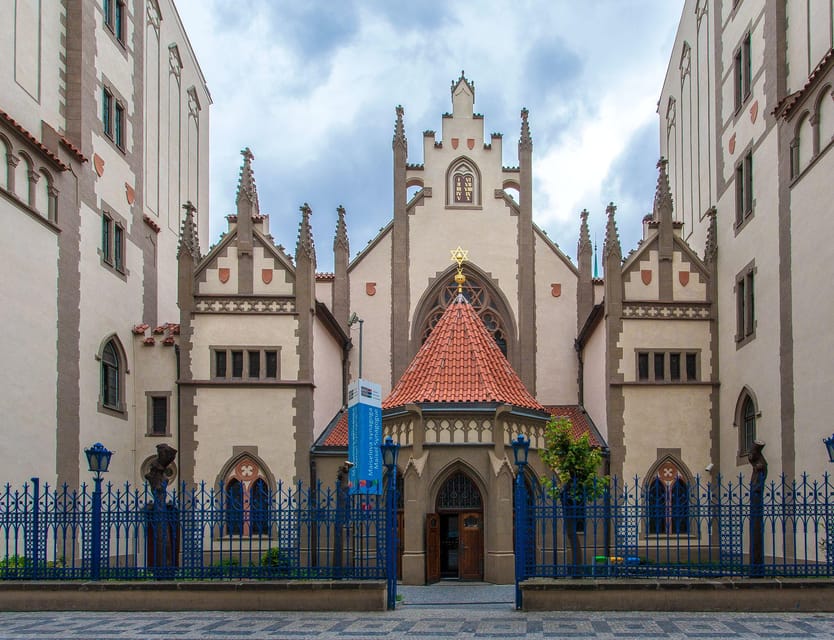
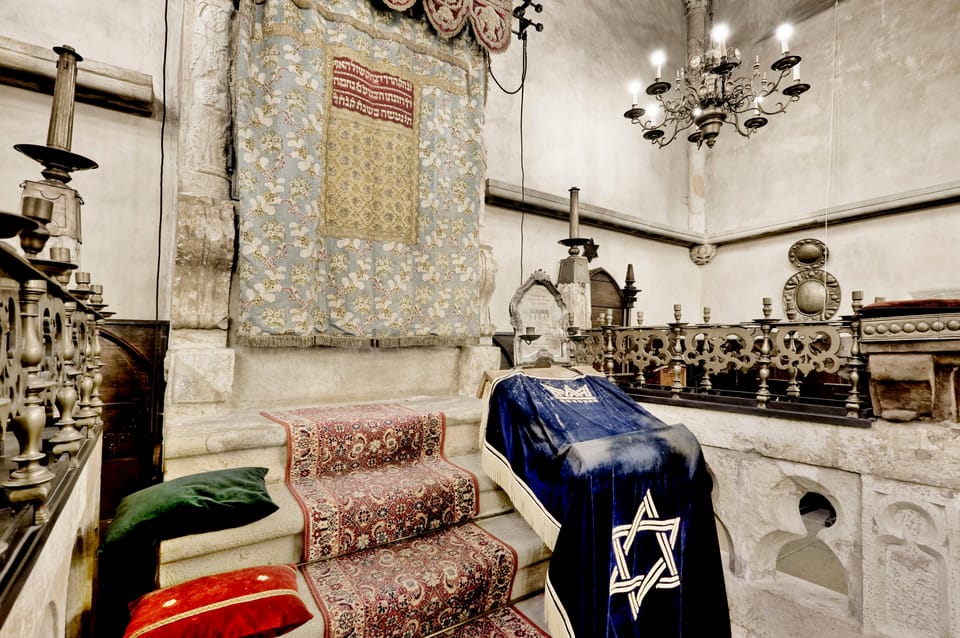
The Old-New Synagogue, also called the Altneushul, is the oldest extant synagogue in Europe. More importantly for your visit, it has been the main synagogue of the Prague Jewish community for more than 700 years.
That longevity is not a trivia flex. It changes how you experience the building. You’re not just looking at a historic structure. You’re walking through a place that has served the community across centuries.
You may want to take a moment to notice how the synagogue’s continuity shapes the mood. It feels less like a museum object and more like a working link between generations.
If you crave extra context and find yourself wanting more than the signage provides, an audio guide can help you keep up with the details without needing a full live tour. One common tip from people who do this on their own: get an audio guide so the centuries don’t blur into a general wow.
Spanish Synagogue: Why It’s Called Spanish
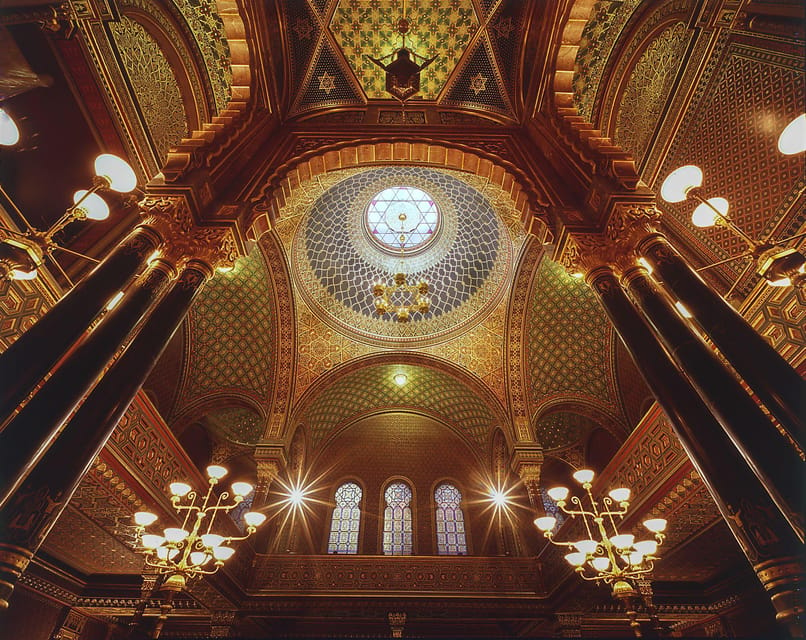
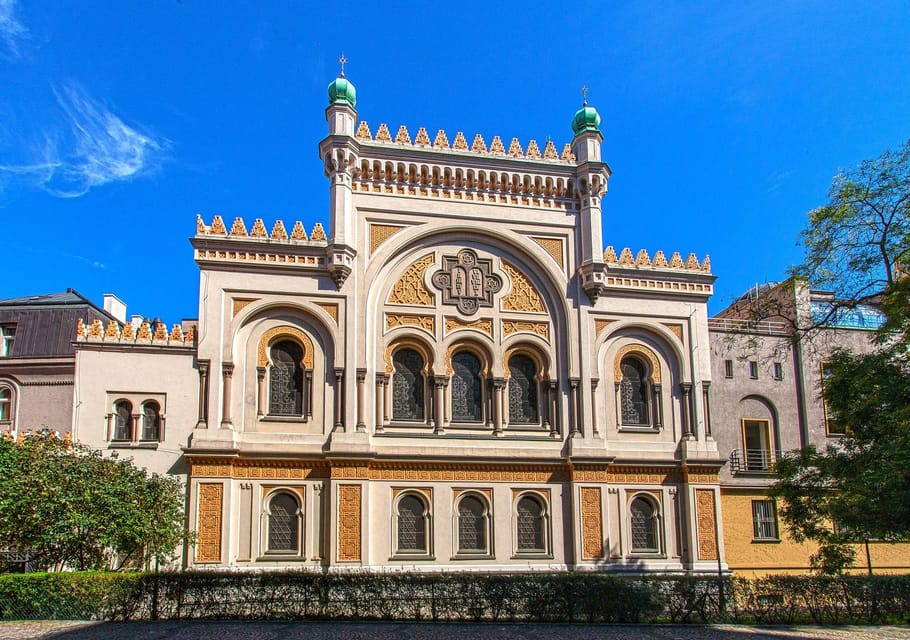
The Spanish Synagogue gets its name from its impressive Moorish interior design, which is influenced by the famous Alhambra. Even if you know Prague for Gothic spires and baroque façades, this stop feels like the city temporarily exchanged locations with another world.
This is a great contrast stop after the heavier memorial and cemetery experience. It reminds you that Jewish cultural life also expressed itself through design, ornament, and architectural ideas drawn from elsewhere.
Practical angle: don’t just look for the headline features. Spend a little time letting your eyes move across the interior. The Moorish influence is the whole point here, and the best view is often the one you only notice after you stop scanning and start looking.
How to Plan Your 3-Day Visit Without Rushing
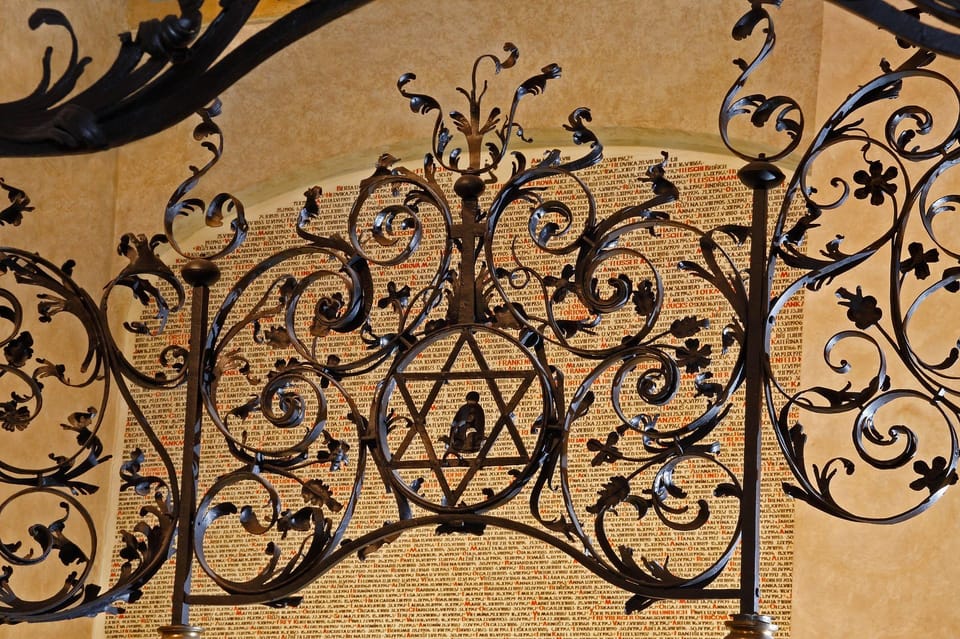
Even though you could do all five sites quickly, I think this ticket is strongest when you treat it like a mini program. You’ve got 3 days from your first activation, so you can split the load and give each stop breathing room.
Here’s a smart way to pace it:
- Use your first day for the synagogues that introduce the story (Maisel, Pinkas).
- Put the cemetery on a second day if you want the space to feel more quiet and personal.
- Return for Old-New and Spanish when you’re ready for the contrasts: active history, then architectural storytelling.
Why this works: you reduce fatigue. Jewish history can be layered, especially when memorial material is involved. A tired brain misses details, and then the ticket feels more expensive than it is.
Also remember the route ends back at the starting point. That helps if you like to pair the Jewish Town visit with other nearby sights afterward.
Hours, Saturdays, and Jewish Holidays: The One Schedule Detail You Must Respect
This ticket is all about access, but access is controlled by hours. The opening times vary by season, and all sites are closed on Saturdays and during Jewish holidays.
Here are the key patterns you should plan around:
- In winter, many days run later in the morning (for example, 11 a.m. to 4:30 p.m. for 1 January 2025 and 1 January 2026).
- In spring and early fall, hours often extend into the early evening (for example, 9 a.m. to 6 p.m. during April and 9 a.m. to 6 p.m. from 1 September to 18 October 2025).
- In summer, closing is later (9 a.m. to 7 p.m. for 1 May to 31 August 2025).
- 24 December has shorter hours (9 a.m. to 2 p.m. for 2024).
If you’re visiting during a weekend, double-check the holiday timing too. Even if your plans are locked, the site closures can still change what you can do that day.
Dress Code and Rules That Can Matter More Than You Think
This is one of those experiences where rules are there for a reason: respect, security, and comfort.
Don’t show up with:
- weapons or sharp objects
- oversize luggage or large bags
- food and drinks
- smoking
- pets (assistance dogs allowed)
- short skirts
- sleeveless shirts
- tripods
- alcohol or drugs
- see-through clothing
Wheelchair access is available, but it’s limited. If you rely on a wheelchair, check in advance for specific accommodations so you’re not stuck guessing once you arrive.
Also: this isn’t a place you can casually treat like a walk-through. The restrictions help create a focused atmosphere. If you dress appropriately and travel light, your visit will feel smoother from door to interior.
Price and Value: Is It Worth $27?
At $27 per person, the price lands in the “reasonable for Prague” zone, but what matters is how the ticket is structured.
You’re paying for admission to five significant sites: Old-Jewish Cemetery, Old-New Synagogue, Maisel Synagogue, Pinkas Synagogue, and Spanish Synagogue. That’s not a single building with a single room. It’s multiple venues, each with a different kind of story—from community leadership to Shoah remembrance to legendary figures like Rabbi Loew.
You’re also buying the convenience of skip-the-line access and the flexibility of a 3-day validity window. If your schedule is tight, that flexibility alone can be worth it. If your schedule is relaxed, it lets you slow down and actually absorb what you’re seeing.
The ticket is a good fit if you want independence and you’re comfortable using signage and maybe an audio guide. If you want heavy narrative structure and you like having a person connect the dots, you might prefer an actual guided tour instead. Still, the self-paced format is a strong option for many people.
Should You Book This Prague Jewish Town Ticket?
I’d book it if you want an efficient, respectful way to see the core sites in Prague’s Jewish Town without getting stuck in lines. It works especially well when you want control over timing and you’re okay filling in context through on-site explanations and tools like an audio guide if available.
You might skip or supplement it if you know you really want a live history storyteller. Some people will get more out of a guided format because it connects the dots across the synagogues, the cemetery, and the wider story of Prague and Bohemia in one continuous thread.
If you’re the type who enjoys walking slowly, reading carefully, and letting the contrasts hit—heritage, memory, and architectural style—this ticket is a very practical choice.
FAQ
What sites are included in the Prague Jewish Town ticket?
The ticket includes admission to the Old-Jewish Cemetery, the Old-New Synagogue, the Maisel Synagogue, the Pinkas Synagogue, and the Spanish Synagogue.
How long is the ticket valid?
It’s valid for 3 days, starting from the first time you activate the ticket.
What is the visiting order of the stops?
The order is: Maisel Synagogue, Pinkas Synagogue, Old-Jewish Cemetery, Old-New Synagogue, and Spanish Synagogue. The activity ends back at the meeting point.
What does skip-the-line mean for this experience?
It includes a skip-the ticket line for entry to the included sites.
What are the opening hours and are the sites ever closed?
Opening hours change by date and season. All sites are closed on Saturdays and during Jewish holidays.
Is the ticket wheelchair accessible?
Wheelchair access is limited, so it’s best to check in advance for specific accommodations.
Are there rules about what I can bring or wear?
Yes. Items like oversize luggage, food and drinks, smoking items, tripods, and pets (assistance dogs allowed) are not allowed. Dress rules include no short skirts and no sleeveless shirts.