REVIEW · PRAGUE
Prague: Skip-the-line Strahov Monastery and Library Tour
Book on GetYourGuide →Operated by Rosotravel - Czech · Bookable on GetYourGuide
Prague’s Strahov complex is one stop with gravity. You get skip-the-line entry to the monastery and Strahov Library, plus a guide who explains what you’re seeing instead of just pointing. The setting in Hradčany also makes the walk feel like part of the story, not just a way to get from A to B.
I especially like how the Theological and Philosophical Halls come with clear context and visual drama—fresco ceilings and ornate woodwork are hard to forget. Second, I really value the way the tour connects the monastery’s art—church spaces, gallery pieces, and the basilica—into one logical flow.
One thing to think about: this is priced like a private tour, and with a well-run group you may feel some parts could fit into less than 3 hours. Also, skip-the-line helps at the ticket queue, but you can still run into entrance or security checks.
In This Review
- Key highlights worth planning around
- How 3 hours really plays at Strahov Monastery
- Meeting at Masaryk and getting oriented in Hradčany
- Skip-the-line tickets: the smart part, the limits
- Strahov Monastery: the place behind the beauty
- Strahov Library halls: fresco ceilings and serious woodwork
- Cabinets of curiosities and why your guide matters
- Strahov Picture Gallery: art across centuries in one circuit
- Basilica of the Assumption of Our Lady: the Baroque finale
- Price and value: when $161 makes sense
- Walking, weather, and comfort: what to wear
- Which languages and group style you’ll feel
- Don’t expect special exhibitions or brewery stops
- Should you book the Strahov Monastery and Library Tour?
- FAQ
- How long is the Strahov Monastery and Library tour?
- Where do we meet the guide?
- Does the tour include skip-the-line entry?
- What parts of Strahov are included?
- Is there much walking or steps?
- What languages are available for the live private guide?
- Is the tour wheelchair accessible?
Key highlights worth planning around
- Skip-the-line tickets to the Strahov complex (date-specific), so you bypass the ticket office line
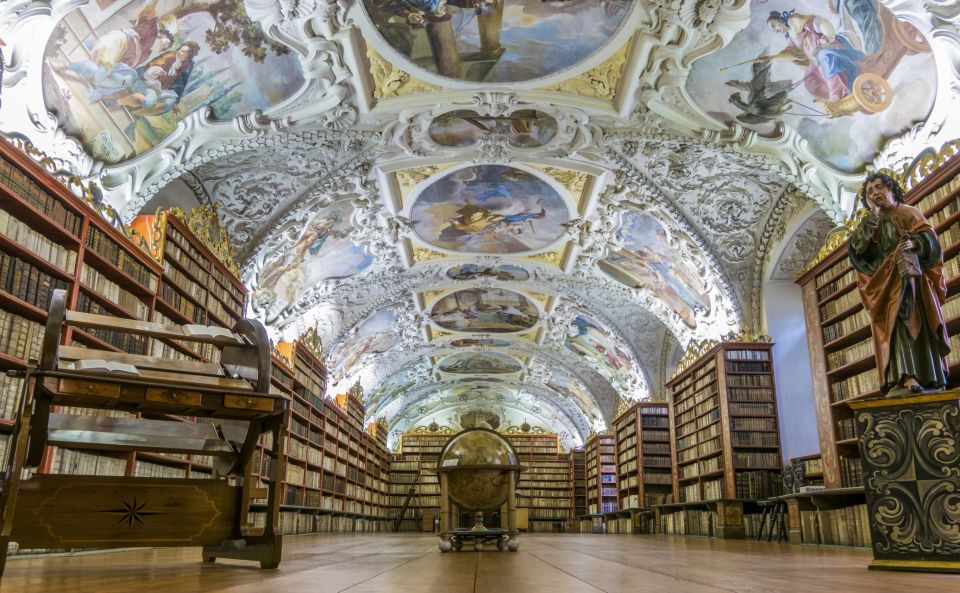
- Strahov Library focused on the Theological and Philosophical Halls with frescoed ceilings and woodwork
- Basilica of the Assumption of Our Lady, a Baroque church stop with frescoes and serene altars
- Strahov Picture Gallery covering religious art from Gothic to Renaissance to Baroque
- Hradčany district orientation from Hradčany Square, passing Prague Castle and Loreto
- Private guide flexibility, with language choices and pacing adjusted to your group
How 3 hours really plays at Strahov Monastery
This tour is built for momentum. In about 3 hours, you cover the Strahov Monastery complex, the library halls, the picture gallery, and the basilica—plus a short walk and orientation around Hradčany. That time box matters in Prague. If you like history but don’t want your day chopped into tiny errands, this format fits.
What you’re buying is not just entry. You’re paying for translation help, story structure, and the order you’ll experience things in. Without that, Strahov can still be impressive—but it’s easy to miss what makes the place more than beautiful rooms.
The tour also includes gardens, which are a nice pressure-release after indoor highlights. You’ll usually move indoors first, then balance it out with some open-air breathing room.
You can also read our reviews of more tours and experiences in Prague


Meeting at Masaryk and getting oriented in Hradčany

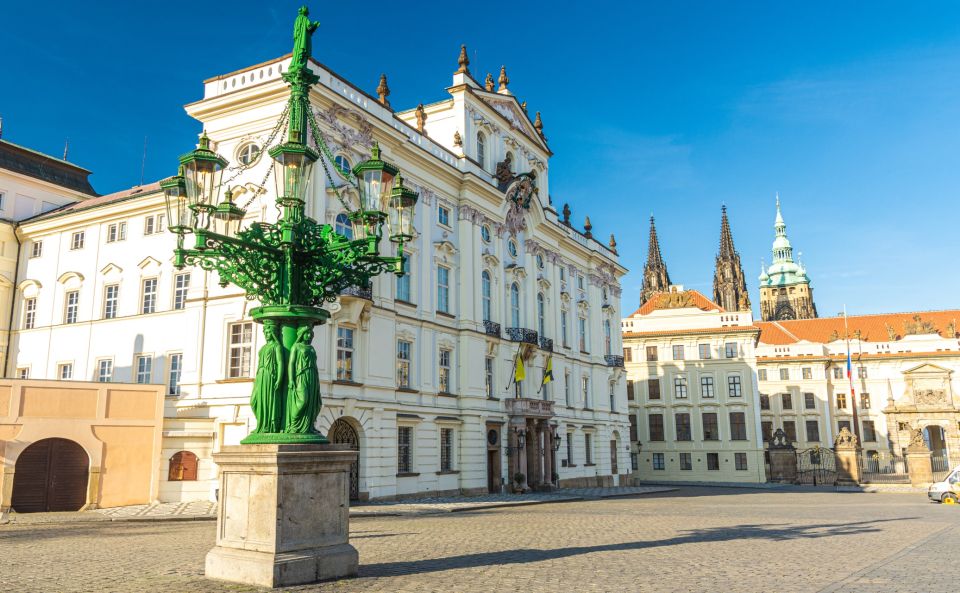
You meet your guide in front of the Statue of Tomáš Garrigue Masaryk in Hradčany (Hradčanské nám., 118 00 Praha 1-Hradčany). From there, the route threads through the district so you don’t only arrive at Strahov—you understand where it sits.
The tour starts around Hradčany Square with Baroque architecture as your backdrop. Along the way, you pass the Prague Castle complex and the Loreto pilgrimage site. Even if you don’t go inside those spots, the passing glance helps you “place” Strahov inside the wider Hradčany scene.
One detail I appreciate here is how some guides use the walk to explain daily life in older houses in the area—how people lived in that built environment and why certain parts of the neighborhood feel the way they do. It turns the walk into a warm-up instead of dead time.
Skip-the-line tickets: the smart part, the limits
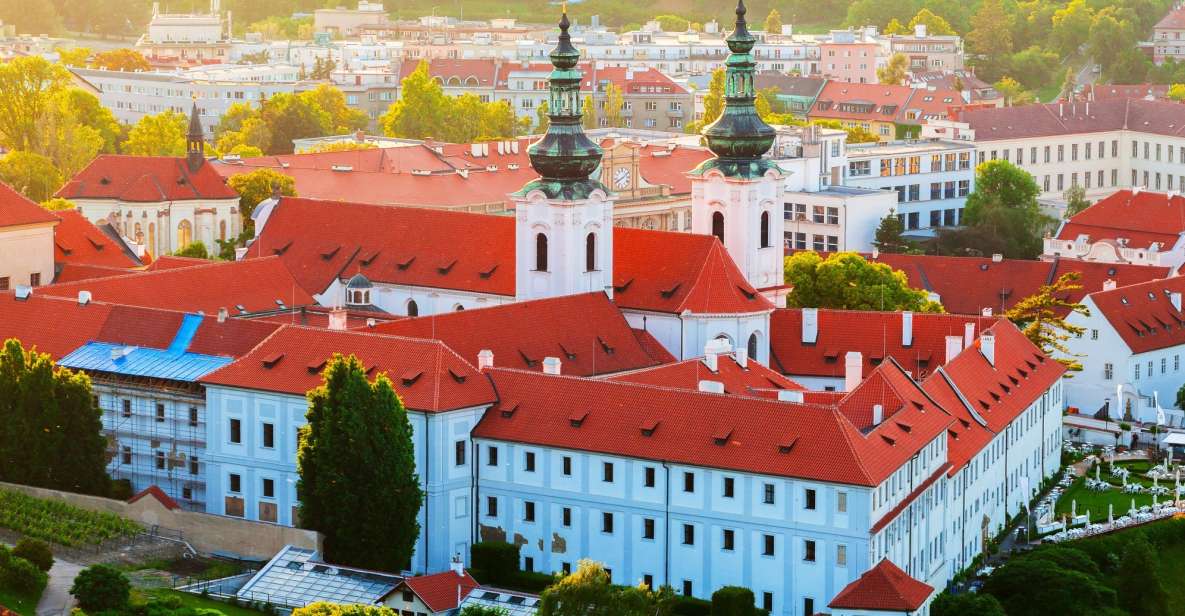
Let’s be clear about what skip-the-line means here. Your tickets are date-specific, and they help you bypass the ticket office queue for the Strahov Monastery complex.
But skip-the-line does not promise zero lines at every checkpoint. You can still encounter queues related to entrance or security checks. In other words: you’re saving the “ticket window” delay, not eliminating all waiting.
This matters most if you’re going at a busier time of day. If you show up without a timed ticket, you might lose time you could spend in the library halls where you’ll want to slow down and look.
Strahov Monastery: the place behind the beauty
Once you reach the monastery, the tour shifts from orientation to meaning. Strahov’s story is tied to major religious conflicts across centuries, including two world wars and the communist regime. Your guide’s job is to connect those big events to what you see in front of you now.
This is where a private guide earns the cost. You’re not just hearing dates. You’re getting a sense of why the monastery functioned the way it did, and why the buildings and collections survived when a lot of institutions across Europe were under pressure.
You’ll also get anecdotes and legends. Not every story will be equally relevant to your interests, but the guide can steer toward what you care about—art, religion, architecture, or the human side of survival through upheavals.
Strahov Library halls: fresco ceilings and serious woodwork
If you care about interiors, plan for the library to be the main event. The tour focuses on the famous Theological and Philosophical Halls. These rooms are known for frescoed ceilings and ornate woodwork—the kind of details you’ll want to look at slowly, because the craftsmanship shows up in patterns and textures, not just in one big dramatic moment.
A useful tip for your expectations: you might spend some time seeing key parts of the library from a practical vantage point, depending on how the tour group is positioned. One visitor noted that you can admire parts of the library from a distance as part of how the visit is organized. So don’t assume every angle is immediately up close. Go in ready to appreciate the whole composition of the room.
This is also where you’ll likely hear about the library’s collection of manuscripts and its role in preserving knowledge through the ages. That context helps you understand what you’re actually looking at: not just books, but a long-running system of custody and learning.





Cabinets of curiosities and why your guide matters
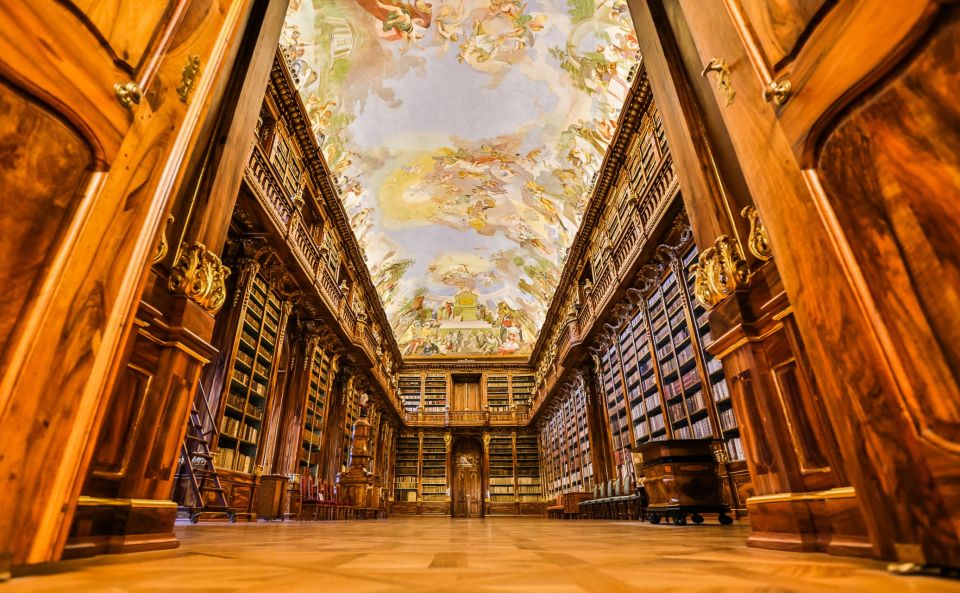
Some tours include extra stopping points or room-like moments that feel like “cabinets of curiosities.” One guide-led visit highlighted these kinds of details alongside the library halls and art gallery. If you like the feeling of stepping into a curated world of artifacts and religious learning, this is the layer that makes the library feel more alive.
The guide’s pacing makes a difference here. In several cases, guides like Valentina / Valentyna were praised for explaining history in an engaging way and keeping the group moving so you hit all major sites. Another guide, Ilia, was singled out for being very helpful and keeping the tour engaging. That kind of shepherding matters in places where the rooms can feel similar.
If you’re the sort of person who likes to ask questions, this is also where your questions pay off. You’ll get the kind of answers that help you connect what you’re seeing to why it exists.
Strahov Picture Gallery: art across centuries in one circuit
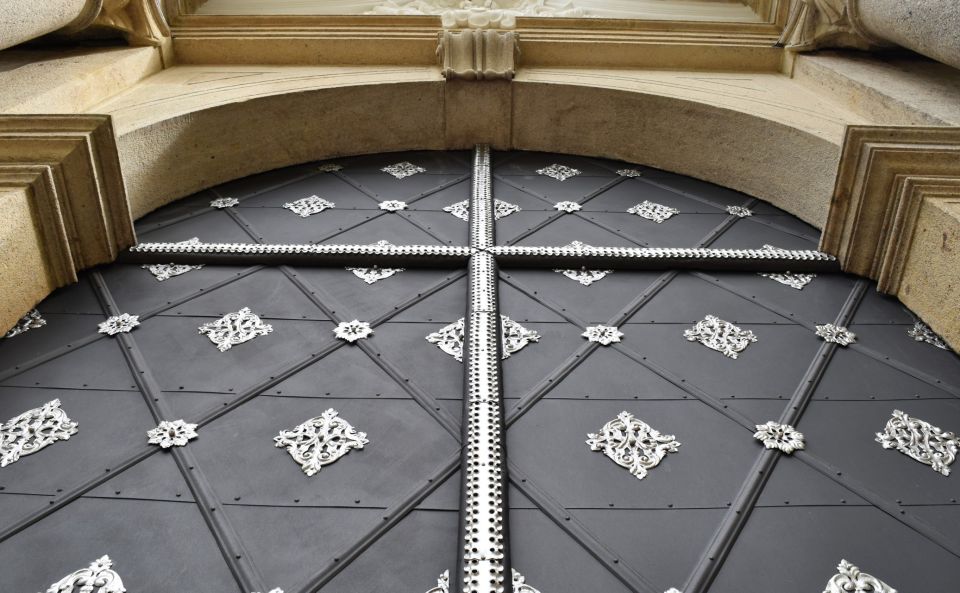
After the library, you’ll move into the Strahov Gallery (Picture Gallery). This is where your experience widens beyond books and into religious art.
The tour covers works representing Gothic, Renaissance, and Baroque periods. You’ll see sculptures and paintings, and the overall point is evolution: how religious art changed its style and visual language over time. Even if you’re not an art history scholar, the guide can usually explain what to notice—materials, composition choices, and how sacred themes were expressed differently across periods.
One practical reason I like this stop in a guided format: without help, it’s easy to treat each artwork like a standalone photo moment. With a guide, you start noticing the through-lines—how the monastery’s spiritual mission and artistic patronage show up in the collection’s range.
Basilica of the Assumption of Our Lady: the Baroque finale
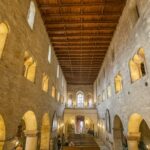
The tour ends up in the Basilica of the Assumption of Our Lady, a Baroque masterpiece in the monastery complex. You’ll focus on the church’s intricate frescoes and serene altars—a combo that often hits best when you’re not rushed.
This part is less about “learning every fact” and more about letting the space work on you. Baroque churches can be intense. A good guide helps you read what’s around you without turning it into a lecture marathon.
If you’re short on time in Prague and have to choose between monastery interiors and other big sights, the basilica stop is a strong anchor. It’s the kind of room that makes the rest of the tour feel worth it because you see what the monastery was built to support.
Price and value: when $161 makes sense
At $161 per person for a private 3-hour tour, this isn’t a budget add-on. It’s a decision.
Here’s how I’d think about value:
- If you’re going as a small group, private guides can make the price easier to justify because you’re paying for direct pacing, language support, and less time lost figuring things out on your own.
- If you’re solo or two people, ask yourself whether you truly want a guide to handle story, order, and interpretation—or if you’d rather spend your money on self-paced wandering.
One helpful clue comes from a published experience where a group of four paid 315€ and still felt the most interesting part was the monastery and library, suggesting it might be cheaper to go directly for those parts. That doesn’t mean you should skip the tour. It does mean you should be honest about what you want: guided context and smooth timing versus maximum cost efficiency.
My balanced take: this tour is worth it when you care about understanding the place and want less friction on-site. If you mostly want photos and quick entry, you might feel the time doesn’t match the cost.
Walking, weather, and comfort: what to wear
Expect a moderately-paced walking tour with about 25–30 minutes on foot. The route includes uneven surfaces or steps, and your guide will adjust pace to your group.
Also, the tour runs rain or shine. So bring what you actually need for Prague weather in that season: comfortable shoes with grip, a layer you can add or remove, and a rain option.
One more point: the tour is wheelchair accessible. That said, uneven surfaces and steps are still part of the real world. If mobility needs are involved, it’s smart to contact support in advance so arrangements can be made where possible.
Which languages and group style you’ll feel
This is a private group tour, which means you’re not sharing the story with strangers. It’s a cleaner experience if you want questions answered and attention focused.
Your guide is licensed and fluent in the language you choose. Options include German, English, Russian, Spanish, French, Italian, Polish, and Czech.
If you’re the kind of person who likes to linger in rooms—or someone who needs the tour to move at a steady, slower rhythm—private control helps a lot. Some people also enjoy switching between art and history themes based on what hits them in the moment.
Don’t expect special exhibitions or brewery stops
The included admission covers the Monastery, Library, Picture Gallery, and Basilica. The tour also includes gardens.
What’s not included? Special exhibitions and the brewery are not part of the included access. Your guide will still recommend ways to enhance your visit, but you shouldn’t assume you’ll automatically get those extras inside your booked tour time.
Should you book the Strahov Monastery and Library Tour?
Book it if:
- You want a licensed private guide to connect the monastery, library halls, art gallery, and basilica into one story.
- You care about the fresco ceilings, ornate woodwork, and the meaning behind the collection rather than just sightseeing.
- You’d benefit from skip-the-line handling at the ticket office, especially if your schedule is tight.
Consider skipping (or going self-paced) if:
- You mainly want quick access to the library and basilica and you’re comfortable reading without a guide.
- You’re very price-sensitive and feel you might spend most of the 3 hours waiting for the tour structure rather than for the rooms.
- You prefer to choose your own order inside the complex.
My practical advice: if Strahov is high on your Prague list, this tour is a strong way to do it with less friction. If Strahov is a “nice if we have time” stop, price it against doing just the included areas on your own.
FAQ
How long is the Strahov Monastery and Library tour?
It lasts 3 hours.
Where do we meet the guide?
Meet your guide in front of the Statue of Tomáš Garrigue Masaryk, Prague (Hradčanské nám., 118 00 Praha 1-Hradčany, Czechia).
Does the tour include skip-the-line entry?
Yes. The tour includes skip-the-line tickets to the Strahov Monastery complex, but the tickets are date-specific and skip the ticket office line. You can still face entrance or security checks.
What parts of Strahov are included?
Admission includes the Monastery, Library, Picture Gallery, Basilica, and the tour also includes gardens.
Is there much walking or steps?
There’s a moderately-paced walking component of about 25–30 minutes on foot, including uneven surfaces or steps. The guide adjusts pace, and it runs rain or shine.
What languages are available for the live private guide?
German, English, Russian, Spanish, French, Italian, Polish, and Czech.
Is the tour wheelchair accessible?
Yes, the tour is wheelchair accessible, and the company says they can make special arrangements when possible if you contact support in advance.