REVIEW · PRAGUE
Small-Group Tour through the History of Jewish Prague
Book on Viator →Operated by czechguidingtours · Bookable on Viator
Sinister stories start inside a synagogue in Prague. This small-group tour strings together four major sites, mixing legends, community history, and the hard facts of 20th-century persecution, all in a tidy 1 hour 30 minutes. You’ll spend your time where Prague’s Jewish story actually lived, starting with the Old-New Synagogue and the Golem of Prague legend.
Two things I really like: the guiding. Inna gets mentioned for being both friendly and seriously well prepared, and the tour stays interesting rather than turning into a lecture. I also like that the pacing still covers real turning points, from early Jewish life in Bohemia to the Shoah years and the post-war period, without swallowing your whole afternoon.
One possible drawback: it’s short, so you won’t get to linger for long at each stop. If you want deep, slow museum time in one place, this format may feel like a fast highlights reel, especially with the heavy WWII material.
In This Review
- Key Highlights You’ll Actually Feel
- A 90-Minute Walk Through Jewish Prague Stories
- Old-New Synagogue and the Golem of Prague Legend
- Maisel Synagogue: From 10th Century Roots to Emancipation
- Pinkas Synagogue and the Names of Shoah Victims (1939–45)
- Spanish Synagogue Ending: Joseph II Reforms to Post-War Prague
- What the Small Group and Timing Really Give You
- Value for Money: What You Get for $23.83
- Who Should Book This Jewish Prague History Tour?
- Should You Book It or Skip It?
- FAQ
- How long is the tour?
- What time does the tour start?
- Is the tour in English?
- Is admission included for the stops?
- How big is the group?
- Where do I meet the guide and where does it end?
- Can I cancel for free?
Key Highlights You’ll Actually Feel
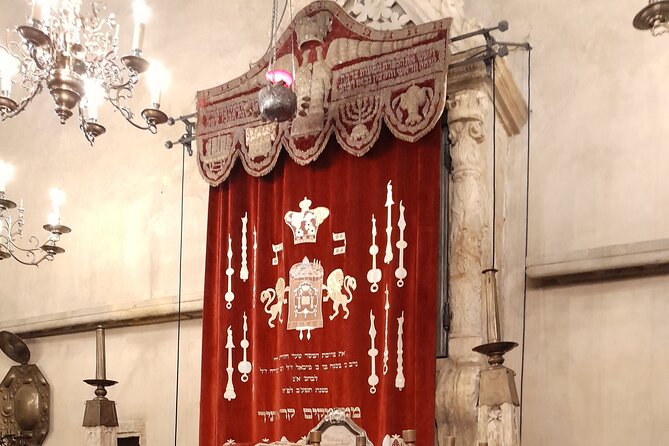
- Old-New Synagogue + Golem of Prague: legend meets oldest-synagogue context in Europe.
- Maisel Synagogue time jumps: from 10th-century roots through Jewish emancipation in the 18th century.
- Pinkas Synagogue remembrance: learn about 1939–45 Shoah history during Nazi occupation.
- Spanish Synagogue ending: trace community life from Joseph II reforms to after World War II.
- Max 10 people: enough room to hear well and keep questions from getting lost.
A 90-Minute Walk Through Jewish Prague Stories
This tour is built for people who want the essentials, fast and in order. You start in Staré Město (Old Town), and you end at the Spanish Synagogue, so you’re not zigzagging across the city all day. The whole experience runs about 1 hour 30 minutes, which is great if you’re doing other Prague sights too.
What makes it especially useful is the structure. Each stop focuses on a different chapter of Jewish Prague, not just a list of beautiful buildings. You’re meant to connect the dots: early community life, major historical shifts, then the trauma of the Nazi era, and finally what changes (and what doesn’t) after the war.
You should also know the tour is offered in English, uses a mobile ticket, and stays small, with a maximum of 10 travelers. That small group size matters more than you’d think in synagogues, where sound and attention can make or break your experience.
You can also read our reviews of more historical tours in Prague

Old-New Synagogue and the Golem of Prague Legend
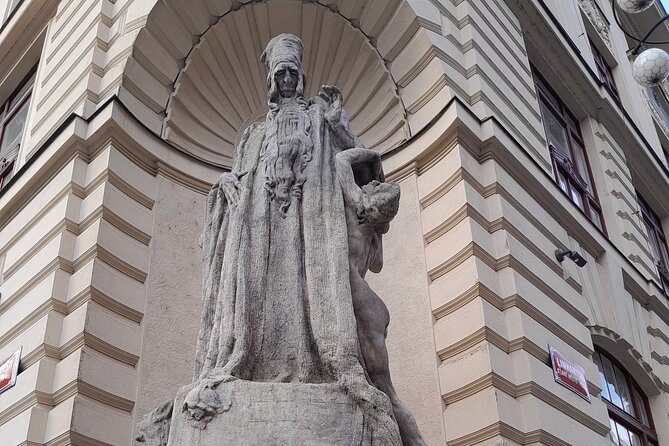
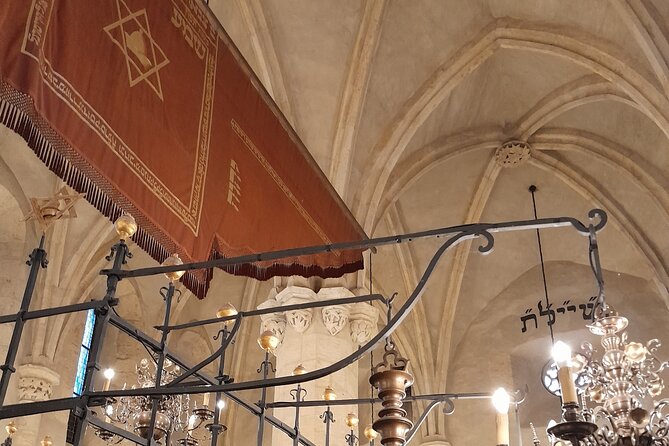
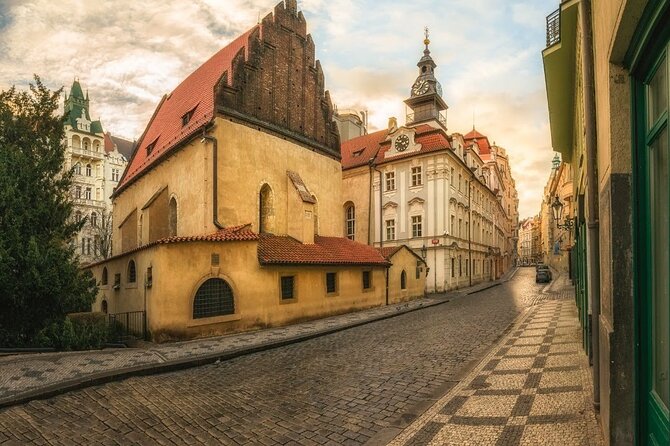
Stop one is the Old-New Synagogue, described as the oldest synagogue in Europe. That fact alone gives you a different sense of place—you’re standing in a setting with serious historical weight.
Your guide then adds the thing people love to talk about later: the legend of the Golem of Prague. The story is mythical, but the power comes from how it’s used to explain fears, beliefs, and the way communities try to make sense of danger and protection. Even if you’ve heard the Golem story before, hearing it tied to this specific synagogue setting gives it sharper edges.
This stop is scheduled for about 25 minutes, and admission is listed as free. That combination is important. The Old-New Synagogue can feel overwhelming if you show up cold, but in under half an hour you get both context and narrative, so the building becomes more than a photo backdrop.
A practical tip: take a moment before the story starts to look around slowly. Even with a guide, your brain absorbs more when you’ve seen the space first.
Maisel Synagogue: From 10th Century Roots to Emancipation
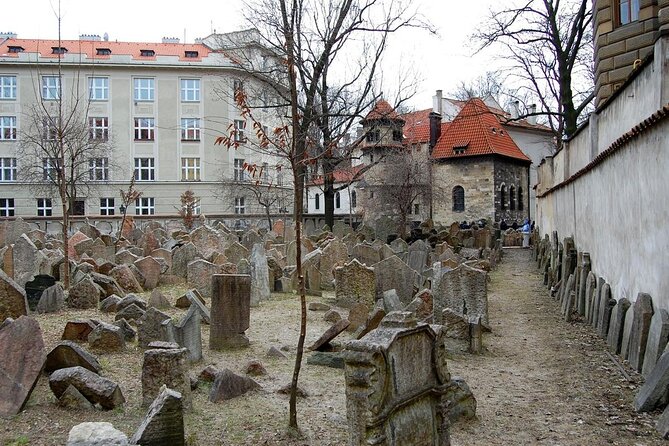
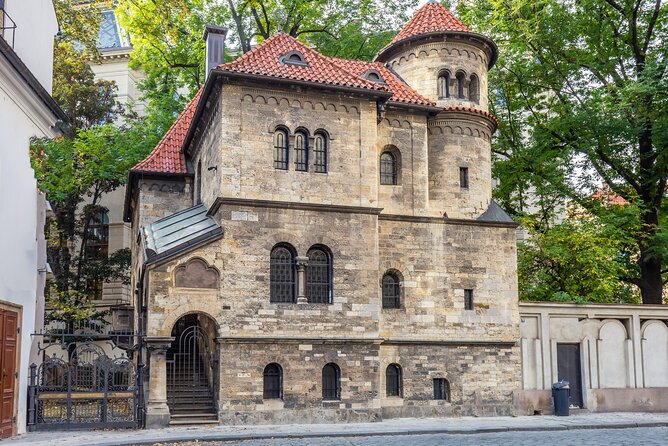
Next up is the Maisel Synagogue. This stop focuses on the history of the Jewish community in Bohemia over a long stretch, from the 10th century all the way to the first emancipation of the Jews in the 18th century.
I like this approach because it stops the usual problem of Prague Jewish history: people jump straight to WWII. Yes, that part matters. But if you don’t understand the centuries leading up to it, the later suffering can feel disconnected instead of rooted.
The Maisel Synagogue segment is about 20 minutes, again with admission free. In a short time, your guide’s job is to give you a timeline your brain can hold onto. If you’ve ever left a museum thinking you saw a lot but remembered nothing, this is the kind of stop where you can walk away with clearer chronology.
One consideration here: because the date range is huge, you’ll get key themes rather than every detail. If you want a deep study of medieval Jewish life in Prague, you’ll still need a longer visit later—but as a framework, this stop works well.
Pinkas Synagogue and the Names of Shoah Victims (1939–45)
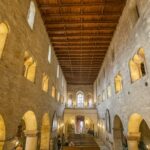
Then comes the most emotionally serious stop: the Pinkas Synagogue. It’s described as the second oldest preserved synagogue in Prague, which is meaningful on its own. But the real focus is the period of the Shoah during Nazi occupation of the Bohemian lands from 1939 to 1945.
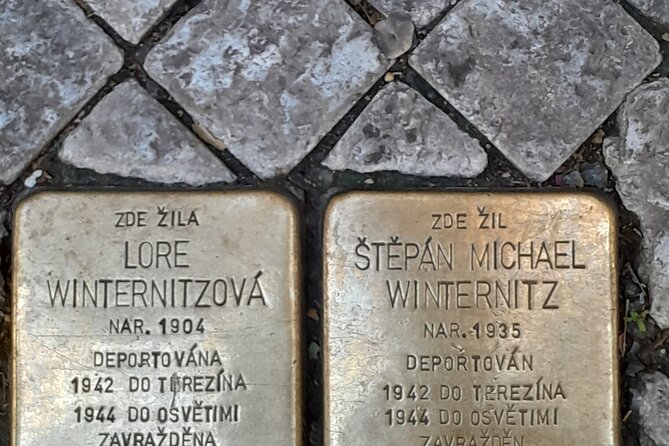
This is where you’ll see how the tour connects buildings to real human loss. Guides can handle this topic in two ways: either as abstract facts or as something you understand as history that happened to people. The tour’s structure is designed to make it hard to treat it as “just another stop,” because it ties the synagogue to the Nazi era directly.
Your time here is about 25 minutes, and admission is again free. That may not sound like long, especially for such a heavy subject, but it’s long enough to hear the context and understand what you’re looking at. If you’re the type who needs breaks, plan to pause after this stop before you move on.
A gentle note for your expectations: this part will feel weighty. If you prefer lighter storytelling during a sightseeing day, this tour still delivers, but you’ll want to pace yourself.
Spanish Synagogue Ending: Joseph II Reforms to Post-War Prague
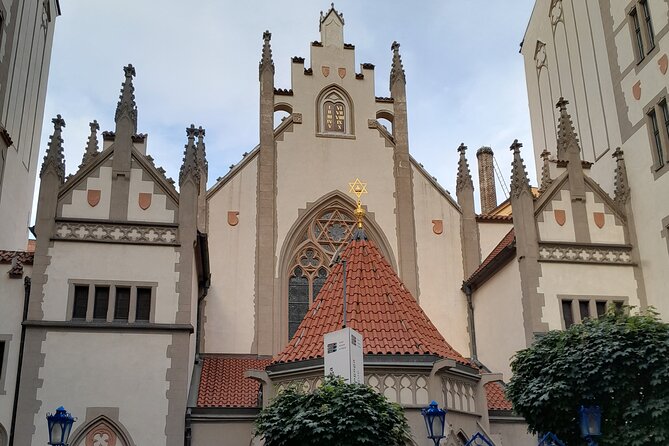
The tour finishes at the Spanish Synagogue, also linked with the Jewish Museum in Prague. This site is described as the newest synagogue in the area of the so-called Jewish Town, so it helps balance the older buildings you’ve already seen.
Here the story moves into the reforms and aftershocks of the 18th century, starting with the reforms of Joseph II at the end of that century. Then the guide brings you forward to the period after World War II, giving you a sense of what life looks like when the worst chapters end—but not everything resets.
This stop is about 20 minutes, with admission listed as free. Ending here makes sense. You’re not left staring at only medieval roots or only WWII trauma. Instead, you get a final chapter about how the community’s story continues, including how post-war realities shape what comes next.
Practical tip: if you want to take your time, this is the best place to linger after your guided portion ends. Because you’re ending there, you’re more likely to have the motivation (and the energy) to keep looking at your own pace.




What the Small Group and Timing Really Give You
A maximum of 10 travelers is the right size for this kind of tour. With more people, guides often end up shouting over each other or rushing to keep the line moving. With this group size, you’re more likely to hear the important details and ask small questions without feeling like you’re holding the entire day hostage.
The total duration—around 1 hour 30 minutes—also helps. It’s long enough to build a storyline across four stops, but short enough to fit into your first day plan. In fact, one of the most common praises is that it’s a must on day one, because it gives you a foundation for everything else you see afterward.
Meeting and ending are also clean. You start at Pařížská 934/2, 110 00 Praha 1-Staré Město and finish at the Spanish Synagogue, Vězeňská 1 in the same general Old Town area. You start at 2:00 pm. The tour is noted as near public transportation, so you can plug it into a bigger city day without needing a car or complicated transfers.
One more thing: this is offered with a mobile ticket, so make sure your phone battery is healthy. It sounds obvious until you’re standing outside a historic site with a dead screen.
Value for Money: What You Get for $23.83
At $23.83 per person, you’re buying more than “a guide walking you around.” You’re paying for an organized sequence of four meaningful synagogue stops, each with its own historical focus and all marked as admission ticket free in the tour outline. Add the small group limit and English-language guidance, and the value feels strong.
Why does that matter? Because synagogue history is not the easiest thing to figure out on your own when you’re moving from site to site. A good guide does two jobs: translation of context and translation of meaning. The reviews highlight that the guide kept things interesting and helped people understand how WWII impacted Prague, while also covering centuries beforehand. That mix is exactly what you want if you only have one short window.
Included is just guide service—so bring a little buffer for any personal expenses you might decide to pay for during or after the tour. But as far as the core experience goes, the cost is mainly about the guided storytelling, not surprise add-ons.
If you’re booking a busy Prague day, the fact that this tour is often booked about 85 days in advance is a clue: you’ll likely have an easier time getting your spot if you decide sooner rather than later.
Who Should Book This Jewish Prague History Tour?
This tour is a good fit if you:
- want a tight timeline of Jewish Prague, not just scattered facts
- like learning how legends and real history connect
- need an introduction to WWII’s impact on Prague without turning it into a full-day memorial visit
- prefer small groups and clear guiding in English
It’s also a solid pick for your first full day in the city. Getting the story of the Jewish Quarter early helps you recognize themes later when you see other buildings, memorials, and museum exhibits.
If you’re a history specialist who wants to go deep on medieval records or who plans to spend hours reading exhibits inside each synagogue, you might feel this tour is too short. But for most visitors, it’s a smart way to get oriented fast.
Should You Book It or Skip It?
I’d book it if you want a clear, human-scale introduction to Jewish Prague across multiple eras—especially if you’re pairing it with other Old Town sights. The strongest argument is simple: four major sites, short and well paced, with a guide who keeps the information engaging (and with Inna specifically praised for being friendly and knowledgeable).
Skip it only if your ideal day means long, quiet museum time in one location, or if you want to avoid heavy WWII topics entirely. This tour doesn’t shy away from the 1939–45 Shoah portion, because it’s part of the story you’re being shown.
FAQ
How long is the tour?
It runs about 1 hour 30 minutes.
What time does the tour start?
The listed start time is 2:00 pm.
Is the tour in English?
Yes, it’s offered in English.
Is admission included for the stops?
Admission ticket access is listed as free for the stops in the itinerary.
How big is the group?
The tour has a maximum of 10 travelers.
Where do I meet the guide and where does it end?
You start at Pařížská 934/2, Prague 1 (Staré Město) and end at the Spanish Synagogue, Vězeňská 1, also in Prague 1.
Can I cancel for free?
Yes. Free cancellation is available up to 24 hours before the experience start time.