REVIEW · PRAGUE
Prague: Museum of Torture Entry Ticket
Book on GetYourGuide →Operated by Museum of Torture · Bookable on GetYourGuide
Prague has a way of hiding its darker chapters underground. This museum puts you in reconstructed cellar spaces on Celetná Street and walks you through torture law and how it was applied over the centuries. I really liked the mix of courtroom context and physical replicas of infamous instruments, not just shock value. One possible drawback: the setting is underground, and one report described an intense odor tied to mold on the walls—so if you’re sensitive to smells, take that seriously.
You’ll get an efficiently packed visit inside a 400 m² exhibition space, with about 100 exhibits plus dozens of period engravings. Expect wax figures in period-style scenes, plus sound effects and two special audiovisual moments that heighten the mood. This is not a light stop for everyone—the content is graphic, and it’s not recommended for young children or anyone who’s easily distressed.
In This Review
- Key things you’ll notice right away
- Prague’s Museum of Torture: what the ticket actually delivers
- Walking through the reconstructed Celetná Street cellar spaces
- The exhibition mix: exhibits, engravings, and what they’re trying to teach
- Replica torture instruments you’ll encounter (and what to make of them)
- The effects: sound cues and two special audiovisual moments
- What the pace feels like in a 400 m² space
- Language and who you’ll interact with on site
- Price and value: is $9 a fair deal?
- Comfort, hygiene, and sensory realities (including one reported issue)
- Who should book this, and who should skip it
- Should you book the Museum of Torture in Prague?
- FAQ
- How long is the Museum of Torture experience?
- Where is the museum located in Prague?
- What will I see inside the exhibition?
- Are the materials available in English?
- Is it suitable for children or sensitive visitors?
- What does the ticket include?
Key things you’ll notice right away
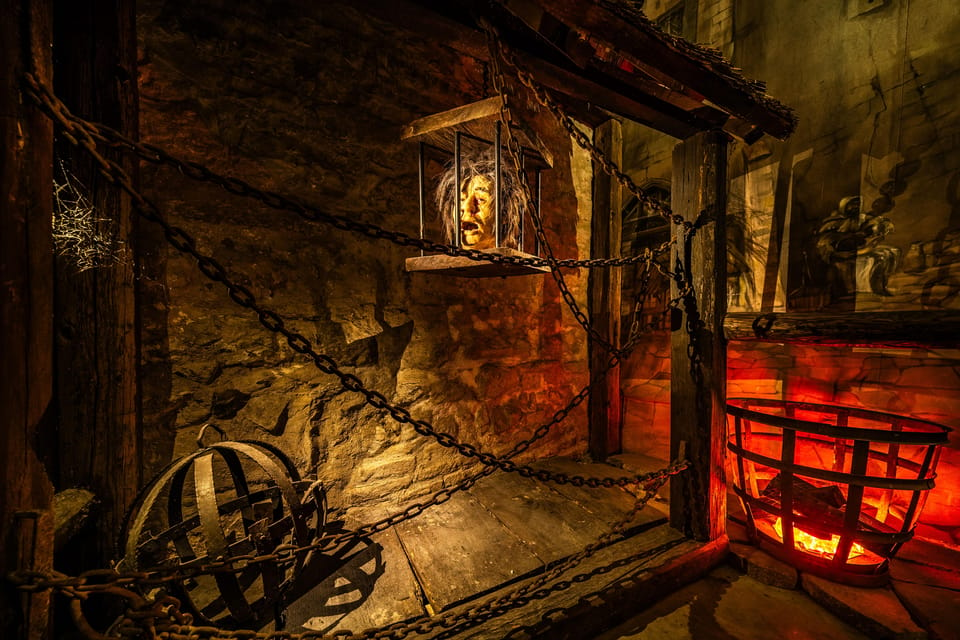
- Celetná Street cellars: underground reconstructed rooms that set the tone before you even see an instrument
- About 100 exhibits in 400 m²: a dense, walk-through layout rather than a spread-out museum
- Replica torture instruments: examples include the iron maiden, Spanish boot, rack, and pear
- Torture law explained: documents and text that connect torture to judicial processes
- Sound + audiovisual effects: two special audiovisual effects and added sound cues during the tour
Prague’s Museum of Torture: what the ticket actually delivers
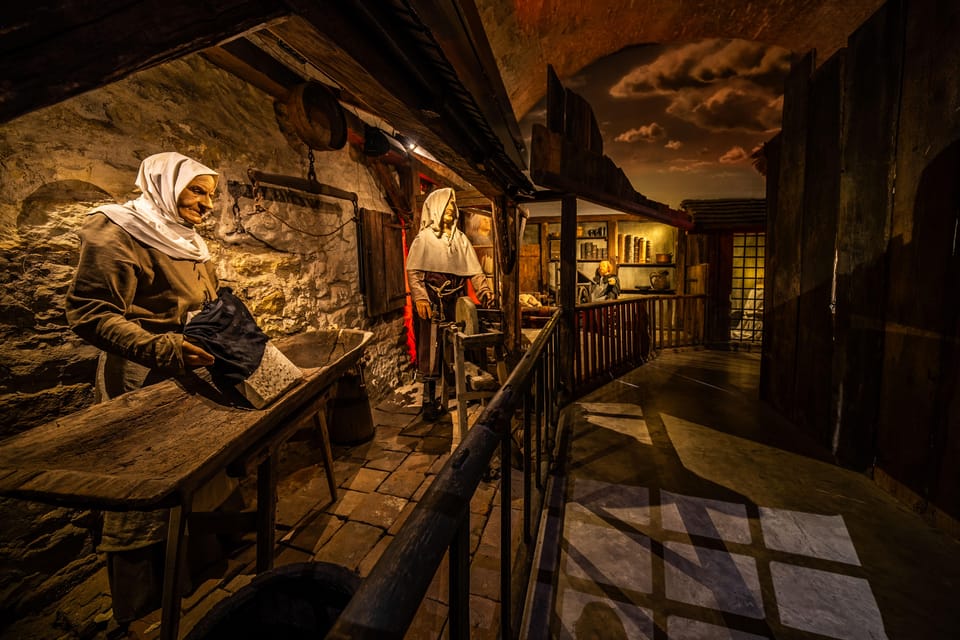
Let’s be clear about what you’re buying. The ticket is entry to the Museum of Torture and Torture Law in Prague, set in reconstructed cellar spaces on Celetná Street in the city center. This matters because it shapes the whole experience: you’re not just reading panels in a bright gallery. You’re moving through underground rooms designed to feel like the kind of place where people feared official punishment.
The museum focuses on two big ideas. First is the law—how torture was treated as part of judicial processes over time. Second is the objects—replica instruments used to extract confessions or punish offenders. That combo is what makes the visit more than a list of grim props.
At $9 per person and a visit you can fit into a day, the value is mainly in how much you see in a small footprint. The exhibition covers around 400 square meters and includes around 100 exhibits plus dozens of period engravings. You’re not waiting through long gaps for your eyes to refocus; the pace is steady and the visual density is high.
You can also read our reviews of more tours and experiences in Prague


Walking through the reconstructed Celetná Street cellar spaces
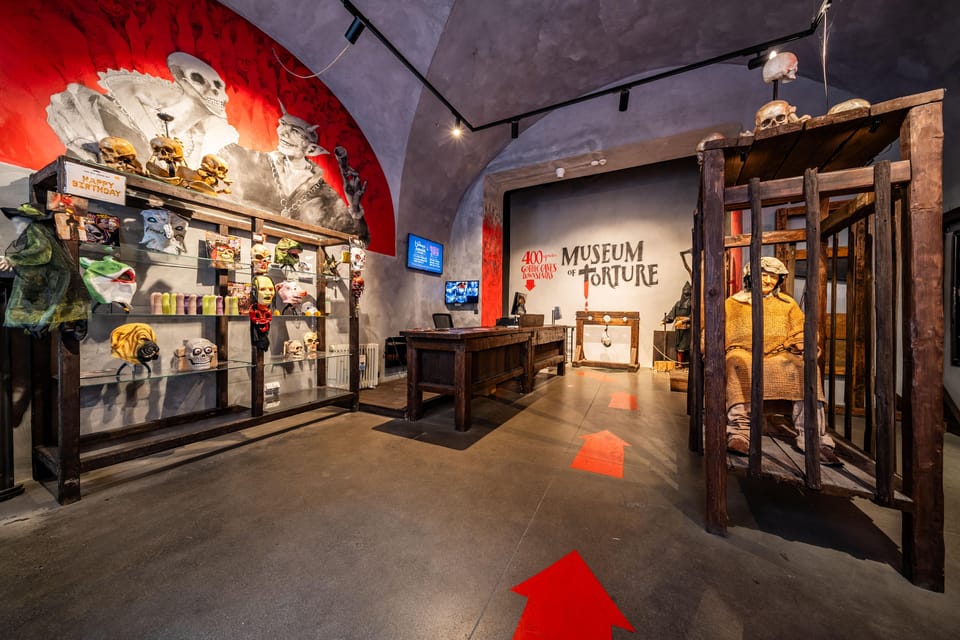
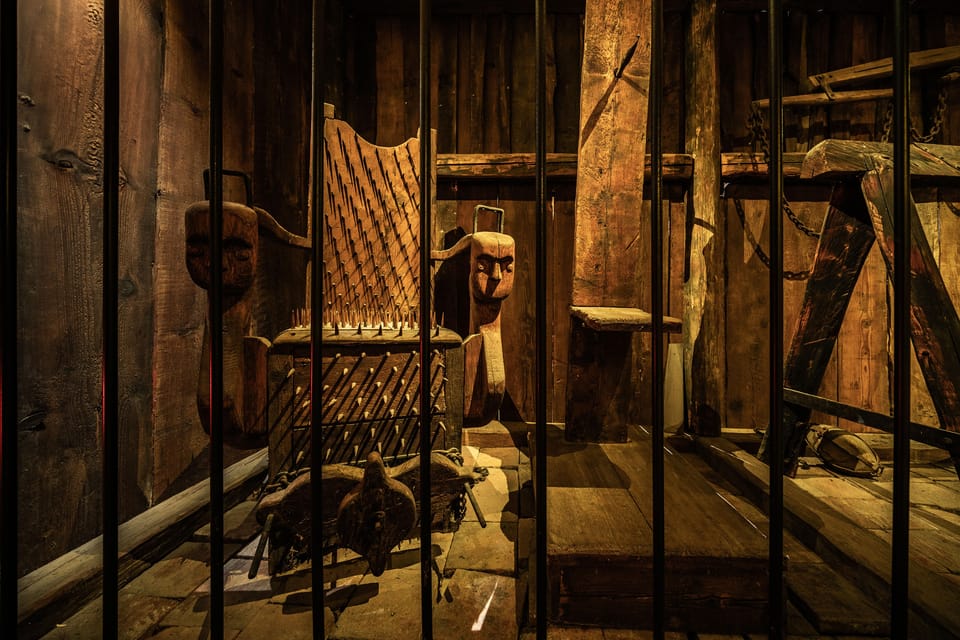
The museum’s setting is a big part of the impact. You’re on Celetná Street in central Prague, and the exhibition is staged in reconstructed cellar rooms. Even if you’re the type who stays calm in museums, the underground setting changes the feel of everything—sound travels differently, and the lighting tends to make the walls and fixtures look closer than they would in open-air galleries.
This is also why the museum uses wax figures placed in authentic settings. Wax can look theatrical in the wrong venue. Here, it’s paired with the cellar staging and period-style engravings to reinforce the idea that this isn’t fantasy. It’s meant to recreate a historical environment, at least in presentation style.
Practical tip: wear shoes you can move in easily. The tour is meant to be walked through as you progress room to room, with effects and exhibits distributed across the space rather than tucked into one single highlight room.
The exhibition mix: exhibits, engravings, and what they’re trying to teach
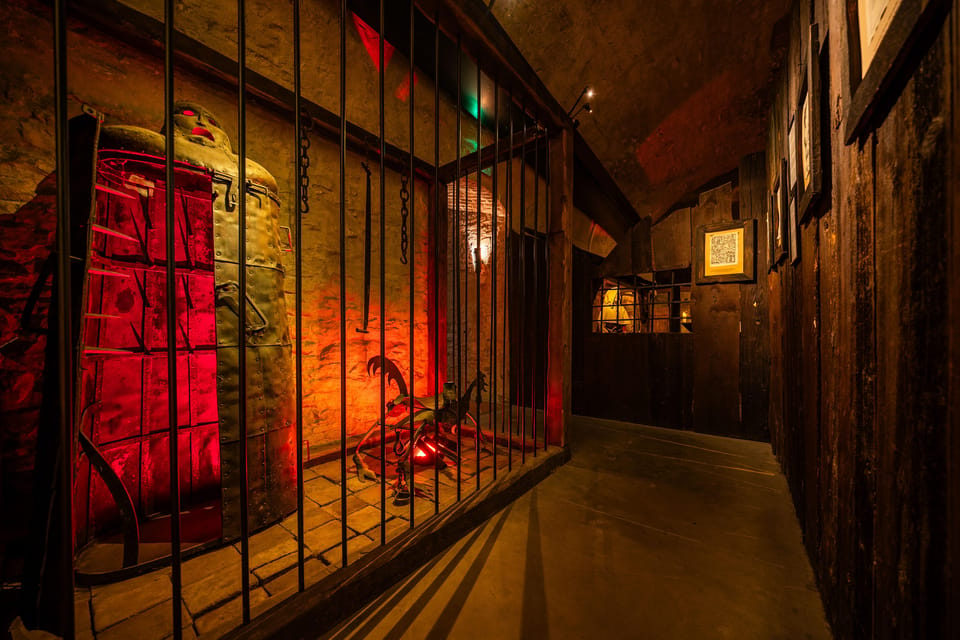
The heart of the experience is the way the museum layers information. It doesn’t only show the instruments. It also provides textual information and documents that clarify the historical and legal contexts. That’s the difference between a “horror museum” and this one. You’re repeatedly guided back to the idea that torture wasn’t just violence—it was framed as part of legal procedure, with consequences for society.
You’ll see about 100 exhibits along with dozens of period engravings. The engravings help you understand how the period depicted these ideas, while the physical displays help you connect the law’s consequences to tangible mechanisms.
If you’re a visitor who likes your history with cause-and-effect, you’ll likely appreciate how the museum points toward broader fallout—how judicial use of torture shaped trust, fear, and the legal system itself.
Replica torture instruments you’ll encounter (and what to make of them)
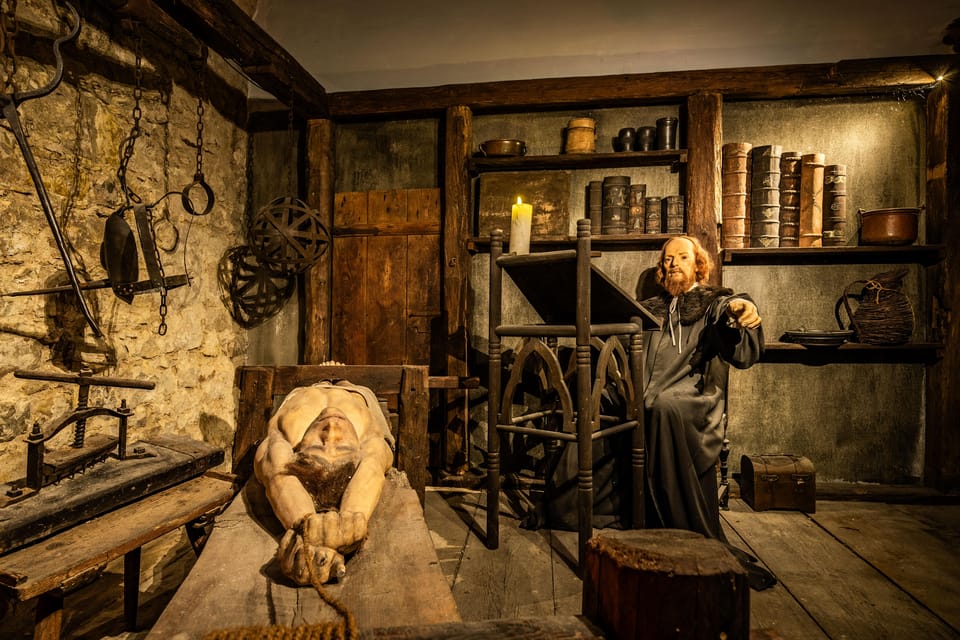
The museum includes detailed replicas of several widely known torture devices. Based on what the exhibition offers, you can expect to encounter examples like:
- Iron maiden
- Spanish boot
- Rack
- Pear
Seeing replicas in person is different from seeing them in textbooks. The museum’s approach encourages you to think about application—how an instrument relates to extracting confessions or punishing offenders. That’s also why the museum pairs visuals with legal documents and context.
What to watch for as you look: don’t just focus on the object. Ask yourself what the museum is implying about the legal logic behind it. Since the exhibit includes torture law explanations, you’re meant to connect the instrument to the stated judicial purpose, not just to the spectacle.
One careful note: because this is graphic and intense subject matter, your comfort level matters more here than in most Prague museums. If you don’t handle grim content well, plan a slower pace or skip the most intense rooms.
The effects: sound cues and two special audiovisual moments
A lot of museums use audio sparingly. This one leans into atmosphere with sound effects and especially two special audiovisual effects. The goal isn’t just entertainment—it’s to intensify the “cellar tour” feeling and shape how you experience the exhibition sequence.
In a practical sense, that means you should expect moments where lighting, audio, and timing change your attention. If you’re the sort of person who finds sudden sound distracting, go in with that in mind so it doesn’t catch you off guard.
Also, because the setting is underground, sound can feel louder and closer than you expect. Bring a calm mindset. Treat it like a guided scene—short-term discomfort is part of the design here.
You can also read our reviews of more museum experiences in Prague



What the pace feels like in a 400 m² space
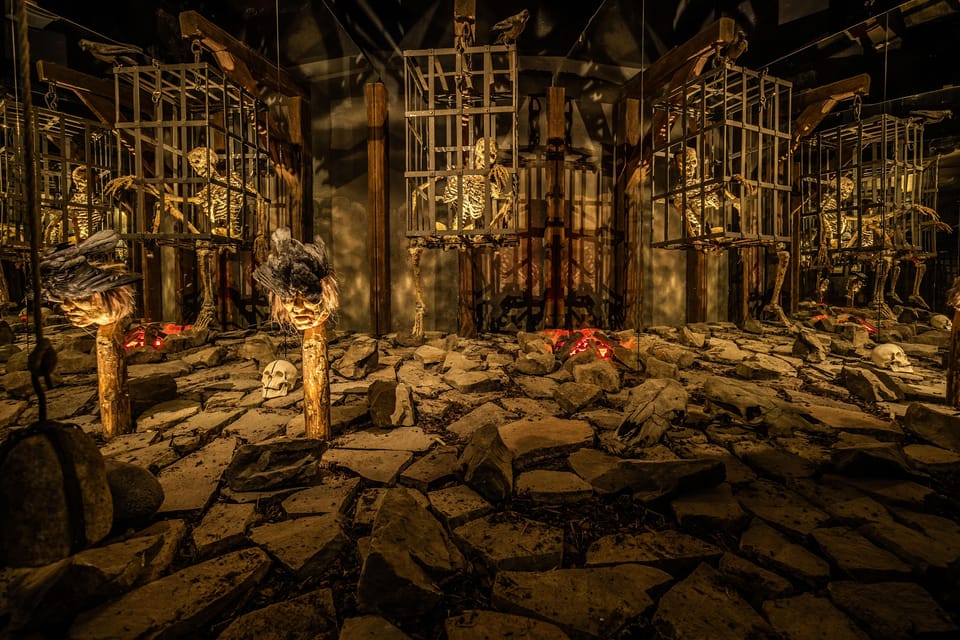
This isn’t a museum that sprawls for hours. It’s a more compact, curated walk-through across about 400 square meters, featuring around 100 exhibits. For many people, that translates to a focused visit where you keep moving and you keep encountering new visual context—engraving, replica, document, then effects again.
Since the activity is listed as valid for 1 day (with starting times you can check), you can choose a time that fits your schedule. In a day full of Prague sights—Old Town squares, river views, churches—this museum works best when you treat it as a dedicated “one-stop” topic rather than something you casually squeeze in between long walking stretches.
Language and who you’ll interact with on site
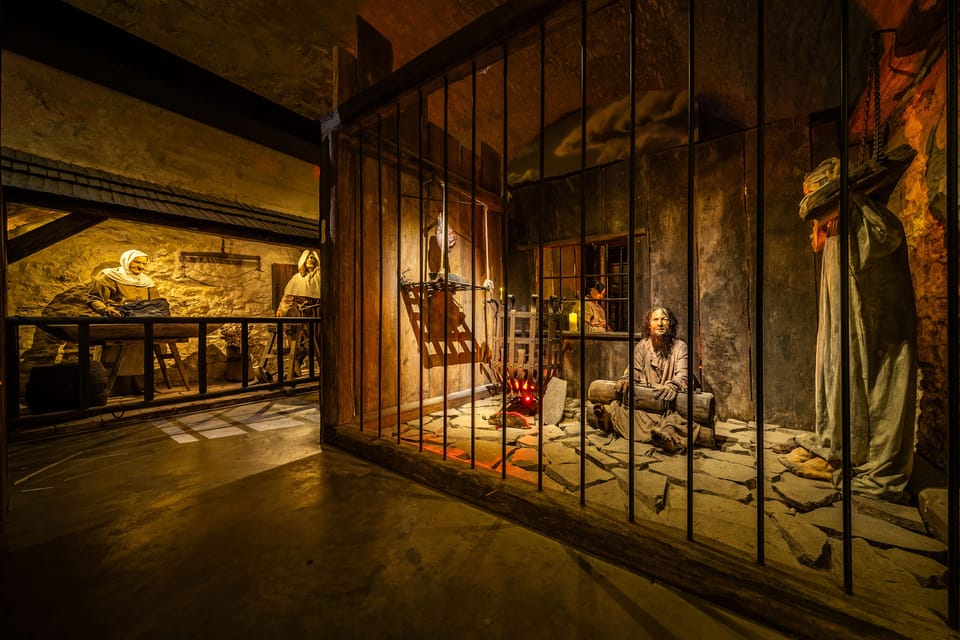
The museum experience is available in English, and there’s an English host or greeter mentioned with the activity. That’s helpful if you want someone to smooth out the basics—where to go, how the entry works, and how to orient yourself once you’re inside.
That said, because the exhibition is heavy on visuals and written context, your experience will still largely depend on how much you read and how long you pause at each display. English support helps, but the heart of the visit is the exhibition itself.
Price and value: is $9 a fair deal?
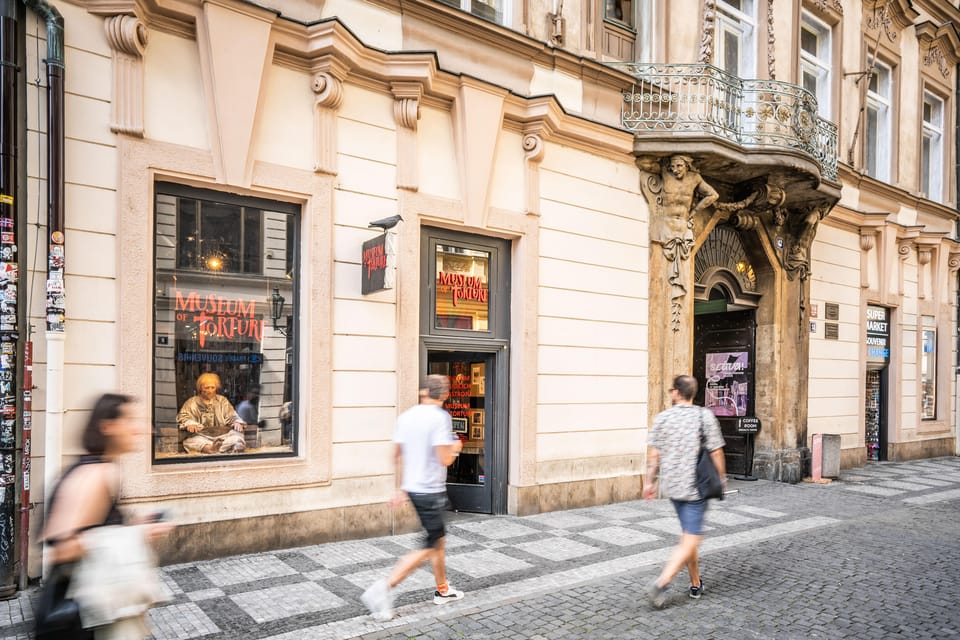
For $9 per person for a one-day entry ticket, the price-to-content ratio can feel strong if you’re interested in the subject. You’re paying for:
- a compact floor area of about 400 m²
- about 100 exhibits
- plus dozens of period engravings
- plus physical replicas (including major recognizable instruments)
- plus sound and two special audiovisual effects
In other words, the museum isn’t charging you like a huge multi-wing institution. It’s a focused experience with enough variety that you’re not stuck looking at one thing for too long.
Where the price won’t feel like a win is if you’re hoping for a gentle, purely educational museum visit. This is graphic and intense. If that’s not your thing, even a low price won’t fix the discomfort.
Comfort, hygiene, and sensory realities (including one reported issue)
Underground exhibitions can come with sensory downsides: closeness, damp air, and enclosed surfaces. The museum is underground by design, since it’s staged in cellar spaces.
One specific report described a strong odor linked to black mold on black-painted walls that looked like it was peeling. That isn’t proof that every visit will be the same. But if you’re sensitive to smells, it’s smart to factor in that possibility when deciding whether to go.
If you’re not sensitive to odors and you can handle graphic content, you’ll probably be fine. But if you’re prone to allergies or you hate strong smells in enclosed spaces, I’d weigh this carefully.
Who should book this, and who should skip it
This museum fits best if you meet one of these profiles:
- You like legal and historical context, not only grim visuals
- You’re curious about how societies justified punishment through rules and process
- You can handle graphic, disturbing themes for a short but focused visit
You should skip or think twice if:
- You’re sensitive to graphic content
- You’re shopping for something kid-friendly (it’s not recommended for young children)
- You have strong odor sensitivities, especially in enclosed underground spaces
Should you book the Museum of Torture in Prague?
If you want a short, intense, historically framed experience in central Prague for around $9, this ticket can be a good value. The combination of torture law context, replica instruments, and the audio/visual effects makes it feel more structured than a random collection of macabre objects. It’s also compact, so you’re not forced into a long time commitment.
But book with eyes open. This is graphic, and the underground cellar setting isn’t for everyone. If you’re worried about smell or you’re easily distressed, pass and choose a lighter museum that day.
If your goal is to understand how torture was treated as part of judicial process—and you can handle the presentation—this is one of the more direct, memorable stops in Prague for the topic.
FAQ
How long is the Museum of Torture experience?
The activity is listed as lasting 1 day, and you can select starting times based on availability.
Where is the museum located in Prague?
The museum is in the central area of Prague in reconstructed cellar spaces on Celetná Street (Central Bohemian Region).
What will I see inside the exhibition?
You’ll see a dark history of torture law and how it was applied, plus around 100 exhibits, dozens of period engravings, wax figures, and replicas of instruments such as the iron maiden, Spanish boot, rack, and pear.
Are the materials available in English?
Yes. The activity lists English as the language, and there is an English host or greeter.
Is it suitable for children or sensitive visitors?
No. The exhibition is not recommended for sensitive individuals or young children due to graphic content.
What does the ticket include?
Your ticket includes entry to the Museum of Torture and Torture Law.